
Leaderboard



Popular Content
Showing content with the highest reputation on 01/06/2021 in all areas
-
9 pointsThis situation isn't funny in the least, but what if upon Biden taking office he points at the former President and says "You're fired"?9 points
-
5 pointsNo, what's happening in DC right now is not right or justified; but calling this "protesting" wasn't either!5 points
-
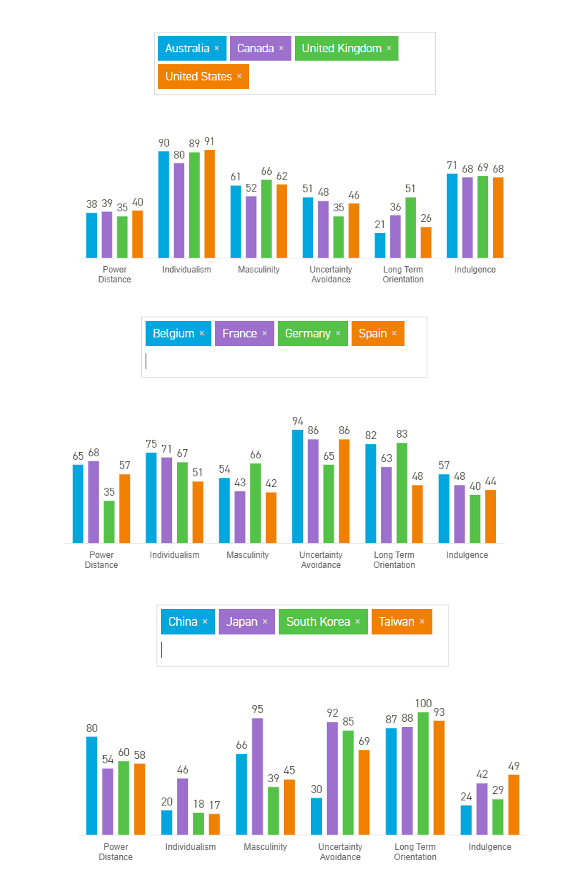
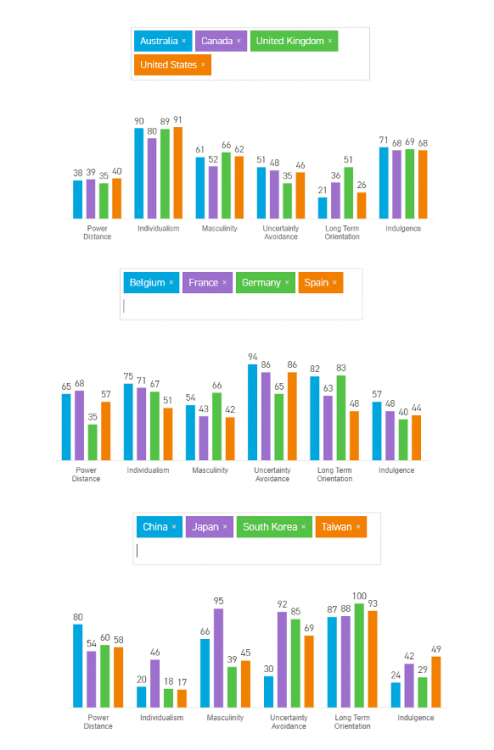
5 pointsI'll clarify a bit: On the Hofstede 6D model, the top graphic is a cross section of the Anglosphere, the middle one is a cross section of Western Europe, and the bottom one is a cross section of East Asia. When I refer to Western Europe as collective, I simply mean more collective than the US. As you can see, the Anglosphere is significantly individual. Western Europe is also pretty individual but not nearly as much as the Anglosphere. And the Far East is is the most collective societies. The Far East societies have done that best job at mitigating the spread of COVID. Of those 4 societies, Japan is routinely criticized the most as having done the worst job. Japan has still done a significantly better job than Europe or the US though. As you can see, Japan has the highest individualism score of the 4 sampled. The US and the UK are continually criticized for having poor COVID responses. The outliers here are Canada and Australia, but may be explained by population sparsity and low commercial traffic. West Europe falls squarely in between the Anglosphere and East Asia for Individualism/Collectivism, and by and large people perceive them as having a better response than the Anglosphere, but a worse response than East Asia. So this was not a very rigorous analysis. Merely an observation I made. I live in Europe now, and I will agree that there is some bucking to mask, lockdowns and social distancing. But by an large people fall in order and do it at some point. Those that protest are chastised to the point of societal excommunication.
 5 points
 -
5 points
-
4 pointsNo one's arguing that those BLM rioters are pieces of shit. No one. That's not the point. A key difference between the two is that the president of the United States was not the figurehead, orator, and leader sparking any of those riots.4 points
-
4 pointsThe (R) are like the gangsters in The Dark Knight who hired the Joker. They hoped for a one sided chaos they could control, but they just got chaos. Still. I think we've only seen the end of the beginning, with Trump as the catalyst for what comes next. Rational liberals who voted Democrat, and could have voted no other way because of the absurdity of Trump as president, no longer have the boogeyman to distract them from the insanity of democratic policy. Phase two is going to be the breakdown of the democratic party, a split that has been a long time coming, will once again take away the fabled supermajority of voters that Democratic politicians have been chasing for decades. Joe Manchin may be able to sell out his entire ethical foundation, but the American voters will be less pliable. The worship of race, and the now open demonization of "whiteness," wealth, and masculinity will take the many, many suburban woman who voted against Trump for the justified hated of his disgusting composure, and deliver them right back to the Republicans. Well, only if the Republican politicians learned from the last 4 years. Some have. Warnock is the continuation of the Marxism camel getting it's nose under the tent. The (D) will be hard pressed to keep it out now.4 points
-
3 pointsWhile I don’t think it was Trump’s “inflammatory words” that cost the right the senate (at least one senate seat in Georgia, fingers crossed to keep the other for the sake of this country), I do find Ted Cruz’s grand standing counter productive. I’m obviously a huge MAGA fan and not ashamed about it but Trump lost. It’s time for Republicans to deal with it, thank him for his service (sincerely), and focus on their fight against the Green New Deal and its radical supporters the next few years. Or worse, court packing and going after the electoral college. Buckle in, hope sticking it to Trump was worth it.3 points
-
2 points
-
2 points
-
2 pointsWell, we spent all summer in protest mode. It was foolish to think that wouldn't cut both ways.2 points
-
2 pointsThere's even a video out there where the GOP chair in Georgia is answering questions at a rally, and people keep asking "why should we even vote if the outcome is already decided?" and "what's the point in voting if the Democrats are going to rig the election anyway?" Turns out when you call the entire voting process into question...you chip away at the motivation of your voters. Trump's done some good things, but I would be happy to see someone more capable of regulating their emotions in charge of the party.2 points
-
2 pointsI have a sneaking suspicion "variant" is a way to keep the public mortified by the virus.2 points
-
2 pointsIt's quite interesting how a failed presidential ticket campaigning on a message of bat shit crazy could inspire even more voters to turn out in a run off election. Definitely a conspiracy.2 points
-
2 pointsWell, on the bright side, I just interested 10K from my grandfather I was going to use to pay down the remaining balance of my wife's student loans. But with he way things are going, definitely going to hold off on that!2 points
-
2 pointsCoconut oil works great if you're not worried about being healthy. I use the orville redenbacher popcorn oil for my machine at home. https://www.orville.com/kernel-popcorn-and-oil/popping-topping-oil Gets the job done, and doesn't leave as much cooked on oil as using canola/vegetable oil (which I wouldn't recommend at all because of how hard it is to clean off)2 points
-
2 pointsYou racing on a closed track is up to you. You speeding on a public highway is not up to you. The distinction isn't whether or not you interpret it as dangerous. The distinction is whether or not your actions put other people at risk.2 points
-
2 points2 points2 pointsMy presupposition would be that 11Fs are more comfortable with assuming higher risk based on their perceived invincibility.2 points2 pointsBingo. It isn't "wear a mask and the virus disappears". It's "wear a mask and you can reduce the spread". It's sad we've come to a point where even otherwise educated adults can't grasp that not breathing on people will help prevent the spread of germs.2 points2 pointsI don't think there's any strategy at all. They lost, they know they lost, so they're defensively lashing out in all directions. I love pointing out how the democrats are being idiots when they do things that are logically inconsistent or harmful to their own cause, but republicans are putting on a spectacular display of the same thing right now. The fact that trump bandwagoners can't see that he is taking their own party to a very unproductive place blows my mind. It used to be nice being on the right because I could reasonably tell myself that republicans generally stick to some core values and respect our institutions. Lol not anymore.2 points2 pointsWell fellas, since the manning crisis has been solved by Covid, that frees up some resources to boot the undesirables. As we all know, there is no possible way airline hiring is going to pick back up ever again, so no real need to be concerned with manning or the morale of some of the most highly trained people we have. Carry on. #fuckingidiots2 points2 pointsI'm sure the Russian and Chinese Air Forces just published similar guidance.2 points1 pointI’d love to hear from Sim, Seadogs on your claim. Edited to add this gem on the differences of how police handled the peaceful protests/riots for social justice vs a violent breach of the nation’s Capitol. https://www.buzzfeednews.com/article/ikrd/comparing-scenes-from-the-attempted-coup-to-blm-protests1 point1 pointI literally remember this conversation. When you personally liked the post below back in July, it was probably a misclick, right?1 point1 pointOh, and media is totally acting disgusting in this whole mess today. Totally agreed! You’re not the media, so I hold you to a higher standard [emoji23]. All depends on perspective. Sen Duckworth (sp?) was interviewed and said something along the lines of, “no I wasn’t worried, this is the Capitol for crying out loud, not Mogadishu!” Some other D, forget his name, decided to go the complete opposite direction with his comment talking about how incredibly scary it was. Let’s not diminish how serious it is by making it seem more of a threat than it really was. No real threat at all, but still a totally reprehensible crime and assault on Democracy. Sent from my iPad using Tapatalk1 point1 pointNot arguing that Trump isn't the instigator in today's acts, and it's a shit move on his part (but not unexpected); but there were a lot of elected officials who sat on their asses and allowed the BLM, ANTIFA and other "protests" to occur...1 point1 point1 point1 pointOn another note, doesn't look like your guys' guesses about billionaire philanthropy were based very much in reality. https://observer.com/2021/01/billionaires-philanthropy-record-low-2020-bezos-elon-musk/ BUT JEFF BEZOS MAX A TAX-DEDUCTIBLE DONATION OF $10B TO THE... Bezos Fund.1 point1 point1 pointWhat a bunch of trash ass people. Hopefully they get federal charges. https://twitter.com/jim_newell/status/1346899789347233796?s=211 point1 point1 point1 pointA lot of tough talk on “Accelerate Change or Lose,” to Russia and China yet waste time on this PC BS. AF leadership is probably just trying to preemptively toe the line with one of the many “priorities” of the incoming administration.1 point1 pointNot a dig at all. I understood your meaning. More of a sarcastic critique on those grasping for straws.1 point1 pointWhether it’s the treat environment or the tyranny of distance or some combination of the two (look at early Syria for example), the idea that getting home after riding the silk is just a quick helicopter ride is insane. The limiting factor isn’t going to be whether we send a helicopter/tilt rotor and how current it’s SIRFC is, or whether it’s got 4th or 5th Gen support to get it in. The limiting factor is gonna be based whether or not you can keep the isolated evader alive and hidden while you crack the egg on where and how to get them. The best way you keep Joe Oklahoma fighter pilot alive 8 minutes (or 8 days) after his feet touch the ground in a country where he doesn’t look or sound like the locals is getting him somewhere to hide and sending some friendly locals to stash him somewhere to buy time. Threat/distance/both will result in more time that evader needs to remain an evader to facilitate a successful recovery. At the same time with high threat, we are going to see a lot more possibility for evaders become active in theatre. Now you’ve got your JPRC playing triage of what is worth sending limited assets after in an environment where some are just flat out of reach. Everybody likes talking about successful recoveries like Vega because the stories are sexy, but look at for example Desert Storm where a lot of guys were for lack of a better word “abandoned to their training” because fact of the matter was the air recovery option was neither actionable nor would it be smart/effective. So I put to the room, would you rather the military spending bazillions of dollars on stuff that might stand a more survivable chance of coming for you, or do you think it’s more useful to cultivate those clandestine options and give you equipment to make you a better evader. There is a reason during evasion scenarios and SERE training you don’t get “rescued” out of the hide site by some Pavehawk or Chinook doing a training flight to support the school houses. Read the theatre spins, know your EPA, get good socks and a quality boots and train in them. That’s gonna mean a hell of a lot more than whether or not the supporting CSAR elements are running with 60Gs or the new Whisky hotness. And it would be nice since this is technically stuff I need to do my job, if the shoe clerks and bean counters that figure out what uniform items to provide actually thought about that requirement instead of crap like whether your boots are the right color of green/tan, 1 piece vs 2 piece, fire resistance at 780 vs 450 degrees. Taking me back to my original point, let’s invest in some quality skivvies, uniforms, and boots you could hike around in the hills with whatever guys needing you to not be a burden on them trying to keep you alive. Sent from my iPhone using Tapatalk1 point1 pointThis x100. I disclosed something years ago that almost grenaded my chances. Don't be stupid and lie about something they'll find (see surgery scar example above) but don't disclose anything that doesn't need to be said. I eventually got a waiver that shouldn't have even been necessary but it costed me years of lost time (no joke).1 point1 pointGood point. That sucks for your friend. Scars are gonna be an obvious sign of surgery and easy for the docs to see, his recruiter failed him on that one if he told him not to disclose that. I should clarify that you shouldn’t disclose anything that you don’t need to disclose. For example: If you had hemorrhoids years ago but they’re gone, don’t disclose. Stuff that isn’t relevant anymore but you feel the need to disclose for the sake of “honesty” is not worth your career. The docs and nurses there are not your friends, and they have control over the decision of letting you in. So don’t give them any reason not too.1 point1 pointBad cash flow, not meeting expenses/debts payments due to local/state restrictions? Likely going to have to close indefinitely or permanently? Many are likely going to fail, unfortunately their timing was bad and luck ran out. It sucks for the businesses, but the second failure is that there's no/limited safety net for individuals to help them get back on their feet and back out into the workforce. The dirty part of pure capitalism is that while there is great opportunity to become rich, there's also a great risk of failing miserably, and there may be factors you just can't control. That mom & pop small business could also fail if one of the owners were to get sick (due to interactions with a public that doesn't mask/distance/quarantine appropriately) and run any lengthy complications or hospital stay. A larger small business could have the same outcome if several employees get sick and are out (and poor sick leave policies may encourage workers to come in sick and get more workers sick). Either way, there's risks, and there's no "right" answer, despite what the pundits say. Some business may be more capable of adapting to the new environment and rules, and others not so much. But there's going to be winners and losers no matter what the pandemic response is (and government doing nothing/absence of action is a decision). A 4-6 week hard shut down/lockdown early on followed by forced quarantine when entering US borders might've stopped the pandemic from spreading early on. Doing nothing and hoping for herd immunity may have just gotten the whole thing over quickly at the cost of some potential extra deaths due to capacity issues. But in either scenario, there are going to be winners and losers, businesses that adapt and succeed, or can't and fail. So the question becomes: what is more important, businesses or individuals? Should taxpayer money go to businesses to keep them open, or to individuals to assist them meeting basic needs (food/shelter) so they can be able to work in the future? The two are intertwined, businesses provide jobs to individuals, and together it contributed to the economy. But without healthy individuals to work, businesses can't stay afloat. And they need individuals to sell their goods and services to. We all have our own interests, and we advocate for them. In a sense, it's great that we can debate what or response as a community or as a country should be, and why I take the time to respond on this message board. The downside is that takes time, and time is not always on our side. The hard part of the pandemic is it's a slow motion train wreck, versus a much shorter, discrete catastrophic event. We as a country seem to do decently with response to discrete events, but anything that takes any real effort over a length of time where consequences are in the future and we start falling apart. It's possible we just did too little too late, and now we're just along for the ride and trying to mitigate or delay the damage that's coming. It feels like for the most part our response has been largely for show-mandates to show government is doing *something*, though not really enforced or enacted in a way to make the desired effect. Part of it has been poor messaging (the initial "the general public doesn't need a mask" in order to ensure healthcare workers had access to masks given limited supply probably did irreparable harm to getting people to wear masks later, though people can be irrational and hoard supplies far in excess of what they need). Though partial credit for the healthcare system not getting overrun, though NY went through its challenges and now LA is facing similar challenges with capacity. It's hard to say what things would've liked like if we did nothing, but Sweden's response probably could be used as an analogy for estimating what the impact could've been.1 point1 pointIt's not a silver bullet - it's part of an array of strategies that are supposed to help us manage the disease and mitigate its impact. Remember, once upon a time washing your hands was considered controversial, but now, no one disputes its value: https://www.nationalgeographic.com/history/2020/03/handwashing-once-controversial-medical-advice/ https://www.history.com/news/hand-washing-disease-infection https://globalhandwashing.org/about-handwashing/history-of-handwashing/ Honestly, though I do see some aspect of theater in this, I don't get the hyper-fretting over mask-wearing. But I see where a bit of the noise is coming from. That said, mask-wearing's role in helping diminish COVID's R-value is completely uncontroversial.1 point1 pointSeriously? Government overreach on a mask mandate is your big takeaway? Masks are destroying businesses? I’m sure you’ve heard it before, but were/are seatbelts an overreach? People still die while wearing them, should we get rid of that too? Other poor government decisions related to covid are ruining businesses, 100% agreed. Stop making this all about masks, it just sounds stupid. Once again, stellar leadership on the part of our CINC has made something so simple and effective a political tool. And so many sheep just jumped on board. If people would just stop complaining about masks and realize it’s not some twisted govt plot to slowly exert govt control over you (a la frog in boiling pot) we could be much closer to the end of this mess. Sent from my iPad using Tapatalk1 point1 pointJust a friendly reminder to anyone who hasn’t gone to MEPS yet, DO NOT (and I can’t emphasize this enough) DISCLOSE ANYTHING. They will try and pressure you with some honesty and integrity bs but don’t buy it. It is there job to disqualify, NOT qualify. Sent from my iPhone using Baseops Network mobile app1 point1 pointthe point guys is government arbitrary "rules" are KILLING people. quite literally. and for what EFFECT?! it's not working!!! it's not about the mask. it's about the government overreach destroying american businesses and lives. that's what im passionate about.1 point1 pointMy position is we can stop when 1. Every person knows whether they are a carrier every day 2. Enough people are vaccinated that spread is negligible. Is it that hard to wear a mask? Do you rail against seatbelt laws or complain that requiring shoes in a place of business is oppressive? Putting a mask on is, quite literally, the least you can do.1 point1 pointThe AFOQT quantitative and verbal scores always use the highest, no matter if you passed or failed the first attempt. Rated boards always use the most recent score, even if it's worse than the first one. Does that help?1 point1 pointHow about when we stop setting new records for number infected on a daily basis?1 point1 pointPoint of order @08Dawg, weren't there purges in both 2011 and 2013, making this Part 3? I can't keep track of whether we have more purges or Iraq campaigns.1 point1 point1 pointI think on this often, since it has shadowed my whole adult life. Do you think if we hadn't done Iraq so soon after, we'd still be in the same quicksand? I don't think we would. I don't know if that parallel universe is better...but I'd sure like to see it.1 point1 pointThat thought process is still happening; the bros did a good job of weeding it out at the interviews. Any U-2 pilot worth a sh1t is a proud UCD-wearing recce professional, not somebody looking to use it as a stepping stone.1 point