Leaderboard
-
ViperMan
Supreme User5Points861Posts -
ClearedHot
Administrator4Points5,459Posts -
tac airlifter
Supreme User4Points2,052Posts -
Lord Ratner
Supreme User3Points2,939Posts




Popular Content
Showing content with the highest reputation on 05/19/2022 in all areas
-
Hey Socrates. No one is confused about what life is or if sperm are alive - it's not arbitrary. A sperm is not a human. An egg is not a human. Both are living. Sexually dimorphic species genetic material needs to come together in order to form a unique organism. The line of what constitutes a human is clear and is completely and totally unambiguous. The fact that a zygote doesn't have full human form at all stages of development is not a point in your column of the argument, though it is the fundamental tenet of what all pro-abortion advocates rest their argument upon. The argument is about when elective abortion should be allowed and when it should be disallowed. That's where the disagreement lies. Everything else is an attempt to muddle the other sides' argument.3 points
-
3 pointsHaving now done all manner of sim- and aircraft-training, there's simply no comparing the two in the early phases of training. Hell, one of the biggest weaknesses in MAF was the lack of raw stick-and-rudder flying ability. That comes from the smaller planes that don't translate well in Sims. We should also dispense with the "modernizing" argument. Today's sim technology has been around for decades, and the AF didn't decide to "modernize" until a manning and resource shortage. This is about cutting costs, and the results will be predictable.3 points
-
3 points
-
2 points
-
2 pointsThis has led to some of the funniest press briefings I've ever seen. https://www.whitehouse.gov/briefing-room/press-briefings/2022/05/18/press-briefing-by-press-secretary-karine-jean-pierre-and-national-security-advisor-jake-sullivan-may-18-2022/ PETER DOOCY: A follow-up to the disinformation board. Last week, you guys said that you needed this Disinformation Governance Board at DHS to make sure that freedom of speech is protected across the country and that these platforms are not used for forms of disinformation. So what changed? MS. JEAN-PIERRE: Look, the Department of — of Homeland Security, they began their statement report- — repeating that the board had been intentionally mischaracterized, which is a little bit of what you were asking me, and they were explicit about what it does and doesn’t — it does not do... PETER DOOCY: So if it’s pausing because you think the board was mischaracterized, then the disinformation board is being shut down because of disinformation?2 points
-
Yeah I’m looking at this front page here trying to figure out how to start a thread. It is definitely super complicated. Instead of looking harder, I’m just going to start a new thread as a reply within whatever existing thread I happen to be reading. Makes perfect sense, go Air Force.
 2 points
 -
2 pointsBeen flying for 20 years and one thing I’ve learned is there’s no substitute for actual stick time in the plane. That becomes even more apparent when someone leaves the cockpit and then comes back, dudes with more time pick it back up faster. Sims help but they aren’t a replacement.2 points
-
Consciousness, agency, choice. If we someday find out that Dolphins are actually conscious in the human sense of the word, your view that they are not made in God's image would make it fine to kill them? Likewise if an intelligent alien species showed up at our doorstep, not in God's image? One doesn't need a belief in God to rationally come to the conclusion that moral relativism is dumb, or that your logical end-point isn't logical.2 points
-
2 points
-
2 pointsI don’t know how it is in your community, but for us this change at UPT is accompanied by a decrease in training at the FTU and a decrease in hours requirements for MWS upgrades. And none of the tech works as advertised yet. In principle I think you’re right, I’m no Luddite. But all signs trend towards a decreasing organizational emphasis on competence. Good news is we still attract and hire great people, I’ve been super pleased with all of our younger teammates as they grapple through these challenges which are not their fault.2 points
-
2 pointsThe system we have has worked for decades, and has produced far and away the best pilots in the world. Willfully giving it up like this is a disgrace.2 points
-
Any of our flight docs care to provide an update of where the process stands today 2022? 14 year old son diagnosed age 8 with mild ADD, no hyperactivity, just focus. Prescribed 10MG Adderall XR. No side effects, has been straight A's, 4.24 GPA, all Honors/AP classes, National Honor society etc ever since. He wants to got to college then UPT (god help me), so trying to get a better understanding of what the current regs require for time off meds, waiver requirement and such. Thanks1 point
-
1 pointThanks for breaking this discussion out of the other thread. I think it’s a discussion all Americans need to be having right now. Many people in our country are convinced that the government must act like an individual and “balance its checkbook”. I’m no economist, but I have to ask: why? Sovereign nations do not operate on the life cycle of one human being. You and I enter the workforce, work for thirty to fifty years, retire, and die. Our financial considerations are completely different than those of an entire nation which strives to live on in perpetuity. Let’s have an honest discussion about national debt, money creation, and what it means to own the world’s reserve currency. I’m sure we have a lot of armchair economists here who will share their opinions, but I’m really interested in hearing from those who have studied the subject. Maybe we’ll all learn something.1 point
-
Cancer doesn’t have a heartbeat, 10 toes, 10 fingers, etc1 point
-
Hey Occam, thanks for the response, but I still disagree. I fundamentally truly believe that killing a sperm, egg, or using an IUD or birth control to create a prohibitive environment that won’t allow a zygote to adhere to the uterine wall to all be the same outcome as stopping a zygote a few weeks to months later. I do not see why you get to make an arbitrary point that is way too early in the pregnancy the moment life begins (and therefore, the moment you gain control over women’s bodies). To me and many of my friends, an 8 week zygote is little more than a bad sneeze that a woman should be able to decide whether to carry or not. Sorry if that’s too graphic for you, but not everyone agrees with your opinions. Cue outrage. As someone who has had multiple children with my wife (and two “abortions” by this definition), I will say that my personal cutoff is around 20 weeks when I consider life to exist and the gradient to shift where abortion should not be allowed. Actually, if you consider her iud and birth control usage, we’ve probably intentionally killed dozens of zygotes. Finally, I leave you with this. You posit that a human exists at sperm+egg. Let’s go down the developmental path, I’m happy to do it. Is a sperm+egg human if it doesn’t have eyeballs? Is a sperm+egg human if it doesn’t have a functional brain? Is a sperm+egg human if it doesn’t have lungs? Is a sperm+egg human if it’s in your wife’s uterus, but she has an iud (or some forms of birth control) that makes it impossible for the zygote to adhere to her uterine wall? Ultimately, this all comes down to your own opinion as to the value of bodily autonomy vs potential to develop. You believe there should be almost none for a woman (or a man, to be fair, as we have a say in a relationship) even when potential to develop hasn’t been proven. I believe individuals should be able to make financial, emotional, non-emotional, career, life, and pragmatic future decisions in their best interest if it deals with their body much longer than you.1 point
-
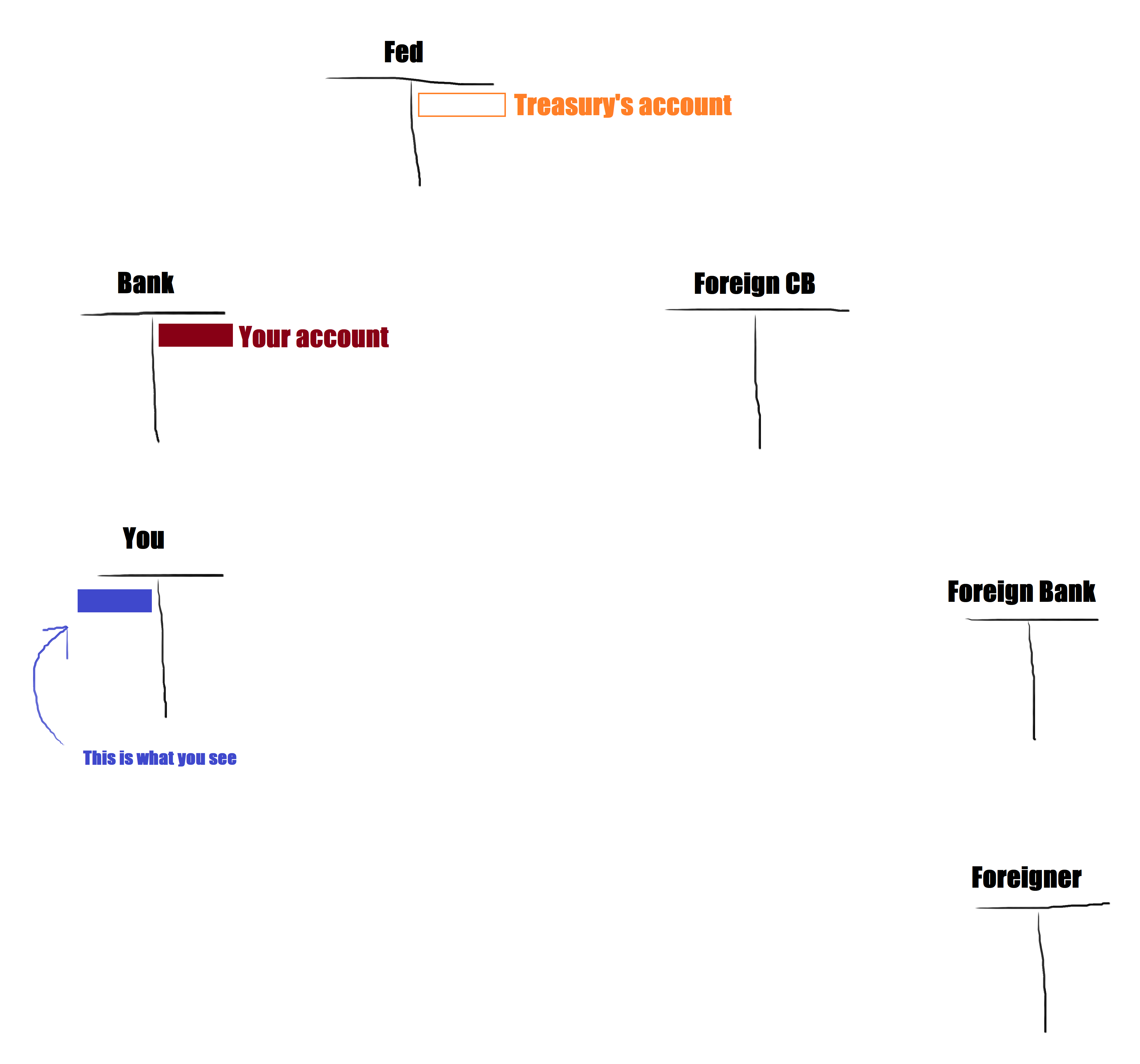
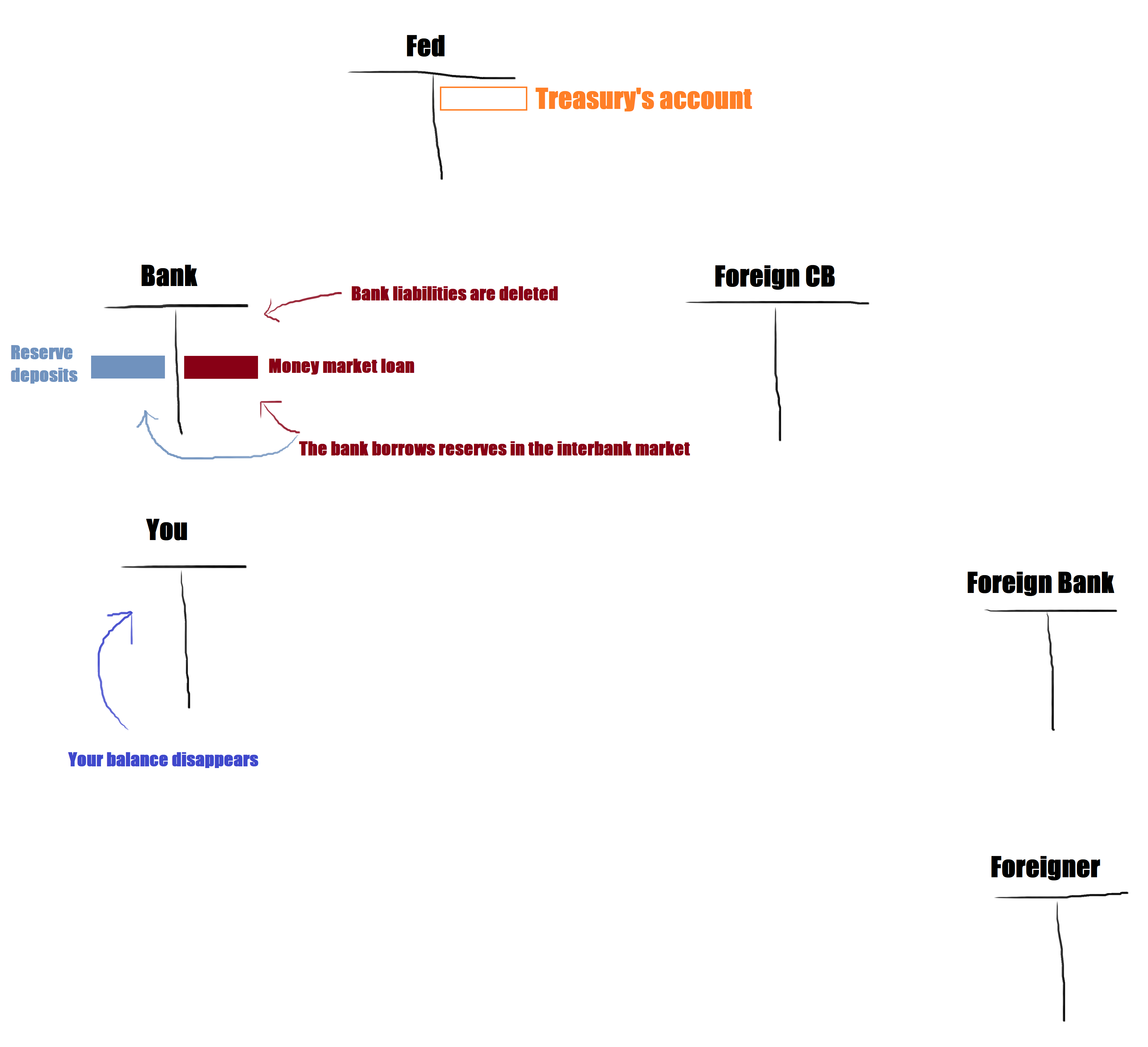
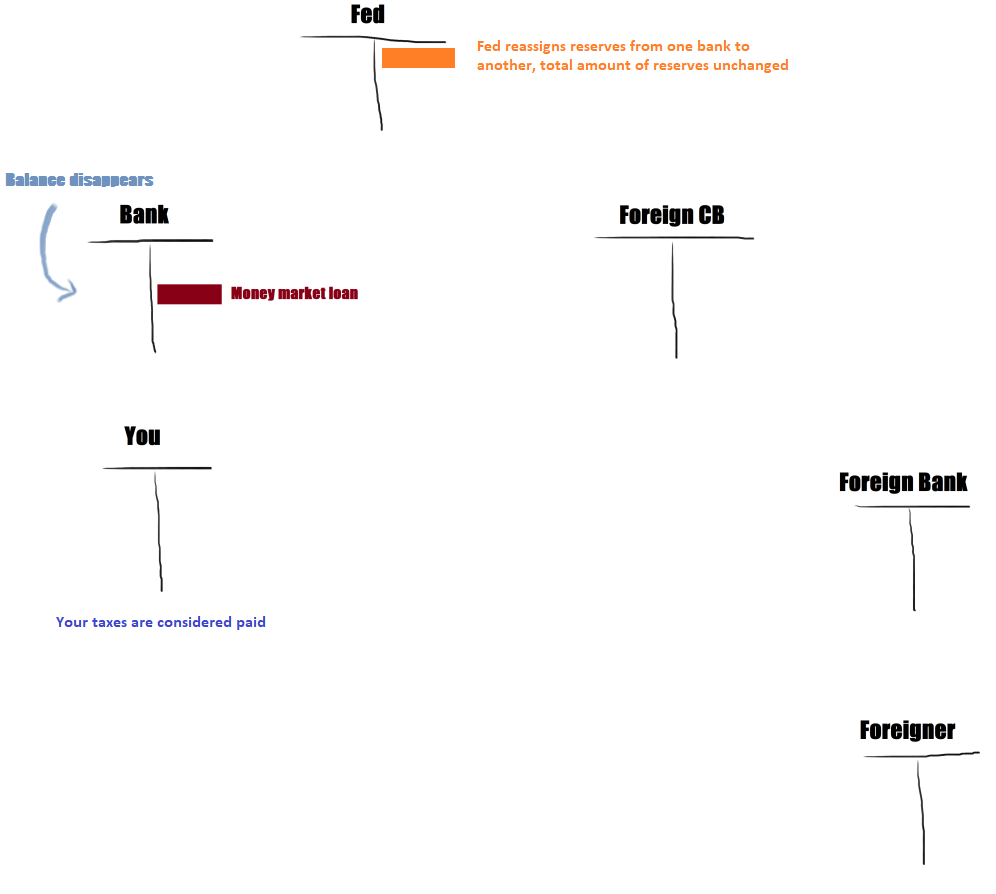
1 pointThis leads us to our first actual post on money and finance, and we should start by asking why is this a necessary topic. Alluded to above, the theory most people have been taught about money is false, and after a 40 year fight the central banks are acknowledging this fact. This means that the arguments and assertions most people make are often, unknowingly, incorrect. Let's start by covering some useful facts: most large nation states don't have reserve requirements. And, the money supply is not created by banks accepting deposits first and then lending them out. Instead, banks create money when they issue a loan, and no pre-existing deposits are required to issue that loan. The bank creates money when it writes entries on its balance sheet. As such, money is technically two things at the moment it is created by a private bank or money creating entity, such as a non-bank financial intermediary (aka shadow bank): an asset (A) and a liability (L). These two components are bound together by the legal contract which creates them, such as a mortgage loan created by a bank and signed by a borrower. When the liabilities are returned to the contract, the asset and liability are then deleted from the balance sheet of the bank (destroyed). Money pops into and out of existence according to the lending practices of banks and loan repayment. There are multiple kinds of money, globally organized in a hierarchy of importance, for example: $ Federal Reserve Deposits $ Commercial Bank Deposits $ Eurodollar Bank Deposits $ Private contracts When people use language like: "there is insufficient reserves in the system" or "reserve liquidity is too low" they are talking about a specific form of money, Federal Reserve Deposits. These are just like the deposits you and I have in our commercial bank accounts, except that they belong to account holders who bank with the Federal Reserve (checking accounts of the banks at their bank, the Fed)--you and I cannot open reserve accounts at the Fed, we cannot hold reserves in digital form. However, cash is essentially a reserve deposit in physical form, and we can hold cash. Similarly, we can open accounts at the Treasury (https://www.treasurydirect.gov/) to purchase US Gov securities directly, which is very similar to being an account holder at the Fed (you become, essentially, an account holder at the Treasury which is an account holder at the Fed). The hierarchy of money is a outcome of historical circumstance. A great source covering this topic in detail is this book here: https://www.amazon.com/Battle-Bretton-Woods-Relations-University/dp/0691162379/ref=sr_1_1?crid=12M70BIUIWIBJ&keywords=battle+of+bretton+woods&qid=1652974414&sprefix=battle+of+bretton+woods%2Caps%2C160&sr=8-1 In short, the US deposed the UK through clever finance and replaced the Pound Sterling with the US Dollar as the primary means of all financial settlement in the early 1940's. If you had to read one source in this thread, The Battle of Bretton Woods would likely be the most applicable to military history and education and is the easiest to read. We visualize the hierarchy very simply with a set of balance sheets corresponding to each bank, and their account holders. Here you can see your account at your bank, which is simply an entry on that bank's balance sheet. Similarly, your bank is account holder at the Fed, as are foreign central banks and some foreign banks. What you see in your account is just the bank's liabilities they have assigned to you. These numbers do not represent physical objects or cash at the bank, or any bank, they are just numbers in the liability side of the bank's ledger. For matters about the government's debt level, taxation and government borrowing, we are interested in the account at the Fed for the Treasury, called the Treasury General Account (TGA). You can see the balance in the TGA at the Fed, you can always see the TGA at the Fed online, pirctured here below: When you pay taxes, bank deposits in your account are deleted from your bank's ledger. And, reserve deposits in your bank's account at the Fed are also deleted. The Fed then marks up the TGA. Subsequently, taxation removes reserve deposits and commercial bank deposits from the system. We can say that taxation reduces liquidity, as it reduces the total amount of 'money' that people can use for payments from the financial system and places it in the TGA. Running a gov surplus thus reduces the capacity of the private sector to make payments, which increases fragility. Running through the balance sheets of a tax payment: your bank deletes its liabilities it assigned to your account, and your balance disappears from your account. The bank then borrows reserve deposits in the interbank market which it will use to complete your desired payment to Treasury. -------------------------------------------------------------------------------------------
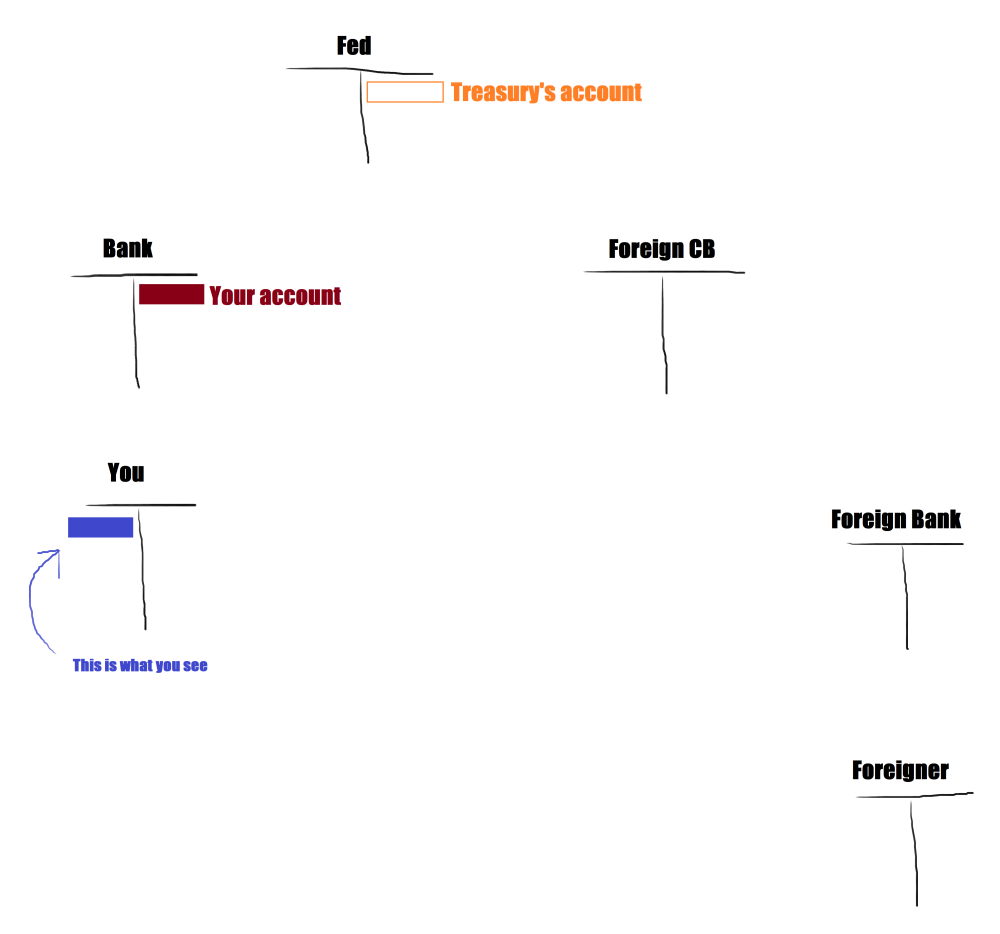
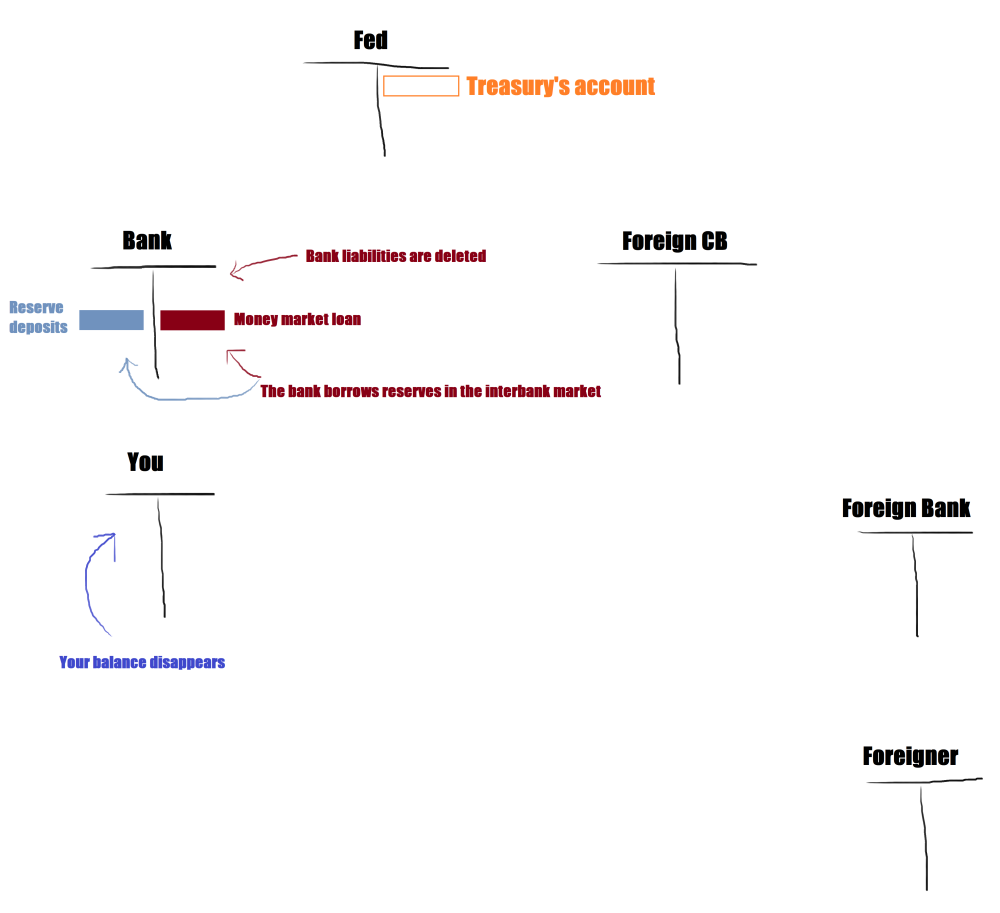
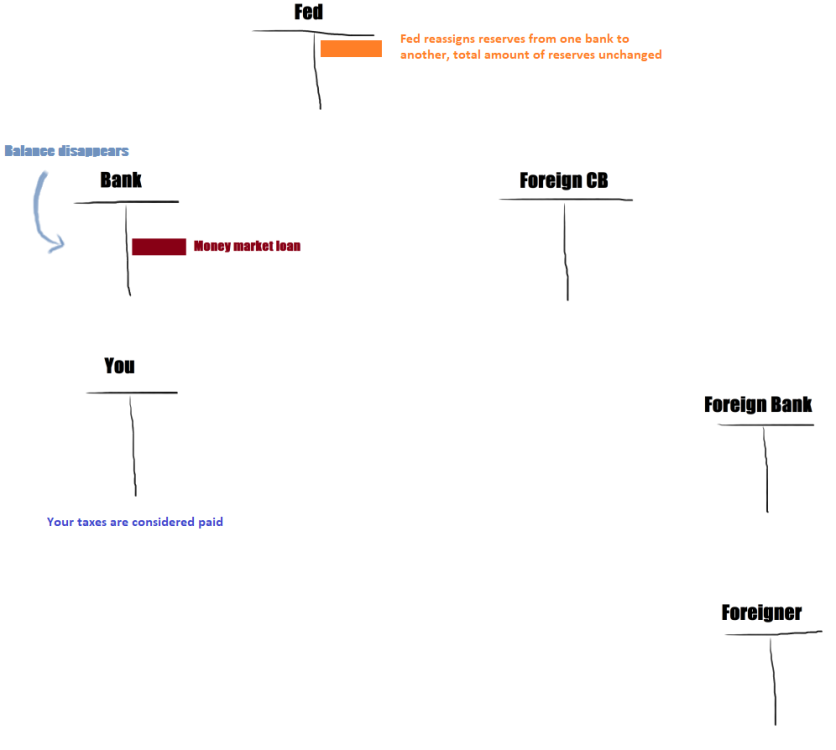 1 point
 -
Sorry Banzai, maybe too harsh a statement and I should have said "science and medicine have confirmed what logic and reason have long argued for when human life begins". The point is we all know, and have for a really long time, when human life begins. Without deliberate intervention, that fertilized egg (not the sperm or the egg individually) will develop into a screaming infant, a precocious 3 year old, an argumentative 14 year old, and finally a douchebag 30 to 60 year old arguing on the internet. We are now left with trying to come to a political decision on when we as a society affirm "personhood" status (with all rights there bestowed/attached).1 point
-
If we were created, then humans have intrinsic value simply because we are human and were created in the image of God. The biologically indisputable fact that human life begins at conception confers the automatic intrinsic value of human life at the point of conception. Thus the pro-life side should not and cannot compromise. This both creates a problem and, at the same time, greatly simplifies the position of the pro-life camp. No compromise is morally permissible. The problem of life and value with the pro-choice folks is that they ultimately have very little, if any, ground to stand on with life and value, which is why they will always call the baby a "fetus". Fetus is simply Latin for 'young' or 'offspring' and the pro-choice group has picked that term because it has less emotion; it is an intentional obscuration by obfuscation. Ultimately, if our ancestors evolved from single cell organisms in a primordial soup, then the only value life has is the usefulness of that life from the beholder's perspective. Any other value is illogical with the theory of evolution and is simply stealing from the Christian worldview. If humans were not created, than what makes our lives any more valuable than any life? For that matter, what makes the normal human cells in my body more valuable than cancer cells? Only because they are more useful to me because they keep me alive. Such a viewpoint is incompatible with civilized society, but that is the logical end of the pro-choice argument. Similarly, the viability argument seems like nonsense. The left may argue that human life begins when the "offspring" is "viable", but it is absurd to base a definition of something so important to what we are based on something that can change. What is "viable"? Is a premature baby viable at 20 weeks because some have survived with modern medical care? In 20 years will the new standard become 20 days because of medical advances? Is a two year old not viable because he wouldn't last a week without parents actively caring for him? I used to be pro-choice because I looked at the issue with an excessively cold 'what is the best for society' viewpoint. From that viewpoint, unwanted babies are not best for society as a whole, so abortion should be legal up to the point of delivery. That viewpoint, by the way, is largely the viewpoint that got Planned Parenthood started and placed in primarily poor minority areas. Once I became a Christian and re-evaluated the issue with a Christian worldview, I realized I was looking at the issue from the wrong direction and flipped my position 180 almost overnight.1 point
-
1 pointI disagree, we need to modernize training and sims are a great way to do it. I’d rather do many FTU scenarios in a sim than airspace. And yes, I survived the great “how can they fly a jet if we don’t make them do fix to fixes” and “no formation landings? We are all gonna be speaking mandarin”1 point
-
1 pointThere’s a line…and Demonrat crossed it. His recent posts and subsequent replies have been deleted.1 point
-
1 pointTo get back on track, good video of another set of Russian BMP crews getting snuffed out.1 point
-
1 pointFunctionally, NATO served the purpose of keeping the European nations from fighting one another. The US underwriting their defense allowed them to focus on trade. The post WW2 economic boom was what happens when people don't fight and instead trade. The US benefits from NATO existing, but not directly from being a member. Being a member may be a pre-requisite for it to functionally exist, but that's a different point.1 point
-
1 pointYou both miss my point completely. Russia over the past two months has presented Exhibit A of why that alliance exists and should continue to do so, and has likely completely upended the past 30 years' worth of arguments you're both sticking with. It's not all over yet, based on the last 30 years your points are not without merit and the follow through from Germany and others is obviously key. But look at how the world was reshaped post WWII, and how prosperous that has been for everyone, and then take a look at those who lived under the Soviet boot and see the deep scars there. Pretty sure I know how I'd like the world to be molded. Don't cede that, or you'll be back again.1 point
-
1 point'Cause being the biggest player in the game means you get to make the rules. I like living in a world where the United States is THE leader when it comes to influencing global values, especially when Russia and China badly want to replace us in that regard.1 point
-
What about calling the restaurant directly and seeing if they’ll text you a pic?1 point
-
1 point1 point1 pointYou got the memo on no black boots and calling it a “heritage room” too right? Also, don’t look for porn in the shitters anymore…1 point1 pointGlad to hear all is well on the outside. The AF is finally deciding they can’t outsource all their IT and just do Cyber Ops. Also figured out MDTs were too expensive to have at every base. Bottom line is they still don’t know where we are going, but no one likes where we are right now. https://www.afimsc.af.mil/News/Video/videoid/838126/ That video gives me hope that AF leadership has identified some of the problems. Now it’s just a matter of prioritizing the solutions.1 point1 pointWe did general admission last year and it was mixed. My biggest piece of advice is to rent an RV and camp at Highway 71 RV park. Has a pool and full laundry/shower facilities. Made it a nice end of day social event. Second piece of advice: go with Pat’s Public Parking. They do free food and booze…good stuff. We won’t be attending any races in person this year. If you do COTA, make sure you pay for seats or walk/free shuttle yourself to turn 6+. The masses congregate around T1 and the ped bridge before T3. The “trek” to 6 and beyond will mean that you can actually find a place in GA to sit. That, and it won’t take an hour to get a cold beverage.1 point-3 pointswere getting played by ukraine. how many more BILLIONS are we going to give them?-3 points