
Leaderboard




Popular Content
Showing content with the highest reputation on 10/21/2020 in Posts
-
5 pointsAll political stuff aside, if you don’t like flyovers then you’re a commie pinko fuck and I don’t like you.5 points
-
3 pointsSorry, increased government involvement is not the answer either. Implement your suggestions ("Get rid of the admins, make it criminal to price gouge on materials, encourage the production of generic drugs, and provide incentive to non profit insurance companies") then sit back and watch our health system crumble. It's an industry, and one that requires money to flourish. In my six decades on this planet I have seen great medical advances that have extended and better the lives of many people. In the 1970s, cancer was pretty much a death sentence; now the majority of people survive it. The progress took a lot of money, but it also saved a lot of lives. I have seen socialized societies work. Germany is a great example. The roads are perfect, the air clean, and the quality of life is high (I would say higher than this country). All it cost the Germans was a large percentage of their income and many rights and liberties. If you want to pay up to 45% in income tax, you too could enjoy the benefits of the government spending your money as it wishes. But that is not how this country was founded. It was built on the inalienable rights of the individual. Our government, especially at the Federal level, needs to be less involved in our lives, not more. If Biden wins the presidency, that will not be the trend...3 points
-
3 pointsDefine ‘quality of life’? Paying >60% taxes doesn’t constitute quality of life for me and many Americans. However many in those countries are happy so like the old saying goes “one man’s trash..”. That’s the beauty of America for the most part; freedom and liberty to make your own choices and spend your own money ...because god help you if you think our government can spend it more effectively.3 points
-
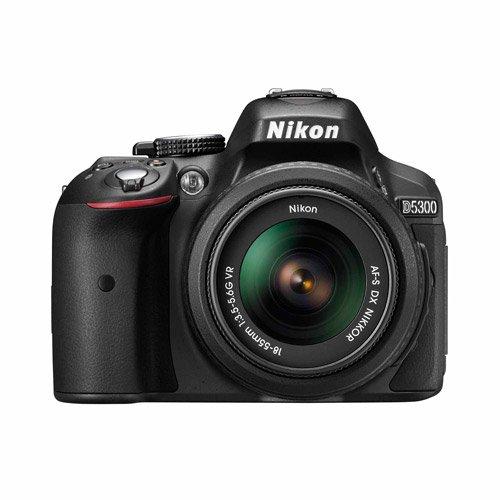
2 points2 points2 pointsFor those like me that are not good with a camera, I use a $4 iPad stylus to operate my iPhone camera.2 points2 pointsPut simply, because of the cost. Healthcare is inordinately expensive. The majority doesn't determine what is and is not a "right." Rights pre-exist government - they're not things that we all agree we should collectively pay for. Not necessarily, but I am ok with it when people don't take care of themselves and become a burden on society. What is the balance? Take a look at many other modern cultures in the world - or non-modern for that matter. They do not look like us. From google (1st hit via the CDC: https://www.cdc.gov/nchs/products/databriefs/db360.htm#:~:text=Among men%2C the prevalence of,those aged 60 and over.😞 "Among men, the prevalence of obesity was 40.3% among those aged 20–39, 46.4% among those aged 40–59, and 42.2% among those aged 60 and over. Among women, the prevalence of obesity was 39.7% among those aged 20–39, 43.3% among those aged 40–59, and 43.3% among those aged 60 and over. None of the differences by age were significant." Well over 1/3 (approaching 1/2) of Americans are medically obese. Let that sink in. Walk around Japan or Poland and you'll notice we do not look like them. They are thin. They are healthy. There is no way in hell I'm interested in paying for end of life care for approximately 1/2 of America, when it's visibly provable that they do not care about themselves. I'm not even interested in hearing arguments about it. I'm a hard "no." Now, we un-screw our food system and the way we eat and feed ourselves in this country and shape up our act, cool, let's start the conversation again. Shack. You're 100% correct. Should the government pay for me to open a newspaper or buy me a bull horn? Freedom of speech is a right!! What about a gun. Right to bear arms! "Should" they is a fine question - they don't have to. The argument is that they do because it makes a career in the service of your country more attractive. Take away that "right" (benefit) and you'll likely see recruiting and retention decline. Military healthcare is not a right - it's part of the compensation you're being given as part of the contract of your service. Same goes for your family. Half of America is OBESE!!! This kid is 10!!!! (Edit - he's 4). Let's fix this first. No it's not all the problem of obesity, but this is only one (1) problem that contributes to the health crisis in our country - there are many others. It is no until we fix some other underlying issues first. I'm not interested in forsaking people who truly lose the health lottery in life. But we MUST differentiate between those, and just blanket providing hundreds of thousands of dollars of care at the end of life for every American.2 points2 pointsDriving is a privilege not a right, the Government provides the infrastructure as in roads and bridges to grow economies and commerce. We to have follow the rules of the roads, if we continually violate the rules you lose your privilege. Does that stop you from driving, no, but the penalties of getting caught are severe. Just like our FAA issued Airmen certificates, it says "Qualified to Exercise the "Privileges" of a pilot or mechanic. If we fly drunk or sign off shoddy work we lose that privilege .2 points2 points2 points2 pointsThere are valid statements above from both sides, but here’s what really matters in my opinion: total fabrication or not, shady or not, the media has no problem plastering shit on trump/other GOP all over the place, but when the same level of shady shit is available on hunter/other Dems, it’s shut down by chairman mao. Regardless of the authenticity/accuracy of smear information, either allow it all (and let the consumer form their opinion), or take your “moral stand” and suppress it; your call media. But when they do one for the Dems and the other for the GOP, it’s very disturbing and frankly everybody, regardless of party affiliation, should acknowledge this bullshit. It’s still suppressing free speech even if you disagree with the content/statements, and that’s wrong.2 points2 pointsIt is perfectly clear what it does, it's all right there in the article: "Its container-centric management environment orchestrates computing, networking, and storage on behalf of user workloads and allows for the deployment of complex microservice based applications with complete automation." To me, this sounds like it was written by the greatest OPR-bullshit artist of all time to describe the mail sorting room at Initech.2 points1 pointIn a related story, I found this image of Huggy pre-flighting his iPhone.
 1 point1 pointHow does my pointing out hat socialism and paradise don’t belong together allows you to assume I’m trying to act superior? Then you continue on and agree with me.....what? Now are you implying those countries are socialist? They aren’t. Like was previously pointed out if you want the government to run more aspects of citizens daily lives then they lose freedoms. And the government decides a lot of things for individuals in socialist countries. I like my freedoms. I seriously don’t get why people want our country to change into something it’s not because some other country may have it. Our country is amazing. Why wouldn’t you go there if you think it’s better instead of trying to change people and a system that doesn’t want to change? I don’t care if it hurts or helps as a whole in your opinion. That’s just it, I don’t want you or others deciding what’s best for me. Are their socialist countries in Europe? If so which ones? Also (for negatory) no system is free from infallible humans. It just happens to be a better system because for the most part it is founded upon consensual agreements and freedoms. Which is a large reason it is completely unique in the world and another reason we live in the best country in the world.1 point1 pointWell, the PACER CRAG article for KC-135s in the late 90's said almost the same thing. We'll see if they mean actually re-trained through UPT as pilots or more of a long-term billet shuffle. I'm betting there will be less re-training than you think.1 point1 pointAn interesting day yesterday. I learned (no thanks to Facebook or Twitter which continue to either slow or completely block any info on this.): - That the now infamous Hunter laptop - public because he left it there and didn't pay an $85 repair bill - was subpoenaed for a grand jury by an FBI agent who specializes in child porn cases. - That Guiliani turned over to Delaware police photos of underage girls from the laptop. True, it is unknown to me if those images are of the gross, illegal kind. - Emails to/from Hunter about inappropriate situations regarding underage girls. - That a former business associate of Hunter's was removed from the general population of the prison he was incarcerated in yesterday. Same guy who is, apparently, providing information about Hunter and others regarding some Indian casino tax scam. The one where two of the three partners went to jail, but only Hunter wasn't charged. - That the pictures of Joe and Hunter with Kazakh business partners of Hunter's puts paid to the Joe claim "of I knew nothing of his business dealings." As did the numerous Air Force Two accompanied trips. As well as the numerous pay-offs to "The Big Guy." - That Joe Biden considers Poland and Hungary as "totalitarian regimes." As a double hypothetical, if Biden wins, does he immediately pardon Hunter or wait until his last day as other Presidents did before helping out family? It's certainly legal to do so, but I wonder if Kamala would like that? I admit I'm not contributing to the healthcare in America theme running, but I also try not to tilt at windmills. It has never ended well either in fiction or in real life.1 point1 pointSurprised this wasn't posted. A C-17 made another gear up landing.1 point1 pointTo your point of low income and food quality, it’s an excuse. It’s easy to eat unhealthy and cheap, no argument there, but it’s also not that expensive, or really that time consuming if you plan. The cleanest diet I ever had was in college getting into competitive body building and living with whatever my ROTC stipend was ($400-$500? I don’t remember) for food, gas, beer and whatever else I was buying. Buying food in bulk, looking for sales, coupons, finding different seasonings, etc, it’s very doable. I was eating a very healthy (2500 ish daily calories) high protein diet for a $200, maybe $300 a month (it was while ago) and only cooking once a week, for about a hour to meal prep. Cut the proteins down for average Joes nutrition requirements and substitute in healthy carbs and there is some more savings. With different seasoning and flavors a lot of what I made was pretty tasty too, not greasy pizza or Chik Fil A good, but we still try to cook healthy ish using some of my old recipes and my young kids eat it without protest. As to the rest of the health care topic, I think it’s one of our most complex and totally messed up issues we face. A lot has been addressed here, but the American diet and our activity levels are a major player. Our insurance scam of system is totally f’d up. You ever look at those statements of what Tricare is billed and what they actually pay? (It’s not just Tricare, it’s all the insurances) How medical practices bill seems criminal to me. Price gouging and over inflated costs in the medical field absolutely blow my mind. The sociology/psychology/economics is absolutely fascinating to observe as modern medicine has evolved. The human nature in us wants to keep our loved ones and ourselves alive as long as possible. But at what point is fiscally irresponsible? It’s not a easy topic to talk about, it’s easy to jump right to “money doesn’t matter, do whatever it takes” and that’s not necessarily wrong to think that way. It’s pretty understandable to think that way. On the flip side, does it make sense to keep yourself or grandma alive a extra couple years if it means it will take several generations for the family to fiscally recover? If you go down the socialized/mass subsidized route, how much can the tax payer coffers cover before it cripples the economy/government? Which leads to the discussion above about when Uncle Sam writes you off and wishes you luck. Regardless of who pays the bill, healthcare isn’t cheap. Even if we fix the “glitch” and get overall costs lower, they still are going to be expensive. Much like aviation, the operators are expensive, the equipment is complex/expensive in both initial cost, operating cost, and maintenance cost. Society as a whole is going to have to come to general consensus on this. In a lot of countries it seems government funded has been decided upon, and that works for them (there seems to be some regret depending on who you ask, example being the wait times in places like Canada and the EU) unfortunately the US system seems more jacked up than some of our first world friends. Disclaimer, I’m not here to start a internet fight, tell you my ideas are right and yours wrong, I have all the answers, or change your mind about your views (except the healthy eating one, totally doable on a budget). Just points/thoughts for everyone to ponder as we discuss the issue and move forward. 🍻 Cheers1 point1 point1 pointIs there a MOA or restricted area that’s located roughly where you need AR? If so, that’s another option in lieu of an ALTRV.1 point1 pointIt's not necessarily mandatory. If you can demonstrate that you have a certain amount of money, insurance is optional depending on the state. The rule is there to protect other drivers from your mistakes. Not to protect you from anything at all. In either case, you have a choice.1 point1 pointWish I had his hair. Glad I don’t have his wild ideas or religion. Don’t know what you are implying with Matt And slack line. But I’m hoping you aren’t calling him a sexual deviant and woman abuser. Let’s stay above the personal attacks.1 point1 pointAlso in socialized health care a board can decide if you need the medical care or not or prioritize others health when you are deemed to be to old or too close to death, etc etc to get any long term value from the procedure. That’s how social medicine works. It can’t be readily available to everyone if it’s good. Think about that loved one in your life that has passed on or not and somehow benefitted from a life saving or altering procedure that they might not on the onset needed. Like someone who has a terminal illness getting an unrelated major proceedure that allows them to live a few years more under their terminal illness. In socialized Medicine a board can opt out of that procedure severely reducing the remaining quality of life or even ending the life early. No thanks. Socialism sucks. Capitalism allows us to take advantage of everyone’s talents for all involved’s benefit.1 point1 point1 pointAccording to the Coronet guys I work with, for a good time call (703) 904-4426 or DSN 725-3331.1 point1 pointMecca for ALTRV's is the Central Altitude Reservation Function (CARF) - the gurus who actually do the work. https://www.fly.faa.gov/carf/ Link only has an e-mail and it's been way too long for me to have a phone number for them. Next best bet would be finding the phone number for the National Air Traffic Services Cell (NATSC - a DoD (USAF actually) office co-located in the FAA's ATC Command Center and shares offices with CARF. Sorry, don't have current phone numbers.1 point1 pointBut looking cool keeps flames off of you. Don’t you know anything?1 point1 pointWell, every DNI and director of our intelligence agencies are President-appointed. So every one of them is useless? Who would you trust then to determine if there is Russian interference? Adam Schiff? It’s a wild story, but Hunter Biden wasn’t exactly on the straight and narrow during the time period this happened. It’s also worth noting that the shop owner didn’t immediately call Giuliani. He called the FBI, who seized the computer, never called him back, and *according to Giuliani* was told to “keep his mouth shut.” After a period of time he started reaching out to people who eventually put him in touch with Giuliani, where he gave him a copy. I’m not taking any of this story as fact until I know more. But there’s a hell of a lot more meat here than the Ukraine impeachment. We have actual emails that corroborate a quid-pro-quo when paired with Biden’s comments to the CFR. Sure, you guys are upset at Trump playing golf and taking trips. I’m not happy about it, but it’s legal. Biden using his position as VP to enrich himself via international sources is a crime. They’re different. They might feel equally as outrageous morally, but you can’t put Trump in prison for playing golf. You can put Biden in prison for getting a payday via the Chinese. Investigate it. Follow leads. Test sources. It’s literally your job as media. The fact they won’t even do that is outrageous. Our media was terrible before, but this might be the breaking point. They’ll investigate random sources if it’s against Trump but God forbid they do the same to the other side.1 point1 pointBiden's "kid" is a 50-something year old grown ass man. I believe he's a grandparent for Christ's sake... But those arguing against his being included in the mud fest sure seem ok with anyone with a last name of Trump being slimed, including a teenager because they are related to "bad orange man" so it's ok to do so. That said, although there are some other financial shenanigans Hunter is likely to see prison time over (look for an Indian casino thing along with one business partner in jail, the other just had his sentence confirmed after appeal), cashing in on a famous last name is not likely one of them. Where the criminal acts come in is with whatever federal officials aided/abetted/contributed/were part of a conspiracy as part of that cashing in. "You got six hours to fire the prosecutor or you aren't getting the billion dollars" isn't a good look as part of that. Neither is using Air Force 2 as your calling card to score personal financial success. The veracity of the laptop and contents have been more than proven to include, released today, a physical receipt left at the repair shop and signed by Hunter. Biden is now officially hiding in his basement since yesterday. For "debate prep." That sure is convenient that the press isn't hounding him over this scandal and letting him prepare. I'm sure they'd give Trump the same courtesy. Not to mention the deletion of foreign policy as a topic as agreed to previously by both candidates and has been historically precedented in these debates. Wonder why that deletion? Finally, and the big takeaway from Hunter-gate, is the deliberate squelching of a major news story by supposedly "neutral" IT providers. By taking their stance, both Facebook and Twitter have declared themselves as publishers. I hope the FCC and/or Congress act accordingly. edited to add: Talking head lawyer Jeffrey Tobin of way too many liberal outlets and impeachment cheerleader was "given time off to deal with personal issues" after being caught spanking his monkey on a business zoom call. Oh, and our deficit is now 3.1 trillion this year. What could possibly go wrong?1 point1 pointMan, the hypocrisy on both sides is disgusting! You guys crying about unfair coverage kill me. Simply depends on who's in power at the time. Suddenly, everything about Biden is verified and true, but when equal sources in similar positions, and people who literally just worked for Trump talk about his shadiness you guys just say #fakenews. Gross pot calling the kettle black here. Let's just keep the discussion to what policy should be. I actually learn from people on here when they put forth well thought out ideas and articulate messages vs the constant defense of their side in spite of gross evidence damning both sides... Sent from my iPhone using Tapatalk1 point1 pointWho independently verified it? I can't find anything online about verification, only the opposite that no one can verify. Are you saying that if I claimed to have a laptop of yours, and I started posting private pics of you and videos of you smoking crack you wouldn't have your lawyer give me a call? What kind of world do we live in where a large law enforcement agency comprised of cops and headed by a trump-appointee is left leaning? Do you even listen to yourself? My bad, he relinquished control but didn't divest, and still funnels millions of taxpayer dollars back into his own pocket by taking everyone to his resorts and enriching himself. Just like the founding fathers wanted. Also you dodged that you can quite literally pay to have access to Trump through Mar A Lago. Who should I trust? A millionaire who lies repeatedly when it's convenient to him and repeatedly disrespects the office of the presidency, or a lifelong public servant who has been under public scrutiny for 40+ years and the worst you can dig up on him is dirt about his son...1 point1 pointI think anybody who lost a son, daughter, father, mother, brother, or sister for no purpose or benefit to national security would disagree. An Afghanistan presence isn’t even close to a deterrence for major powers in that part of the world, and certainly has no real quantifiable objective or reasoning behind it. People’s children who weren’t even born when this shit started are going off to get killed and kill people in Afghanistan who weren’t alive when it started either. We shouldn’t have a single American in that place.1 point1 pointhttps://apple.news/A1vFDoROfTw67ktJ6TCgOhw I get it, NBC is horribly biased, and I’d even agree with you on that, but read the words, the direct quote from this GOP senator. This is the danger of a Trump presidency. Trump is the guy, over the last 4 years, who has driven this country further left. Supporting this narcissist’s behavior, I fear, will ultimately play a huge part in the downfall of this country if we don’t figure a way to come back to center on many issues. Totally agree with above posts about the economy and its mismanagement needing to remain the focal point of discussion. Problem is, Trump has been so incredibly polarizing that it’s impossible to do that. He bares most of the blame for that because he can’t stay focused for longer than 2” on anything substantial. He has allowed elements of the left to take the discussion away from where it belongs because he does/says stupid things. Dude literally retweeted the Bee (think Onion type satire) because it supports his narrative... Come on! My fear is that all of you who have thrown your support behind this guy for so long are just contributing to a growing divide. Instead of standing up to the crazy crap he says/does while supporting the policies you like, this country has enabled him to keep distracting from the important issues. Don’t get me wrong, I feel the left holds a lot of the responsibility for this as well, but he’s the big kid in the room, people are gonna follow his lead... Sent from my iPad using Tapatalk1 point1 point1 point1 pointThis is an important difference between the D’s and R’s right now. Dems know better than to nominate a candidate who is far outside the mainstream. Republicans, meanwhile, are clamoring to board the crazy train and leave their party’s traditional values behind. And I’ve got to agree with Drewpy here. While Joe and Kamala certainly espouse liberal values, they are both well within the mainstream. The idea that they are radical socialists (or controlled by radical elements) is simply untrue and is an obvious conservative trope attempting to scare people away.1 point1 pointAt this pace I don't think Hunter Biden is going to win this presidential election thing. Either way I'm going to hold judgement on what the Feds say on the email. Initial look it appears to be fake news, not to mention the story surrounding it being "found". Imagine that.1 point1 pointSo the FBI has had his hard drive for almost a year, and this is what comes out of it? Dude introduced his business partner to his dad and some raunchy videos of himself on his hard drive? Lock this dude up! Why is it that Hilary, Obama, Biden and his son are all guilty of crimes, and yet with control of the executive, judicial and the majority of the legislative over the last 4 years you haven't been able to scrape together indictments against these criminals? Yet in the meantime almost all of Trump's inner circle have had charges brought against them for one reason or another? Do you really think there is an all-powerful deep state cabal protecting these people? If they are so powerful why is the democratic party so weak all the time? None of this makes any sense old man.1 point1 point1 pointRecently declassified photo we have in the squadron. 2020-09-09 14-57.pdf1 point1 point-1 pointsAnd A-2 jackets aren't fire retardant, yet plenty of aircrew fly with them. Silly debate with a nonner.-1 points


















Account
Navigation
Search
Configure browser push notifications
Chrome (Android)
- Tap the lock icon next to the address bar.
- Tap Permissions → Notifications.
- Adjust your preference.
Chrome (Desktop)
- Click the padlock icon in the address bar.
- Select Site settings.
- Find Notifications and adjust your preference.
Safari (iOS 16.4+)
- Ensure the site is installed via Add to Home Screen.
- Open Settings App → Notifications.
- Find your app name and adjust your preference.
Safari (macOS)
- Go to Safari → Preferences.
- Click the Websites tab.
- Select Notifications in the sidebar.
- Find this website and adjust your preference.
Edge (Android)
- Tap the lock icon next to the address bar.
- Tap Permissions.
- Find Notifications and adjust your preference.
Edge (Desktop)
- Click the padlock icon in the address bar.
- Click Permissions for this site.
- Find Notifications and adjust your preference.
Firefox (Android)
- Go to Settings → Site permissions.
- Tap Notifications.
- Find this site in the list and adjust your preference.
Firefox (Desktop)
- Open Firefox Settings.
- Search for Notifications.
- Find this site in the list and adjust your preference.