
Leaderboard
-
ClearedHot
Administrator5Points5,038Posts -
BashiChuni
Supreme User5Points2,644Posts -
gearhog
Supreme User5Points1,704Posts -
HeloDude
Super Moderator5Points3,540Posts




Popular Content
Showing content with the highest reputation on 05/17/2024 in all areas
-
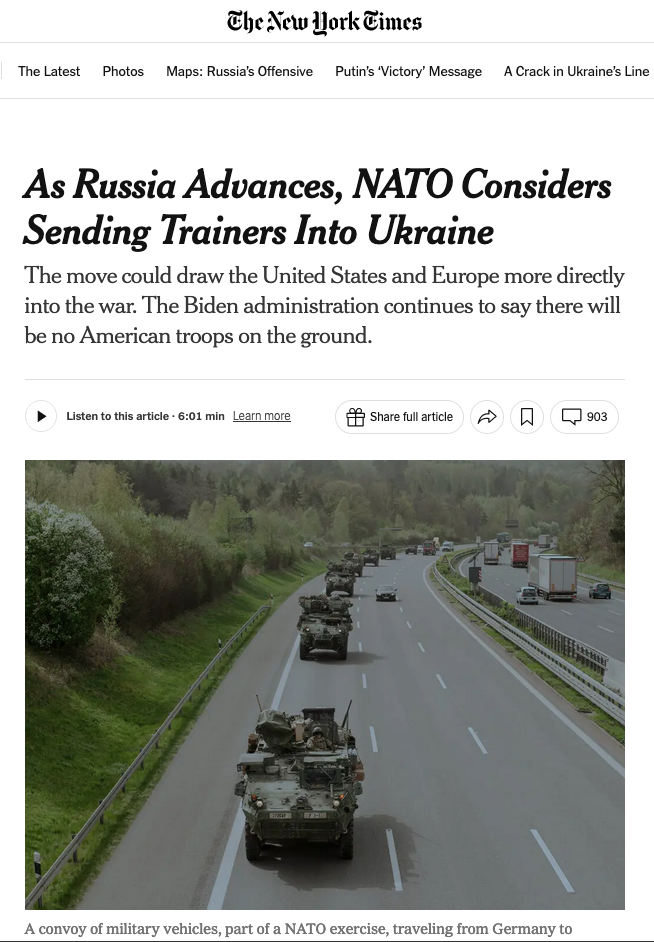
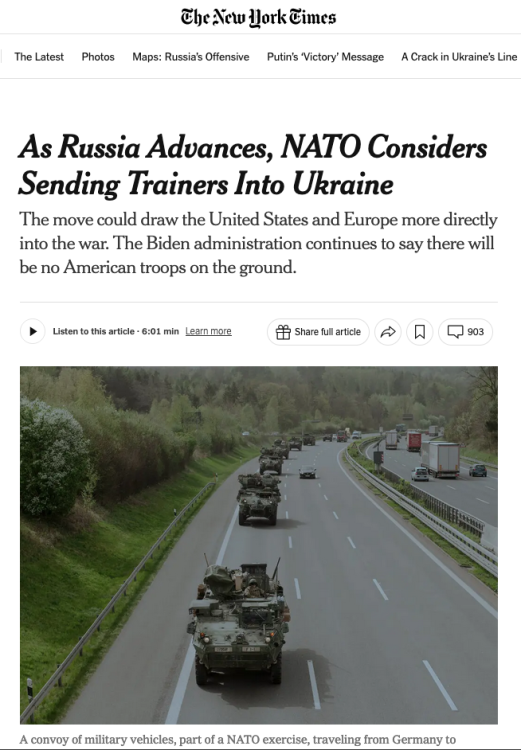
3 points3 points3 pointsYeah, odd that an army that has been starved of ammunition has been unable to stop hordes of convicts and conscripts and turtle tanks being thrown at them.3 points3 pointsI did not appreciate the tone of the Sheriff’s press conference, when he basically justified the murder before showing the video. Pointing out with emphasis the lame excuses that will be given for the ridiculous choice to unload your gun into someone who is no threat, in their own home. Just say you are sorry, that you feel horrible for the family of the victim, that you fully support murder charges, and that you are resigning because your department is full of trigger-happy douche-canoes.3 points2 pointsI mean, let's put it in perspective: the discussion of land lost in the last year is 0.2% of Ukraine's land mass (As of this morning at 6am: 552 sq miles out of 233,062...Source). I am sure any countries leader worth a damn would say their definition of victory is to regain ALL invaded territory. It isn't very realistic for him to publicly say he is okay with Crimea being the sacrificial lamb. Behind closed doors in a negotiated settlement? Maybe it'll be different. But I can't fault him for his patriotism. I think well equipped Ukrainians can regain land from the Russians, after all, from June to December they liberated 199 sq miles. Russia has "only" occupied 294 sq miles from this April to May with their major offensive which coincided with Ukraine's major artillery shell shortage. Meanwhile, an underequipped Ukraine is still managing to schwack oil depots and major infrastructure in Novorossyisk and a refinery in Tuapse, not to mention the attack on aviation assets in Belbek Air Base, to name a few recently. We will see how they do after the next shipment of equipment arrives.2 points2 pointsRushing to judgement goes BOTH ways. How in the world can you say @flyusaf83 is rushing to judgement without saying the Police Chief is rushing to judgement as well? I hear what you are saying and fully support the approach of due process, the problem is that in 99% of all cases of suggested police misconduct the first reaction of leadership is to defend the officer's actions and that is just as bad. The Police Chief should not succumb to an admission of guilt NOR should he auto-default to justifying the officers actions. Sadly, police departments make this process PAINFUL. They always investigate themselves then the public has to draw out the truth/facts via FOIA and litigation. Luckily FDLE has the hammer on this one.2 points2 pointsIf only we had this a few years ago, then we wouldn’t have failed in Afghanistan.2 points2 pointsI think getting bent out of shape about this stuff is the gayest thing you can do. No one cares.2 points2 pointsThanks for the reminder of why I retired instead of staying.2 points2 pointsNothing Racist to see here. I like her bald head though. Doesn't make her look like a Black Neo Nazi or anything like that. She is my enemy. Fuck her. Edit. Like her, I'm tired of black men murdering my Aunt Julia for no reason. I'd call that failing up. https://www.thewetumpkaherald.com/news/reoccurring-nightmare-parole-hearings-force-victim-to-relive-murder-attempt/article_beced49e-2abf-11eb-9e1d-139022db17b7.html The cool thing is Oprah did a special on the guy who pulled the trigger, Benjamin Oryang. She praised him for being a model prisoner but Oprah never once talked about what he did to my aunt Julia Lindsey. She had just dropped off Christmas presents for my cousins and myself at my Grandmother's house as my Aunt had guard (Army) duty over Christmas. My mom had to identify my aunt by her hands, as my aunt's head was pink misted by a high power rifle at point blank range. I woke up on Dec 17 at 0300 hours to my mom's screams. That was her baby sister. She had to identify the body. My birthday happens to be Dec 17. Needless to say, that kinda ruined all of my birthdays since then. Tell that racist Rep. Pressley about my aunt and she will say I'm racist somehow. If the murderers would have asked my aunt for a beer instead, she would thrown them one with a smile. Edit: Here’s a review of that sweet book! Thanks Oprah!2 points1 pointSort of and I should clarify...The accused is always assumed innocent from a legal perspective. However there are some additional burdens/limitations on those holding G Series orders: 1. A commander should never default to public statements of innocence or guilt. 2. Commanders and designated Magistrates (many don't realize that the MSG/CC is also a federal magistrate at some bases), have some limitations and requirements that don't allow for absolute proclamations of innocence. As an example a commander will assume innocence and won't administer punishment without due process with all the protections (representation), the accused is entitled to have. However, they may also authorize pre-trial confinement. 3. Serious crimes outside the bounds of NJP go to a Courts Martial which purposely is usually removed from the commander's purview. I had a bad rape case and the defense convinced the judge to bar me from attending the proceedings. I had flown with the accused for many years so they used that to keep me our of the courtroom. I was never going to attend anyway but it was interesting when the judge sent an the order of to the Wing HQ. Make sense?1 point1 pointI thought there was an A-10 that gunned a raptor in an exercise that had the silhouette, but I feel like putting it on the side of the A-10 was part of the joke. Could be unrelated.1 pointIt most certainly does, and as I stated, I don't defend what the chief of police said; but flyusaf83 is no more right in his statement than the police chief was in his. His suggestion ("Just say you are sorry, that you feel horrible for the family of the victim, that you fully support murder charges, and that you are resigning because your department is full of trigger-happy douche-canoes") is just as wrong as the USAF's tendency to convict those of accusations without due process. I would expect a police chief or sheriff to defend their officers or deputies. In fact, if it was a commander backing one of their accused troops, there would be unmatched praise for them on this forum!1 pointI get your point, but you're recommending basically succumbing to an admission of guilt before the investigation is complete. Not saying he was correct in his statements, but you're rushing to judgment. Due process is still necessary no matter how much "evidence" is presented on social media. Anyone in the military who has been subjected to the "guilty until proven innocent" approach should be very cognitive of that. There's always more to the story...and a process to uncover the truth!1 point1 point1 pointBecause it demonstrates how you are ignoring the many historical examples of asymmetric victory to support a simple and somewhat childish argument of Russia is bigger and is pressing forward, so they must be winning. Did the North Vietnamese win against the US? Did the DRA win against the Soviets in Afghanistan? Did the Taliban win against the US? Did we win against the British? I will not argue the fecklessness of our political class. But we still have an incredible military with incredible weaponry ands intelligence to offer an ally. The very fact Russia hasn't won already, especially after a six month pause in support, is proof that this is not a simple matter of Russia capturing 86 km² of terrain. It's one thing to not want to spend the money. That's simply a fiscal priority. But the "side" arguing against this doesn't seem comfortable with their fiscal position, so they have to twist the conversation into the "impossibility" of success. That's now a military argument that you don't seem able to make effectively. There is a huge difference between "should we" and "can we."1 point1 pointLawman I think we can both agree Ukraine is not winning. So if you want to say Russia isn’t winning then you’re playing word games. what if Russia’s strategy isn’t to capture Ukraine, but to drain them of manpower and equipment? If I had a 10:1 or 12:1 advantage I’d be happy to let the other side fight me in a war of attrition. You speak like you know exact Russian military objectives. In reality you know what we know. OH sorry jk you know secret stuff. anyway BL is Ukraine has no national security implications for the US. We shouldn’t fund or fight in that war. And if we do I wouldn’t want the current crop of US military leaders (who just lost a 20 year war) in charge.1 point1 pointTwo patriots, a series of "tactical retreats", and a strategy of "mobile defense" are the keys to victory. Who knew?1 point1 pointThe next scene of the play waits impatiently behind the curtains: ”NATO allies are inching closer to sending troops into Ukraine to train Ukrainian forces, a move that would be another blurring of a previous red line and could draw the United States and Europe more directly into the war.” history repeats. ————— “While attending the Armed Forces Staff College in late 1964, just as the U.S. Army was gearing up to deploy its own combat forces to Vietnam, Col. Volney F. Warner attended a speech by the Marine commandant, Gen. Wallace Greene. Before he began his talk, Gen. Greene asked his audience of a hundred 100 majors and colonels a pointed question: “How many of you think that U.S. forces should be sent to fight in Vietnam and draw the line against communism there?” Virtually everyone in the audience raised their hands enthusiastically. Then Greene, a decidedly hawkish member of the Joint Chiefs of Staff, asked a second question: “How many think we should stay out of Vietnam?” Six officers raised their hands … hesitantly. Warner was among them.“ “There are a few cowards in every bunch,” quipped the commandant. But those six officers weren’t cowards. They were soldiers and Marines who had recently returned stateside from tours of duty as advisers to South Vietnamese Army (ARVN) combat units. They knew from firsthand experience what the senior leadership of the American armed forces did not: That the ARVN officer corps, like the government it served, was riven by nepotism, corruption, and indifferent to the plight of the peasantry it was supposed to protect. Moreover, the ARVN was fighting a decidedly unconventional, “people’s war” against small units of guerrillas with tactics and doctrine developed by the U.S. Army for conventional conflicts between regular armies. Not surprisingly, it was losing”1 point1 pointKHARKIV, Ukraine -- The situation in Ukraine is so serious that President Volodymyr Zelenskyy had to cancel a planned trip to Spain and come straight to Kharkiv -- the country’s second largest city, which is again in real danger from the Russian advance. “The situation is very serious,” Zelenskyy said. “We cannot afford to lose Kharkiv.” “All we need are two Patriot systems,” he said. “Russia will not be able to occupy Kharkiv if we have those.” do any of you professionally trained military officers believe this guy? As if two patriots are magical fucking fairy dust that will mystically change the tide of the battle as if Russia won’t destroy those patriots like they have previously done. This is a puppet running a fantasy war in his head. It’s always “if only we get weapon system X” or “if only we get X more billions of dollars”. Boys that’s not how war is won. id have thought we as professionally trained military men would have learned these lessons from past failures. https://abcnews.go.com/International/story?id=1102942321 point1 pointYes. We should have been having these negotiations long ago. But people like you have been screaming that negotiating with Putin is borderline treason…the second coming of chamberlain! Russia will not lose this war and delaying negotiations for peace will cost more Ukrainian lives and push the US into a more dangerous position of direct conflict with Russia.1 point1 pointNo, I ask a fair questions and Lawman can’t answer them, nor do I really expect him to be able to. It’s all questionable. But I tend to place more weight on things that are happening and trending over things we are hopeful to happen down the road. If we’re witnessing Fabian strategies by both sides, and the line moves, it would indicate there is more support capability behind the line. Russia can simply throw more bodies and equipment into the fight. What is their production capability when backstopped by China and NK? I’d like to see a time/cost comparison for an equivalent NATO equipment to arrive on the front lines. Not sure how touting America losses gives credence to our effort in this one. Ukr can’t fight this on their own. Give them our war-fighting package and they still can’t do it. To win, they need US boots on the ground. Do you want to send your kids?1 point1 pointCrimea is currently under effective siege. If it wasn’t the Russian Black Sea fleet would still be in harbor there and the biggest airfield on the Island wouldn’t have spent the last several days on fire. If this ends at the tables as all wars have, negotiation positions will make all the impact in what final terms are. The lunacy is people like Gearhog demanding that there is some kind of righteousness in the west abandoning Ukraine to its self like it can then enter those negotiations with any kind of leg to stand on. Germany tried that in WWI with the allies basically saying “sign this or else” and the inability to continue fighting. They were done because means = 0. Russia would simply demand absurd amounts and swallow the largest land mass in Europe through ineptness by the west, and then look at the Baltics (which Putin thinks are his by right) like “who is really gonna stop me.” We should cease our more active efforts of support only after hostilities have ended, not as some sort threat of withholding it to beat the peace out of the a Ukrainians. Sent from my iPhone using Tapatalk1 point1 pointDoes anyone actually believe that Russia will be defeated and/or Ukraine will regain all its territory, to include the Crimea? Honest question.1 pointThe Sheriff is elected, where’s as a military leader is not. So it’s very unlike the military.1 point1 pointThere are countless videos of the Ukrainian military fist-fighting and kidnapping citizens from its streets to be sent to the front lines. Ukraine has to continuously beg for outside help. Even when they get it, they can't make progress. How exactly does your Will x Means equation predict a Ukr victory? You presented the equation, shouldn't you at least attempt to estimate the variables? Remember, "Hope" is not one of the factors. You're actually arguing that a continuous enemy advancement has no bearing on the outcome of war because strategic depth is being traded for "some other factor." What exactly is this mysterious "other factor" that you have faith in, but can't identify? More money? US troops on the ground? I'm open to the possibility, but it has to be identifiable and realistic. History is full of examples of the tide of war changing, but there are also countless examples of more-recent conflicts progressing in one direction. What is the Ukrainian path to victory?1 pointThe Sheriff sets the tone for his department. In incidents like this, he should be the first to go. Not unlike in the military, seems at every base I was at when there was an accident, the sq/cc or wg/cc was replaced.1 point1 pointWho's bent out of shape? There's a whole spectrum of concern between being apathetic and being bent out of shape. I believe acknowledging a problem exists is the lowest level of concern one should have. I'd rather debate a room full of Marxists than one apathetic individual. "The world will not be destroyed by those who do evil, but by those who watch them without doing anything." - Albert Einstein.1 point1 pointTons of YouTube flying channels but this Navy/Marine guy, Growler Jams, has one of the better ones with his calm narrations:1 point1 pointAgreed. I find it extremely odd. One would think over $200 Billion in aid from NATO for the war effort wouldn't result in a shortage of one of the most basic, fundamental requirements for defending against a ground invasion. Does the ammunition simply not exist or is it being withheld? Hyperbole. No one is saying it is the end of the world. If the objective is to secure Ukrainian land, our massive investment is yielding negative returns. Russia is consistently making positive gains, be it measured in inches or km. You don't bet on a losing team and you don't invest in a failing company. "Ukraine isn't hemorrhaging as fast as it would without our help" isn't a viable long term strategy. NY Times: Ukraine just needs training in how to fight a war. We're carefully considering giving it to them.
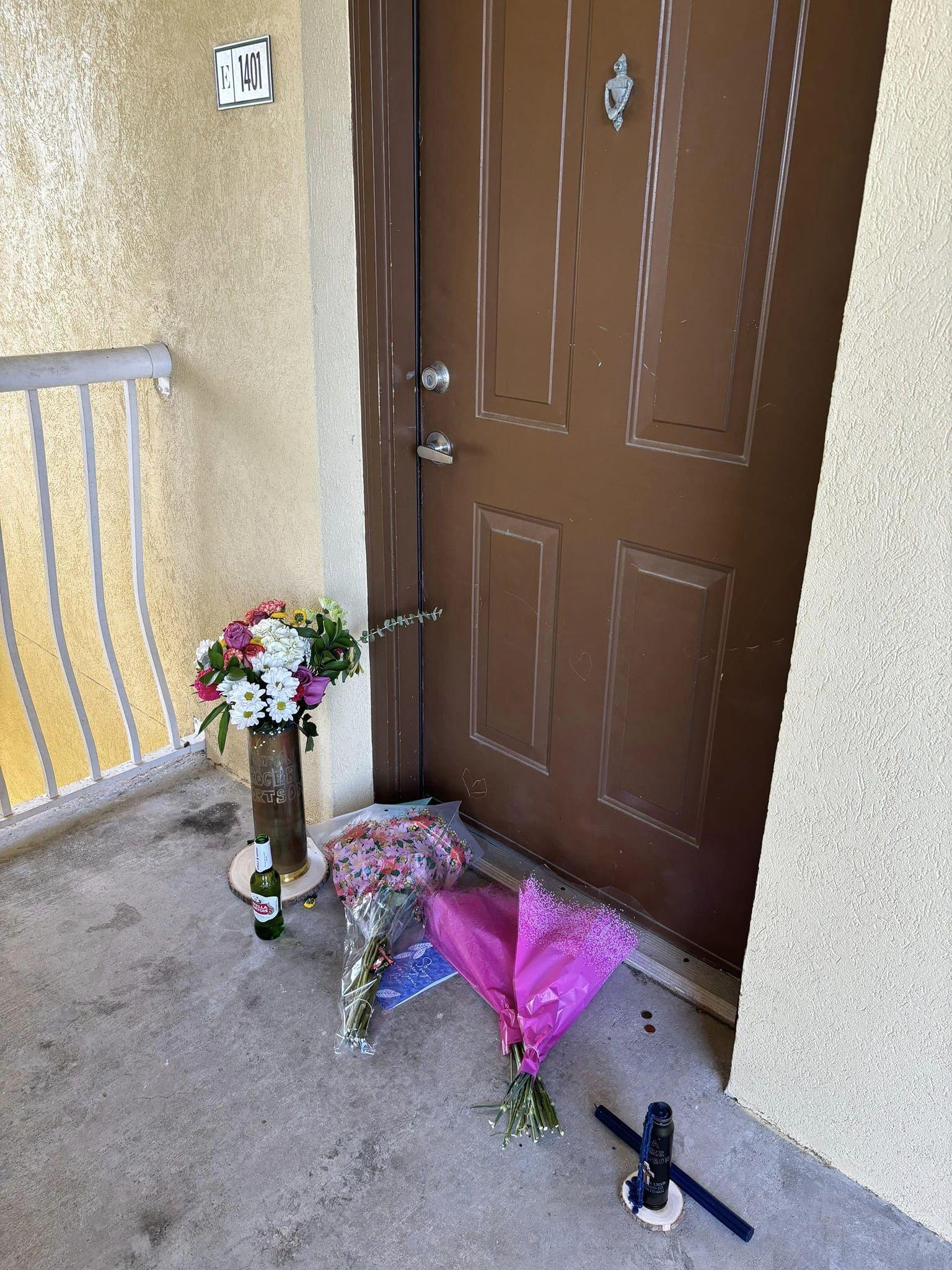
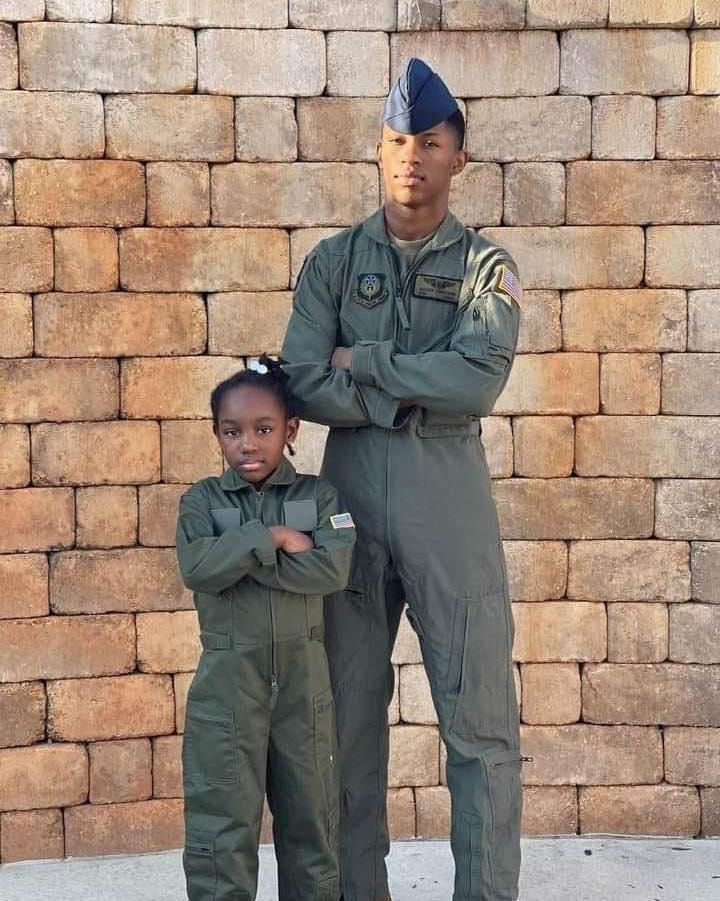
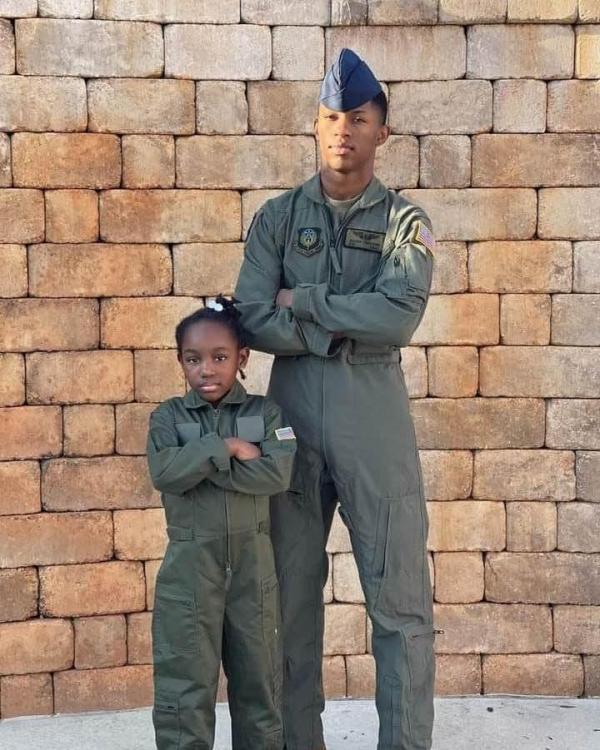
 1 point1 pointShe’s a pretty shitty chief diversity officer if she(?) doesn’t list her pronouns in her signature block ….1 point1 point1 pointThere should absolutely be a drug test for the debates. I don't believe for a second that he wasn't on something last time. Watch the last debates and then watch him completely whiff at softball tosses the press gave him in the weeks before and after. Two different people. He still wasn't 1970s or 80s Biden at those debates, but he also wasn't senile grandpa in a home like he is most of the time either.1 point1 pointThere should be a cognitive test to vote, that would make a cognitive test for office irrelevant.1 point1 pointWell doneViper Demo Team and a great tribute to the F-16! https://www.twz.com/air/viper-demo-team-secretly-painted-jet-in-yf-16-scheme-to-celebrate-types-50th-anniversary1 point1 pointI'm on an all Mexican American soccer team. Im the only white guy (non latino) in the entire league. The guys on my team are good people. They have a huge family and they like Trump. Several of my Mexican Ameican buds prefer Trump, as a matter of fact, all of them do.1 pointThe key to satisfaction in any job is work-life balance. You’ll go through periods in military flying where you get a lot of satisfaction from doing it all. You’ll want to double turn every day while instructing tactics, advising test/acquisitions projects, honchoing real/LFE deployments and spend all night in the bar talking about it afterwards. More more more. The key is to figure out how to keep that mental energy to a sustainable pace before you fall off a cliff without realizing it. Plenty of pilots surge 100% for years and suddenly burn out. Can happen in any job, try not to do that. If there’s so much going on that you can’t enjoy flying a military jet, you’re probably doing too much.1 point1 point1 pointIt’s not that they are too stupid, they assume we are too stupid to know any difference. They only look down on us. It’s the elitist attitude. Sent from my iPhone using Baseops Network mobile app1 point1 point1 pointThat goes back to Rainman's mantra of never passing up the opportunity to keep your big mouth shut!1 point1 pointHe was a really good dude who was loved by all and the AFSOC community is justifiably upset. Being a cop is not easy, daily life or death decisions, and as in this case you will be judged for the rest of your life by the choices you make. That being said, training and leadership set the tone and this department is floundering at best. As mentioned above this is the same department that mag dumped a police cruiser with a handcuffed person in the back because a freaking Acorn fell and hit the roof. This community has crime but nothing like other areas of the country. In the history of Okaloosa County the department has lost five officers to gunfire, four of those were domestic violence situations, the last one happened 2.5 years ago. Everything about this call is odd and to some degree the officer was led down a very bad path. HE certainly had poor training and I beleive in most other areas of the country domestic calls get two officers. They won't say who called, but the lady who meets the cop MUST be investigated. She guides the officer to Fortson's apartment then says she heard "something that sounded like domestic violence TWO WEEKS AGO." That is NOT exigent circumstances, there is no warrant, there is only hearsay, no probable cause, but the cop starts pounding away and ordering the door to be opened...a complete fail. Roger has zero duty to open that door and to be clear the courts have ruled that repeated official commands to open a door without a warrant probable cause invoke the 4th amendment. As far as punishment, Roger did not deserve to die, but he was one of the few that stepped forward and swore an oath to protect and defend the Constitution, I would hope all of us would honor his service and allow for the officer to enjoy the protections offered by that document. He deserves due process and if he is found guilty he should be held accountable, but should not be purposely thrown into the general population for "extra" justice. Rest easy Roger and thank you for your service.
 1 point1 pointLots of rumors on this one, with no real solid evidence. It's going to suck for this girl if it turns out to be false, because her name has already been drug through the mud. Like the accused rapists that turned out to be innocent and just a victim of a scorned chick, it's really hard to unring that bell.1 point1 pointIf I had to guess a time, it'll be next year, but the more relevant metric will be whenever the next economic downturn happens. Traffic and consumer spending are at very high levels. If they normalize or retract, we will go from a pilot deficit to a pilot surplus very quickly. We've already basically returned the industry to the adequately staffed level, but as someone said, age 65 remaining in place will help mitigate. Again you have to view it from the context of the people running these companies. It's not Jeff bezos and Elon musk, it's a bunch of accountants who got to where they were by aping the people above them. Now they all just ape each other until something changes. So they all started hiring massively until suddenly they didn't need to. No forecasting went into it, the forecast was "whatever happens today is what we need to plan for for the next 10 years." When one company furloughs you'll see all the others follow suit because "cost savings" will become the Wall Street mantra during a contraction. AA furloughed. It wasn't a long furlough since the government stepped back in, but it happened in September of 2020.1 pointShack This is one of my favorite follows on youtube. Him and lackluster.1 point