
Leaderboard
-
brabus
Supreme User12Points4,632Posts -
HeloDude
Super Moderator9Points3,540Posts -
ClearedHot
Administrator5Points5,037Posts -
uhhello
Supreme User4Points1,978Posts



Popular Content
Showing content with the highest reputation on 11/21/2023 in all areas
-
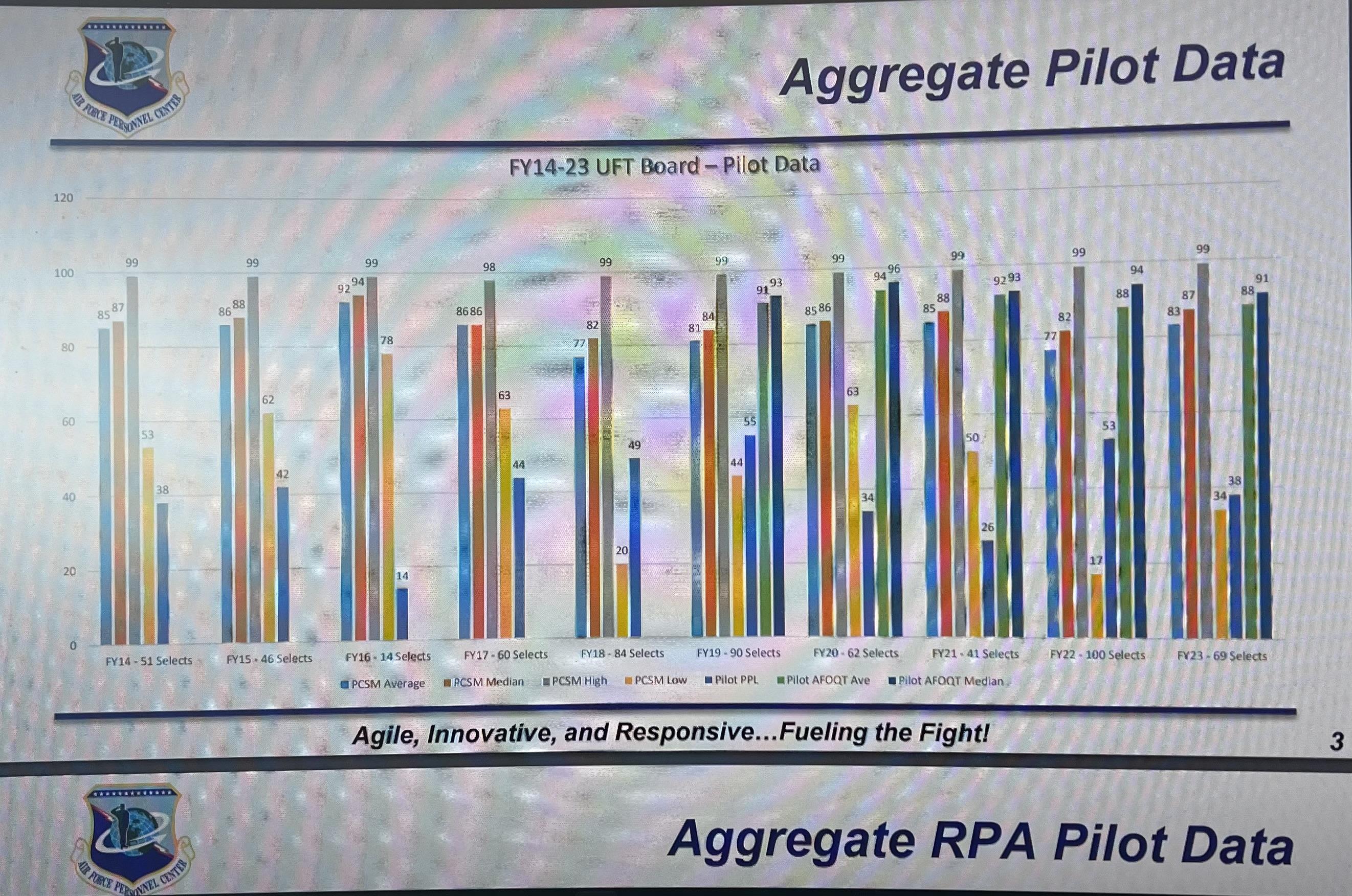
9 points9 points5 points2026 airline interview: “We see you had a mishap in the Navy, can you tell us about that” ”well you see, I have long maintained a personal policy of never go around, because that’s what pussies do!”5 points5 pointsThe thread has devolved into a broader discussion on divesting older platforms in the name of making difficult choices given current threats which may be true but is NOT the case with the potential 105MM removal. It will actually COST money to take the 105MM off the gunship. This is a punitive decision made by a cud eating lunatic and endorsed by his caustic clown-penis puppet. It started as an exercise to harvest ops manpower for functions that have nothing to do with SOF core competencies. With regard to divesting other legacy platforms I certainly agree that in many cases it makes sense given the capabilities of 5th and 6th gen platforms. We make fun of Fat Amy but the simple fact is in the air to air realm, if the Raptors and Fat Amy are playing it is an unfair fight, as it should be. The problem is our single-minded focus on this one mission...yes we have a duty to kick down doors and project airpower and national policy, but we also have a sacred duty to protect those on the ground. Luckily the benefit of our 5th and 6th gen capabilities extends to stopping an enemy air force but it is myopic to think it ends there. I am sorry but a cloaked up Lightning with 181 rounds of 25MM and a couple GBUs does not replace an A-10. When all is said and done we are spending a TRILLION dollars on Fat Amy, perhaps I am a dinosaur but I think we can part with a few $ to find away to provide CAS for future generations.5 points4 points4 points3 points@ClearedHot I’m not as worried about the equipment as I am about the CAS knowledge/culture. But of course you need an MDS or two to keep those alive. If we needed to, we could strap rocket pods, whatever EO/IR sensor pod we wanted, bring tons of bombs to the fight, put some “CAS enhancing” capabilities in the software, etc. in an F-35. It’d be pretty damn good at it…but even in that hypothetical, where’s the CAS knowledge and personal capability of all the pilots who don’t even know how to spell CAS at that point? To me, that continued culture is what we critically need, more so than insert-old-MDS flying to 2050. As an example, shifting CAS to a primary on some ARC F-16 DOC statements could do the trick…it’s not the “perfect MDS,” but it would maintain CAS-focused pilots.3 points2 points“But why armed Biff?” - Elon ”Because I fucking want them, that’s why!” - Biff ”Well I’m convinced, here’s a no limit CC, go buy what you need” - Elon2 pointsThe PCSM score does only play a small factor. They really look at the whole airmen concept. Last year someone was selected for UFT with a 34 PCSM
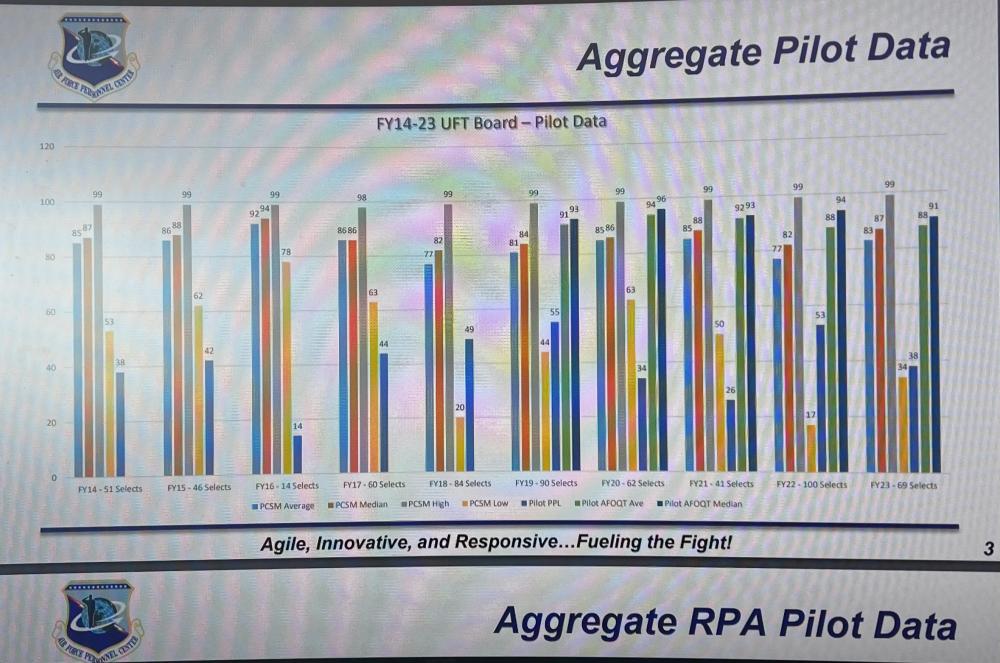 2 pointsLast year I had a 74 Pilot, 62 PCSM, 1/5 in the squadron, 3/12 in the wing, no PPL. I was only a first year captain but I had 750 hours in my airframe, a sandbox deployment, and went through instructor upgrade (12R by trade). That's probably what helped get me on the alternate list with average scores. As long as you've done everything in your power to control what you can control and put forth the best package you could then I wouldn't worry about anything haha.2 points2 points2 points2 pointsThe downside being we won’t big enough fodder to actually do those training sorties and honed the edge on the spear so we’ll. Why won’t/can’t we fly Raptors for 40 years has nothing to do with some sort of obsolescence and everything to do with not having enough tails to solve the attrition of flight hours. There will never be an F-22C. How good/proficient an Air Force would we have had we stopped building Eagles in 1980 and vipers in 1987. If we’d been trying to limp that fleet at 5G maximums how many less sorties would you generate and likewise people could you have taken from 1LT to patch wearer. We are quickly becoming the militaries we used to laugh at. Sent from my iPhone using Tapatalk2 pointsThis is just proof that its all just a random drinking game they play to select people [emoji1787] Sent from my SM-G986U using Tapatalk2 points2 pointsThe only way to solve this problem is to put a chick in it and make her gay.2 points2 pointsHey! This is the airline thread, take your bullshit Air Force promotion acronyms down the hall to the what is wrong with the AF thread. Soooo...anything good on the airline front? I was able to dump my entire schedule next month, so that's good. 🤣2 points2 pointsI get that's a common sentiment in order to show gratitude to the departed, but that's not at all how it went down in reality. It's also not the first time I've buried a co-worker where the folk tale gets pressed that there was a heroic suicide for the sake of the people on the ground, later to reveal a more simple and less flamboyant answer (spatial D and mental unwillingness to get out, as was the case with my UPT SRO and his Hornet crash). You don't have to rub it in the surviving's faces at the funeral. But for us who still remain and do the job tomorrow, damn right we owe the departed some roasting, if we are to honor the legacy of his sacrifice, and learn a god damn thing or two instead of repeating it. The conversation about collateral damage in the jet was to me, simply ancillary to a suspension of disbelief that stemmed from the fact they (and I am also not above reproach in that fallibility) did not immediately internalize the absolute nature of loss of control once dual hydraulic failure ensues. The common urban legend is that you can steer with windmilling hydro when the engine fails but windmills. First of all, not true enough to warrant consideration. BUT, this is worse than merely windmilling hydraulics, because the gearboxes were severed and thus there would have been actual zero input to the pumps. That means no shit, other than the engines effecting pitching moments of little consequence as they throttle jockeyed, the aircraft was immediately ballistic. The decision to delay ejection was neither the correct one nor one that saved lives on the ground. It may have actually killed the deceased, if one is to conjecture that he would have had extra time to gather enough presence of mind to get his sh*t together, un-f*ck his own seat from the way he left it on takeoff, and punch. But this is conjecture since we will never know if he failed to punch himself out due to incapacitation (due to the incorrect sequence selected, and the FCP seat blasting him with the rocket) or inappropriate reaction to stress (aka frozen by panicking). As to the latter, the SIB had some insights into that question which now the AIB sort of refutes, and paints the survivor in a not so positive light. I'm a little bit disappointed by this reversal in findings, but that's for the survivor to live with. Never miss an opportunity to STFU when it comes to USAF interviews is all I got to say about that one. I also don't trust the safety process enough to open my trap, but that's my bias. Exactly. And you're being kinder than I. Generally the checklist now allows for anywhere before takeoff. Most people either stow them in the hammerhead, or all the way back before pulling chocks. I do the latter, but sometimes I break order and do it in the hammerhead. And I'll challenge anybody here who flies these things come and assert they've never forgotten to arm their seat until they get to the MOA and go "..oooh shit...*muffled cllllllick* ". I only say that so people don't misinterpret my criticism for the complacent CRM in the conduct of a requal sortie that was conducted with a CT atmosphere (they all are) as some sort of gratuitous aspersion, when in reality we have all been guilty of it at one point or another. The lesson learned for me is exactly that: treat CT rides with respect. And treat requal guys like idiot UPT students. Sure, don't verbalize that to them, but treat them with the same skepticism. The fact is, we don't as a collective. I also don't agree with the shortened "feed the fight" figther-centric thing we got going on at the schoolhouse, with shortening the callouts. Not so much because it's somehow blasphemy, but rather because the UPT bases, Red Bulls in particular, are actually going the opposite direction, precisely because of this accident. But I'm preaching to the choir here. Stay safe out there.2 pointsAs someone who was picked up on that board, I love it. Rooting for you guys to get selected. I just finished upt today. Feels like a dream.1 pointLast years scores? Highlights were 88 PCSM, 99 pilot AFOQT, 25 flying hours, 100 on the PT test (lol), #2 Wing ranking, and wing commander letter of rec. Lowlights were I was a newly promoted captain with not much on my resume yet. Some minor awards and accomplishments but nothing substantial to showcase my leadership or potential. My leadership knew I was a great applicant but I ultimately wasn't able to prove that to AFPC. Also had a 2.9 college GPA. I'm not sure if that's a huge problem but it's worth noting. I majored in civil engineering and consistently worked 2 part time jobs plus a year-round internship throughout college to make ends meet so it was tough balancing school work, studying and paying the bills (I was very poor and did not come from money). AFPC just sees a GPA though, not the back story. I mentioned this in a previous comment either in this thread or last years thread: AFPC really cares about leadership. The "quantifiable numbers" like PCSM, AFOQT, etc make up only 30% of how they score an applicant. They care much more about what you've done as an officer and what you're capable of doing. This last year I focused on improving my application in those areas. In some ways, I didn't have to do anything other than continue doing a good job at my job, and based off natural career progression for my AFSC in a year's time I would have a lot to showcase. In other ways I actively looked for opportunities to include on my application (volunteer work, projo, queep, etc). Fingers crossed I did it right this time. I figure if I don't get selected, I still set myself up for success otherwise1 point1 pointI always said I’d fly anything, but it only takes a couple JS rides to know I will avoid that Boeing shit like the plague!1 point1 pointWe could turn every Starship launch into a carnival. 30 ship fly bys, chicks in dirndls, mud wrestling (both?), good bands and balloon rides. No Kardashians. "Let's leave this fucking planet" - Starship1 point1 pointAt least there’s one less guppy flying around. If I could, I’d push every 737 into the ocean1 point1 point1 pointHe's got MIG-29 CAPs https://x.com/NASASpaceflight/status/1725736974143631855?s=20
 1 point1 pointI’m off the week before and thru Christmas! Sent from my iPhone using Baseops Network mobile app1 point1 pointFuck LA and the rules. They can't take away my CCP because I don't have one. To be honest, I thought I was going to have to shoot some fucks last night driving by my house, but they were just teens fucking around. I do what's right, no matter what the law says. I'm willing to lose it all. I don't care if they throw me in jail. As long as I know I didn't cower in the face of the corrupt/idiotic government, I can live with myself in a cell. Freedom isn’t free.1 point1 pointCalifornia.....back the blue..... https://ktla.com/news/local-news/l-a-homeowner-who-fired-on-armed-robbers-has-concealed-carry-permit-suspended/ A Los Angeles homeowner who exchanged gunfire with a pair of would-be robbers in a terrifying incident that was captured on home surveillance video earlier this month has had his concealed carry license suspended, officials with the Los Angeles County Sheriff’s Department confirmed to KTLA.1 point1 point1 point1 pointHey, there. I've done some digging on this and the answer these days is pretty much no. All FC1's go through Wright-Patterson, and they don't process folks until they are selected for a 92T0 or 11HX type job.1 point1 point1 pointI have a humorous request... A few years back (I think it was March 2012), Stuck was part of the crew that flew a B-52 to the El Centro Airshow in Southern California. Coincidently, I was the airshow announcer, and we had a great time at the Club both nights. If any of you were on that crew or know the guys that were, could you have them contact me? Long shot, I know. Or... if you happen to currently be in Stuck's old Barksdale B-52 squadron, that might work too. Drop me a note and I'll explain.1 point1 pointReally humble dude. He would study with us in the flight room after he got back from his deployment while we were still fairly new in 38s. I had a really good one-on-one convo with him during our naming ceremony that still sticks with me today. I saw him the day before at his spot in fam camp. Tough read I was putting off. To stuck 🍺1 point0 pointsNo matter what the next crazy event is.... if the synchronized narrative immediately becomes "no time for deep thought and debate, we must action this now!" you can bet outcomes will favor globalist progressives, cost more than we can afford, restrict freedom, and all initial reporting will turn out to be lies. some of us are debating the things themselves. I encourage us to start looking for patterns & be predictive. We are Psyops targets.0 points0 pointswhere did all the ukraine cheerleaders go? oh onto the next outrage...0 points-1 points-1 pointsNow MSNBC has begun warming the public to idea of failure. "If we give everything we want to give to Ukraine, it still won't lead to success." https://x.com/DavidSacks/status/1727015665780060233?s=20 Zelensky fires the Chief of Ukrainian military medical system due to handling of battlefield casualties. https://www.reuters.com/world/europe/zelenskiy-calls-rapid-operations-changes-soldiers-sacks-commander-2023-11-19/-1 points