Leaderboard
-
beef16
Registered User15Points18Posts -
BashiChuni
Supreme User9Points2,668Posts -
Yodes
Registered User9Points24Posts -
AFZ06
Registered User6Points34Posts


Popular Content
Showing content with the highest reputation on 02/17/2021 in all areas
-
13 points
-
9 points
-
6 pointsThat's like saying "otherwise legally driving" when your BAC is above the limit. It is a very important point. Castille's actions led to his own death. Had he been carrying legally, not endangering his child, and complied with officer instructions, he would be alive today. I can show you hundreds of examples of officers in this situation who hesitated and wound up dead or bleeding on the side of the road. Officer safety is a big deal. They have a right to go home after the end of the shift, and asking cops to sacrifice safety in the name of propping up criminals is ludicrous. There are millions of police interactions that happen daily that you never hear about because they are uneventful and usually positive. The 0.01% make the news (in the most slanted way possible for ratings and a narrative that NEVER gets corrected when the facts come out) and you want to make it even more dangerous for law enforcement as a result (i.e. - removing qualified immunity, which is idiotic). It's the same flawed logic as the "bAn AsSaULT rIfLeS" crowd after a psychopath shoots up a school with a handgun.6 points
-
5 points
-
5 points
-
4 pointsHere is a spot where our opinions diverge. There are several reasons why I think schools should be priority one when it comes to “reopening” the country: 1. Our kids are suffering. I can tell you first hand that the level of education being provided by online learning is nowhere near what kids are getting in school. Older/more mature kids might be doing a bit better, but my 10 year old was getting almost nothing from zoom school. It’s nearly impossible for a teacher to vie for a child’s attention through a computer screen. Aside from the academic deficit, kids are mission out on all of the social and interpersonal development that is arguably even more important than the academic part of school. All of this has taken a terrible toll on kids, as evidenced in the worst possible outcome: a huge increase in suicides. 2. Our society is dependent on the school day. The “one parent doesn’t work and plays homemaker” model is no longer the norm. A majority of families either have both parents working, or are single parent households. Don’t want to get into a morality argument. That’s just the way it is. Most parents depend on school for a majority of the year to make this work. Online school and limited in person school time places a tremendous logistical strain on families trying to make ends meet. In many families, both parents work out of necessity and things are tight. Now they are in the position where they have to either pay for child care that they can’t afford or may not even be available due to demand, leave young children at home unsupervised, or have one parent quit their job and risk not making rent/bills. Sorry, but the economy will not fully reopen until schools do. 3. The vast majority of studies indicate schools can reopen safely with relatively simple mitigation measures in place. We don’t need to wait for all teachers to be vaccinated (although that option is rapidly becoming available to them). We don’t need to rip out and replace the HVAC systems in every school. We simply need to make sure the kids are masked (hand them out at the entrance if they show up without one), and put a little extra space between them (I understand this particular requirement will be difficult in many districts). Bringing kids back into classrooms will never be perfectly safe and I understand teachers’ concerns. However, many of us have been going into work on a daily basis in industries arguably less critical than primary education. We have all been dealing with less than perfect safety measures. If the guy in the Amazon warehouse making sure people get their sex toys on time is considered critical, surely are teachers are too. It’s time for them to get back to work so the American economy can make its comeback and so our kids don’t fall even further behind.4 points
-
4 pointsmy question is when are all you fear based thinkers going to come out of your shell? what's your end game? zero covid? cases per day? etc etc at some point life goes on and a lot of rational people have been moving on now for months4 points
-
Yeah, I think you all are correct. Looking at the previous years' PSDMs, and the document dates, it seems that they get the full up list and are directed to review the list for their wings. Then that same list is posted publically a week later.3 points
-
3 points
-
3 points
-
Hey all I have been lurking for months but had issues making an account. My wife is the MPF Commander and I can confirm the list has dropped!!! I am a RPA select! Top of her head quotas were Pilot:45, RPA:51, CSO:10, ABM:20 Best of luck all!3 points
-
In other news, why does the system of disseminating this type of information have to be so broken? Like I understand wanting to give supervisors the opportunity to inform applicants of results, but why do we need (in my case) 4 entities between AFPC and the unit CC/supervisor?2 points
-
2 points
-
You can change your profile name to 'URTSelect2021' now. Congrats!2 points
-
If anyone has access to the list and wouldn’t mind seeing if I’m on there shoot me a PM please. Base is now closed until Friday and who knows when they’re gonna send the list out.2 points
-
2 pointsHere's my perspective as someone who entered UPT with few hundred GA hours (CPL w/instrument rating) and currently a T-6 IP. For starters, ground ops (walking out to the jet, the preflight, getting the aircraft started and taxied) sound benign but in reality, the AF wants them done quickly and accurately. You won't have time to sit under the canopy in the heat or cold and go through the checklist item by item, especially when you're in a formation and you have a VHF check-in time. You'll need to create flows to make sure everything is in order and it helps to do things the same time, every time, so something will hopefully seem off to you if it's forgotten. The struggle between speed and accuracy is what some students struggle with, to include those with previous flying experience. One large difference in UPT is the vastly different traffic pattern. In the GA world, you're used to a single rectangular box pattern. In UPT, you have several different patterns (overhead, straight-in, low pattern, high pattern, breakout/reentry, etc.) controlled by the RSU within the Class-D and things happen fast. You'll have close to a dozen other T-6s moving at 200 knots at its busiest, and you have to listen on the radios for every little detail while precisely maneuvering the aircraft. It's not uncommon to routinely pull several Gs in the pattern to follow the precise ground tracks. It takes several flights to build your SA bubble enough to be comfortable to solo... this is something you can't really prepare for in the GA world. It's also a blast once used to it. The formation phase is obviously entirely new to most. As someone who occasionally flew formation with buddies in the GA world before UPT, it was nothing like military formation. For most with prior hours I'd say, this is where the playing field is generally leveled. I was a strong student in contact and instruments, but perfectly average in the formation phase and it was similar to learning to fly all over again in some ways. How so? Like in the pattern, things happen fast and you're maneuvering in relation to someone else while keeping up with precise, timely, and correct comms. As lead, you need to make the appropriate decisions for the formation and you're constantly under pressure to do so. But again, it's also a blast once used to it. Also, unlike on a GA training flight where you just fill the fuel tanks and typically don't have to worry about fuel, you will always have a set amount of time/fuel to accomplish each sortie in UPT. You simply won't have the time/gas to mess around. You need to be quick to accomplish your profile within these constraints, whether single ship or for the formation. It's added pressure. Those are just a few specific examples and I'm sure others will chime in with more. What helped me the most in UPT was having good stick and rudder skills from GA flying and my instrument rating. This allowed me to fly/trim the aircraft so I could focus more on what was going on outside and build an SA bubble. Previous flight time will set a foundation in terms of some basic general knowledge and hopefully some stick/rudder skills, but you will have to much to learn in terms of AF procedures and applying them while inverted/under moderate G/potentially being yelled at by the IP. Did I mention that it's a blast?2 points
-
the PSDM goes from MPF to your Wg/CC. i would ask your CC to reach out and up the chain. you can always call MPF and ask the flight commander if the PSDM has made it to wing leadership yet.2 points
-
Congrats!!! Gives me hope I’m a Pilot-96 PCSM-91 w/ PPL My base is closed again at least until tomorrow so MPF isn’t pushing anything out.2 points
-
2 points
-
1 pointMy assumption is the entire Democratic Party will work together to keep the "Weekend at Bernie's Biden's" game going until the 2022 midterms (21 months away from now). After that, who knows.1 point
-
1 pointTop 3 guys in my class had 200+ hours and their commercial. Top guy had 200 hours of formation time on top of that in jets. I saw other guys with a thousand hours struggle. the key is to have the hours as a baseline but attack UPT like you haven’t flown before to build military habit patterns. The air sense you already have from hours will show through. If your set in your ways though it will get ugly, and those are the guys you usually hear about. Finally, some guys just can’t think quickly and having 1000 hours won’t fix that and they will struggle.1 point
-
1 pointSadly, unity at this point is an antiquated concept. Our previous president in 2016 won by nearly the same electoral margin (77 vs 74) and a smaller popular vote margin than Biden, yet proceeded forth as if he had a commanding mandate. Energy independence needs to be our primary goal. Without that, national security will be at risk. Second is sustainability through diversification. As we're witnessing to some degree in TX, limiting power generation sources can have dramatic effects if a primary source is compromised (e.g. icing on wind turbines are a contributing complication ). Greater diversification is our realistic path to a cleaner overall footprint as we can have multiple renewal resources along with fossil fuels and nuclear.1 point
-
I'll be honest - my ADSC is up in a year and I've gotten a lot of weird looks when I tell people I'm trying to go back to flying AD. I'd say all of my bros (and female bros) across the board are urging me to just start rushing now so I can make a seamless transition. On the other hand, if being AD is your dream and pilot second, I'd say consider giving RPAs a go. Their role in the fight is big now and only getting bigger. I'd give it more consideration if I weren't satisfied enough with my career field as is.1 point
-
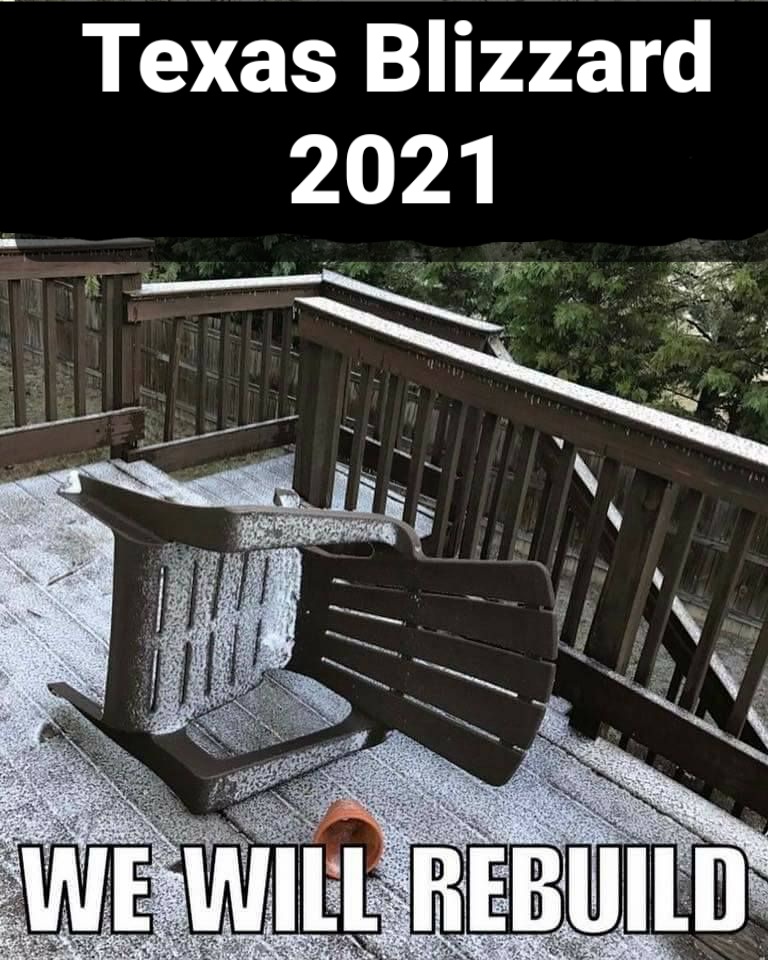
That picture is from 2014 in Sweden, when the company Alpine Helicopters was testing de-icing windmill blades during an ice storm with boiling water. I get the irony, but it's a false narrative using that picture for the current events.1 point
-
https://www.latimes.com/business/story/2020-02-06/wind-turbine-blades1 point
-
Got RPA. Kinda bitter. Really wished for a pilot slot. Damn. PCSM 87, Pilot Score 88 w/ PPL. Second application. Sincerely, congrats to everyone who got the slots they wanted. Everyone put the hard work to get here. I just didn't get what I wanted or thought I would get.1 point
-
1 point
-
Doesn't look like I'll see my answer tonight, and looks like the base is closed tomorrow. 76 PCSM, 86 Pilot w/ PPL. We'll see what happens. And for the record, I am not above bribing someone with access to the information.1 point
-
Get one that'll run propane. They can sit for a long time and still run.1 point
-
Yeah but the question is how much internal resistance and manufacturing complexity the power company is willing to take on to mitigate a once in a decade storm. My bet is not much. They'll apologize and give a few superficial refunds and the same shit will happen 10 years from now. The key with renewables is the energy storage technologies need to be seriously improved. This will help not only catastrophic snowstorm recovery, but also routine power demand at peak hours if it happens to not be all that sunny or windy.1 point
-
1 point
-
My understanding is that AFPC has been primarily teleworking since the pandemic basically began. Which in turn, would mean the main issue may be that there's no power for those teleworking from home. Imagine telling your grandkids that your ability to become a pilot was pushed off first by a pandemic, then by a snow storm in Southern Texas.1 point
-
1 point
-
Brother you need a side business, it looks like the situation is so bad at Cannon the Wing/CC has authorized the folks in Chavez to get rooms downtown on the government dime. We spent a lot on the infrastructure and it failed again (I think I know the who and why). When I was there they were still talking about the last grid failure and how ACC neglected the base. The main bar connecting offbase power to the Cannon grid failed, it was stamped 1949! Eight years and $1.2 billion later and the grid has collapsed again. CE got some splaining to do...1 point
-
1 point
-
1 point
-
1 point
-
1 pointJosh and Chuck did a great Stuff you Should Know podcast episode on it as well.1 point
-
1 pointKC should have signed her https://www.beaumontenterprise.com/news/houston-texas/article/lake-jackson-mom-tackle-15943328.php?fbclid=IwAR2vjmkF_NpEUlJiCd6WT2Ecf1lAOC8g6T-wVrjGVJgV6lmzMaJtNQw-bK41 point
-
1 point
-
Well looks like I’m a non-select. FWIW I’m a current E-3 FTU Nav 1,000+ hours, 96 pilot, 91 PCSM w/ppl #2 WG strat. AD can get bent. Time to start rushing Reserve/Guard units.0 points