Leaderboard
-
di1630
Supreme User5Points1,166Posts -
tac airlifter
Supreme User2Points2,052Posts -
BashiChuni
Supreme User2Points2,666Posts -
hindsight2020
Supreme User2Points1,059Posts


Popular Content
Showing content with the highest reputation on 09/15/2018 in Posts
-
If we are going for efficiency, there might be some ideas in what you are sarcastically saying. I think the USAF spends a ton of time and money doing things the way it was done 40 years ago because we fear change. I know this happens in UPT because I was a student when the first T-6’s came on line. “Can you believe we are training in single engine props!” Said the old T-37 mafia. “There are gonna be pilots who never fly a jet in their career!” I was one of the last IFF classes to drop bombs off the AT-38. “Can you believe these new students won’t crank mils manually and have a HUD in the T-38C doing all the work...what a bunch of SNAPs.” At FTU we were all going to get lost and be lazy because we had EGI instead of a drifting INS and nobody knew how to do a delta update and our standby reticle bombing was horrible. One step away from communism. In my ops squadron wingman were going to kill themselves if we let them use their targeting pod the same time as FL. I was a T-38 IP when the magical fix to fix went away....all the students were going to wash out of follow-on courses because of that one. Back to the CAF....gotta print out maps like we did 20 yrs ago, can’t trust those new avionics with satellite imagery built in. HMCS and datalink was making us all soft. If we had unlimited resources, teach SFO’s to your hearts content. We don’t so we have to prioritize. You can’t cut it all because we need talent discriminators but once a kid tracks...well a heavy pilot probably doesn’t need a acro and a fighter guy doesn’t need as much crew communication work. Sent from my iPhone using Baseops Network mobile app5 points
-
2 points
-
2 pointsI copy the frailties of human nature. However, I have zero sympathy for an officer who puts their personal passions above the mission. I get it, not many dating options in del rio. Also not many options in Bagram. Get used to it.2 points
-
Honestly its more about the larger issue of kicking non tactical training to the FTU, which means either the basic skill is ball washed quickly so they can learn the tactics (which is the primary reason they're at FTU), or a lot of time is spent on the basics and the new kid is shit at the tactics. Either way is a significant burden on the CAF. I had to FO through the weather as a young guy, and it was not perfect, but it worked out. Many years later I did it in combat with a running, but significantly reduced thrust engine. There were a couple other precautionary ones also. So in 10 years, I've had two no shitters in worse than VFR around the flagpole training and a couple less serious ones. The risk is only rising as the viper gets older, so i dont buy the "but what are the chances!" argument. Looking back I'm glad I had all of that baseline training that undoubtedly helped me get through that. While unmeasurable, I know there would have been an increased chance of death or forced ejection (due to fucked up FO pattern) if I had the reduced level of training received by young guys today.2 points
-
1 pointGuess what? There were plenty of "unlawful" options in Bagram too. And they were exploited far more than in UPT. I don't think anyone is asking for sympathy, it's just a fact of life in a coed organization. Always has, always will.1 point
-
1 point
-
1 point
-
1 pointPreach it. And cry me a river (see what I did there) about Del Rio not having women. San Antonio is 2.5 hours away. And there’s tinder, bumble, grinder. Never been a better time in history to be stationed at remote places with a thing called el interneto.1 point
-
I can teach you to fly my plane. I want you to show up with some basic airmanship, some SA, and the willingness to study/learn. You can fix skill problems. You can’t fix will problems. #gloandgo Sent from my iPhone using Baseops Network mobile app1 point
-
1 point
-
1 point
-
1 point
-
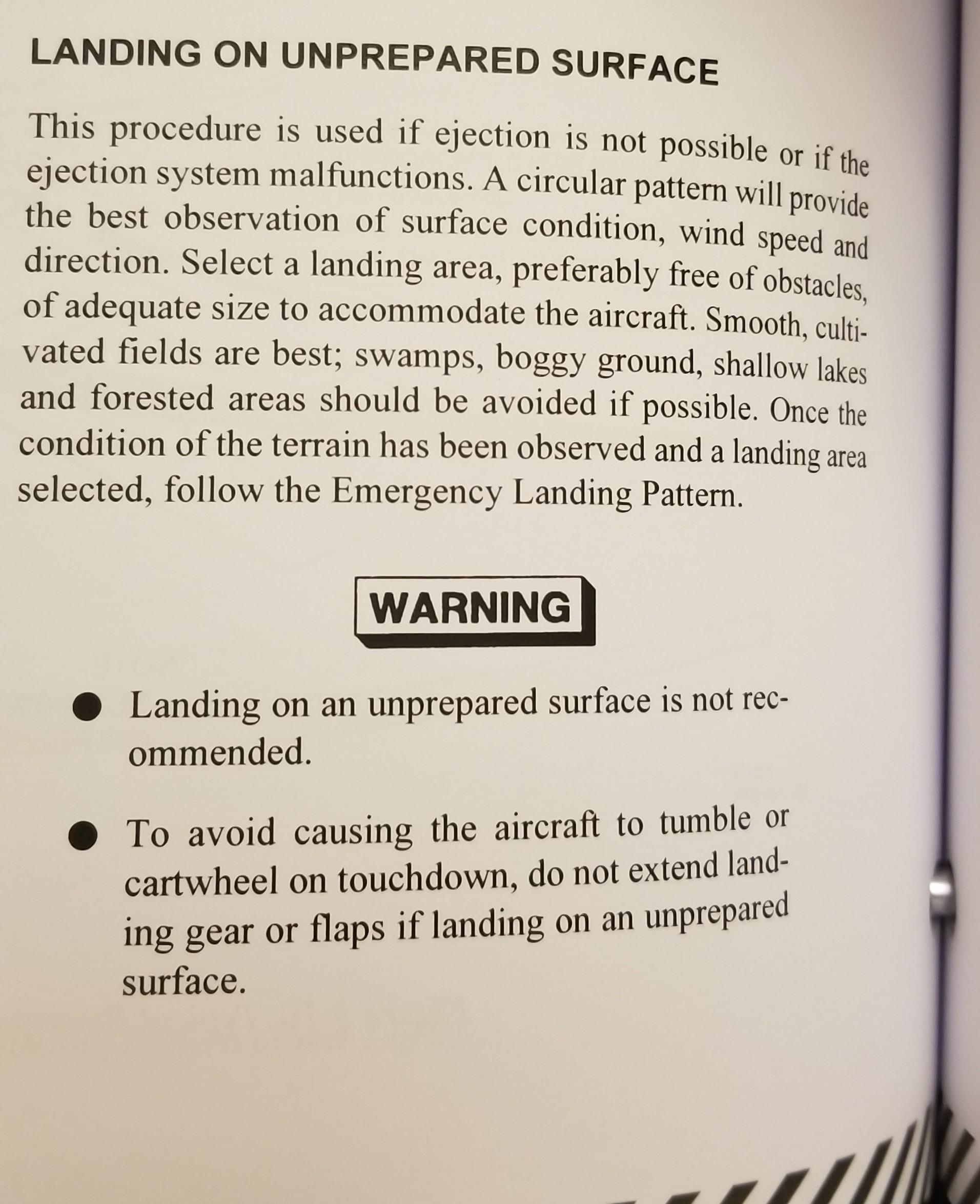
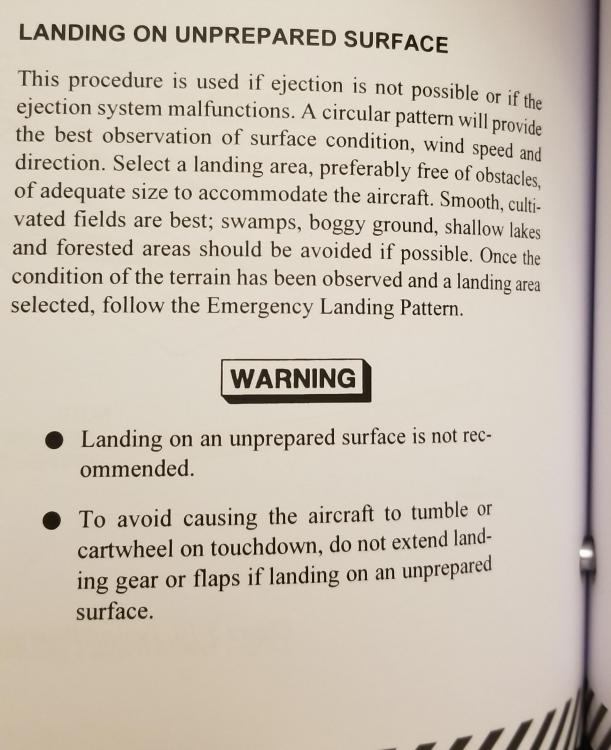
If there's not a runway in the range of your airplane falling out of the sky, ejection is the go-to method of getting on the ground. You would only "perform and off field landing" if you couldn't eject.
 1 point
 -
Viper Guy currently in the B Course. We train to it and it's on the Form 8 check. Can't land out of it per the regs but low approach to 50-100 feet.1 point
-
I'm probably remembering wrong (10+ yrs ago), but I thought that (as a student) in the event of total loss of thrust, you either had to make high-key at home base (CBM) or punch. If it was a PEL, you could do that at any field long enough.1 point
-
Gotcha; I think the bigger issue is sending a dude solo without the training. But that’s me.1 point
-
1 point
-
30% of the instruction is ELP's? Damn, my average was way lower then, didn't know I needed to spend 30 minutes per flt teaching ELP's, all that waster time teaching instruments or formation, should have been teaching ELP's... For the record I think the max ELP's I ever did on a sortie with a student was 5-6. And seeing as how each only takes 3 or so minutes it's not a very big time waster. But hey let's not teach appreciation for emergency handling early on, I'm sure they'll pay attention on a Friday afternoon before a long weekend to some sim instructor tell stories from the Tweet about proper EP handling, yup that'll be a worthwhile replacement.1 point
-
As a prior Chief of PIT... you would be surprised. I’ll take the FAIP over the C-17 AC nine times out of ten.1 point
-
Lots of skills in the ELP are being learned. Energy management. Effect of wind on groundtrack. Planning ahead and adjusting on the fly. Knowing where my nearest emergency field is and whether I can make it there while concentrating on other tasks. Handling an emergency with a definitive time limit (time doesn't stand still in the jet like in stand up). Plus, every jet has the possibility of becoming a glider, we should be giving our pilots at least some exposure to forced landing in UPT to build that foundation of airmanship. ELPs are pretty much the only exposure T-6 studs get to handling emergencies in the jet, and which lays the foundation for staying cool, calm, and collected when things start going downhill. By the same token, why teach aerobatics? Or spins? Most pilots will never do those maneuvers in their MWS. But there's value added in doing those maneuvers-again, understanding energy, looking outside while maneuvering, etc. But I've got a bigger chance of my C-17 turning into a glider and executing a forced landing than me needing to barrel roll or do a spin recovery. It's all about laying a solid airmanship foundation for future instructors to build upon, versus teaching anew in a more expensive jet. Sent from my SM-T700 using Tapatalk1 point
-
Again...lowering standards to cram more bodies through the pipeline each year. But none of these new pilots will be staying in past their 10 year point anyway, so statistically a shorter career means less exposure to losing an engine....besides who doesn't want a tie from martin baker.1 point
-
1 pointI guarantee they don’t care. NGB A1 and A3 wouldn’t know there was a shortage based on the speed the process paperwork. Some of these folks are very good at their jobs. Some are overworked and undermanned. But some don’t give a FU(K how long your age waiver takes.1 point
-
1 pointThe ART is a CSO, the AGR already has a line number, and the AD guy wishes he did. 😂1 point
-
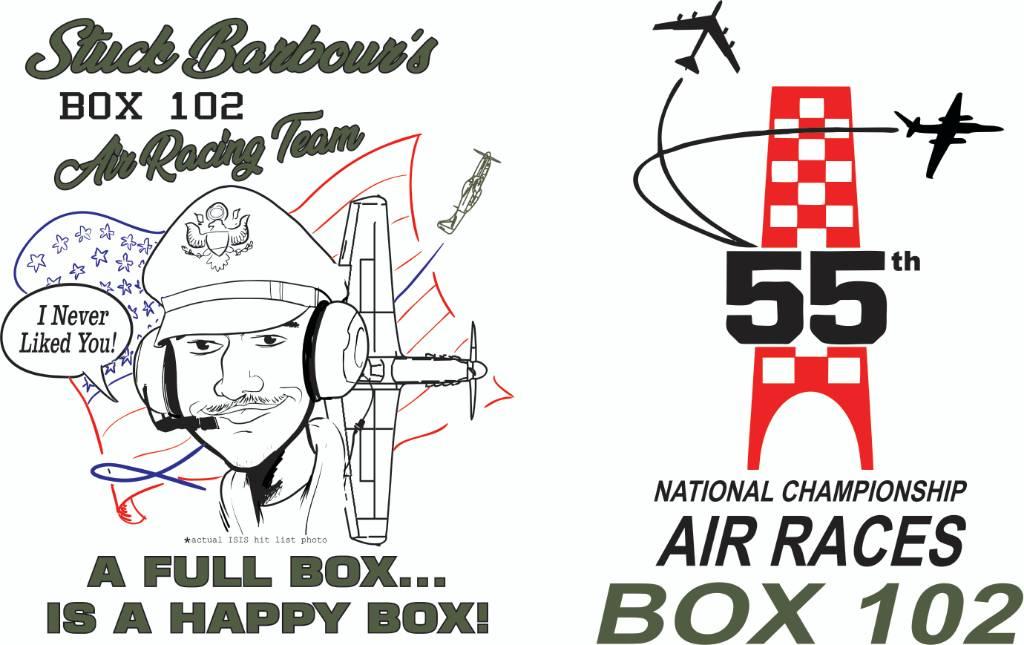
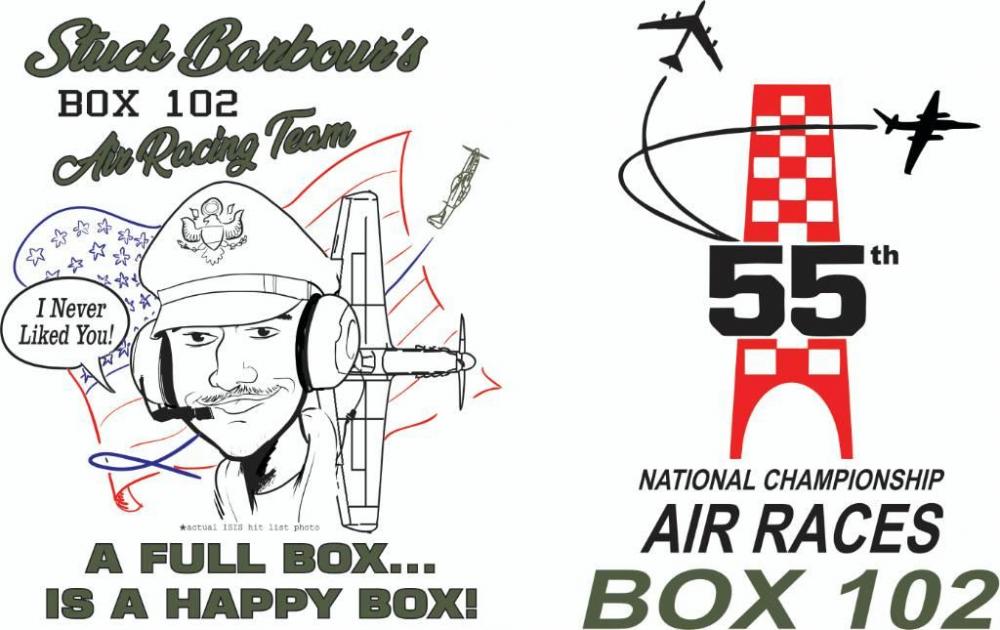
1 pointI met Stuck Barbour back in 2006 at Reno, in Box 102 when he was in college, and we were friends since then. He relished coming out there every year, and was well loved by everyone. The Box owner decided to do up a theme for Stuck on this year's T-shirt. Check it out.
 1 point
 -
1 pointIsn't the Air Force trying to grow it's way out of a pilot shortage? No, don't get up. I'll show myself out...1 point
-
1 point2 is armor. Something about strafing that tends to attract 7.62...1 point
-
1 point1. It's a HUD repeater. 2. No idea, could a whole range of things from additional armor to where the nuclear rockets are stored.1 point
-
The issue is that, while the question is valid, you're ignoring half the system. Let us assume that there are 100 units of energy in your system. Here are the various types of energy and their starting values: Potential Energy (rocket fuel) - 100 Kinetic Energy 1 (spaceship motion) - 0 Kinetic Energy 2 (any other object motion) - 0 Thermal Energy (heat) - 0 Light Energy - 0 Taking the first letter from each energy type (simplified I know) we come to the equation P+K1+K2+T+L=N (net energy) = 100 After your first burn you've converted some of that potential energy to the other forms. Thus you end up with P=80, K1=9, K2=9, T=1, L=1. Net energy remains at 100. What is important to note is that the kinetic energy is evenly split between the spaceship and the exhausted particles that created the thrust. You do a second burn, dropping K1 to zero. However to do that you increase K2. Note that the new particles coming out are moving faster because they have the added velocity of the spaceship. Since the spaceship was lighter due to less fuel you consumed less potential energy in the process. Thus your new numbers are P=62, K1=0, K2=34, T=2, L=2. Your K2 increase is due to its original energy, the energy from the new burn, and the energy imparted on it by the ship movement. This is all, of course, drastically overly simplified but I don't feel like dusting off my old textbooks.1 point
-
1 point@katdude If you’re day-trading stocks trying to guess the reaction to earnings then you aren’t value investing and any discussion of the balance sheet is moot. But I’ll leave that aside for now. I agree that you should pay for what a business is worth today and paying inflated prices for speculative growth stories usually ends in tears. But book value is not really what the business is worth today. In a competitive market if you are earning returns in excess of your cost of capital, unless you have a specific competitive advantage, you will see competitors enter the business until the returns decline to your cost of capital. The reason book value mattered in manufacturing business or railroads for instance is those physical assets drive the value of the business and book value is a rough estimate of the cost it would take for a new competitor to replicate your business and enter the market. If I want to create the next Nvidia to get a piece of their amazing 45% ROIC, the less than $1B of PP&E they own has very little to do with their $12B in sales and $160B enterprise value. Those thousands of engineers they employ to develop new chips and who they pay collectively $2B a year drive much of that value. But GAAP says R&D is an expense and you can’t capitalize it on the balance sheet, ergo no book value. Is NVDA really worth $275/share? I don’t think so. But is it only worth $13.37/share in tangible book value? I highly doubt it.1 point
-
1 pointI just love this interview...this guy has future senator written all over him. Totally incapable of answering a simple question. Just an example: "AIRMAN MAGAZINE: When did the Air Force start noticing pilot manning issues in the fighter community?" Seems like a pretty simple question...when did you notice it? "BRIG. GEN. KOSCHESKI: The fighter pilot crisis manifested itself because when you only have single seat fighters, it becomes a cockpit training capacity issue quickly compared to larger aircraft with multi-seats, where you have an aircraft commander and a copilot. You have a little bit more flexibility to manage your pilot training. The crisis happened quickly in the fighters because of that very reason. But what we’re seeing is the same dynamics are in place for other career fields, and also because of the fighter pilot shortage, the mobility Air Force has been carrying some training shortfalls and pilot training to cover the shortage of fighter pilots. So, their effective manning has been hit and they’ve been doing more than their fair share, trying to help out while we heal the fighter pilot crisis." Okay...but WHEN DID YOU NOTICE THE ISSUES?? WHEN, not HOW or WHY. WHEN. It is a time-based question, sir. The answer should have some kind of chronological reference, like "in 2008 when Gen Welsh was going around USAFE asking fighter pilots why they aren't staying in", or "last week when one of my staffers left Baseops.net open on his computer and I started reading."1 point
-
1 pointThat is a guy who has only ever been in the Air Force, and is so self-indoctrinated that he doesn't even understand the concept of "quality of life" as it exists in the real world outside of big blue. Thus, his assessments and "solutions" are only viable when compared to other previous states of things in the AIr Force, rather than being a comparison to the greener pastures on the outside that pilots are fleeing to. Basically, a man incapable of actually seeing the bigger picture due to his enjoyment of smelling his own blue-tinged farts.1 point