Leaderboard
-
HuggyU2
Moderator5Points2,884Posts -
TreeA10
Supreme User2Points1,375Posts -
ClearedHot
Administrator2Points5,429Posts -
fire4effect
Supreme User1Points628Posts




Popular Content
Showing content with the highest reputation on 10/29/2021 in all areas
-
4 pointsPlay by the rules of the USERRA law and tell Delta Airlines to kiss your ass. https://www.dol.gov/sites/dolgov/files/VETS/legacy/files/USERRA_Private.pdf In other news... I'll have 28+ years at United when I retire, and I will not be able to hold a widebody leftseat based on current projections. When I was hired, we had 5 year Captains on narrowbody. But after bankruptcies, mergers, 9/11, 2008 economy down-turn, china-virus, and a plethora of other events... I've learned that the question of "when can I upgrade..." is an unanswerable question. Who knows? The variables are entirely unpredictable. A bud of mine was in the first UAL class after things shut down for a year (May 2021). Pilots hired a year later will be 2000 numbers junior to him. To put that in perspective, those pilots currently 2000 numbers junior to me were hired 15 years after I was. And I'm not even going to discuss the ramifications of those who were Continental pilots during the merger. If you do not understand the significance of my statistic, then you need to talk to someone who does. The whole "where will I be?" is a stupid question. If you want to dress up and play airline pilot, then get ready for a fucked up career.4 points
-
2 pointsAA 777 FO. I've done 767/787/777 international and 727/737/MD80 domestic. Most of your work is done from leaving the gate to level off and then descent back to the gate. Domestically, you are going to do that several times per day over multiple days with shorter layovers. Hotels are hit and miss. Mechanical, weather, hub delays only make your day worse. International trips you fly 2 legs with a longish layover. ETOPS doesn't allow for many open mechanical issues and we usually have a maintainer on standby to get problems solved. Hotels are usually nice. Long layovers means you can explore local history, restaurants, beer. Downsides are time zone/body clock and sleeping issues. Legal flight routing can put you over some barren terrain with few divert options dealing with marginal English speaking controllers. With seniority, a widebody FO can make more than a narrow body CA and work fewer days. You need to find what works for you.2 points
-
I work in PACAF, so I don't know what Robins AFB is doing, but today the A3 was briefed that if you are retiring (I assume those separating will be included as well) before 01 April 2022, you will not be required to take the vaccine. This is new information as of this week and applies to the Air Force specifically.1 point
-
1 point
-
1 pointPenis reduction x 2. Local doc at my airport worked the process and he was awesome. The FAA was slow but no hiccups on that end.1 point
-
1 pointThe Taliban is begging for Afghanistan's frozen money to be released as the country's economy spirals into crisis (msn.com) Actually governing is a real bitch isn't it. Hungry desperate people tend to get surly at the people in charge. I would say very little of the money they're discussing was provided by Afghanistan versus foreign donations anyway. I would tell the Taliban lets see some concrete action on human rights. NOW. By the way here's our list of wanted criminals including those who committed atrocities against our troops and our Afghan partners. Certainly not all the money at once and you will show an accounting of where it goes. If we even smell a hint of diversion to fund terrorism or corruption the gravy train stops. We have the watch AND the time now. This isn't the 90s anymore.1 point
-
https://www.msn.com/en-us/news/us/biden-admin-barred-from-firing-unvaccinated-employees-after-dc-judge-issues-injunction/ar-AAQ5Atz?ocid=msedgntp1 point
-
1 pointSome really good posts recently and a huge reason I’ve enjoyed following this thread since I was applying 5 years ago. Now that I’ve picked my poison I enjoy learning the details of life at the other carriers. One of the frequent things I heard in my Guard unit was how SWA flew regional schedules in the Guppy, i.e. 6 legs per day with min overnights in between. There have been some occasions I’ve done 5 legs (never seen 6), but just as many I’ve done 1. My logbook says I average 2-3 legs per day. Talking to guys from the other majors I’ve concluded that it’s really not any different than NB domestic elsewhere. Everyone’s got unique work rules, some better, some worse, but it really just averages out to be about the same (including earning potential). The bigger knock on SWA is obviously the lack of opportunity to mix it up, see different destinations while making more efficient pay in WBs, etc. SWA flying’s been the easiest thing in the world but still interesting enough to keep me entertained…but will I still feel that way in 20 years? Doesn’t matter, I’m stuck anyways! So really the question is do you prefer to drive to work for your career or commute to be able to keep the door open for what could be more fulfilling opportunities down the line? It’s a good dilemma to have.1 point
-
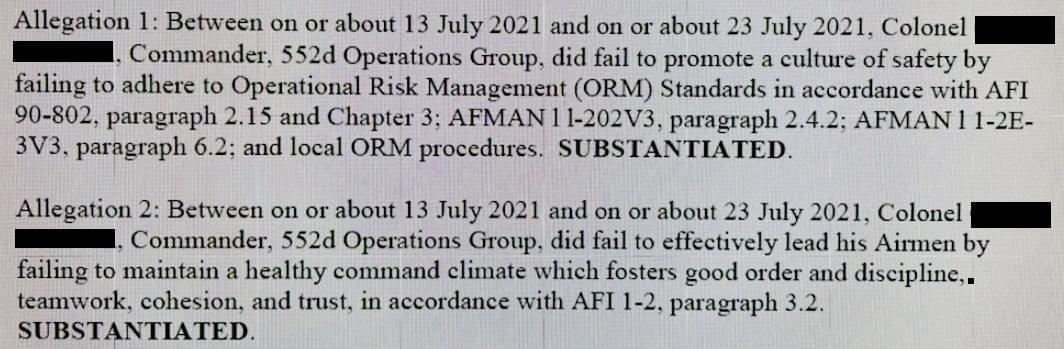
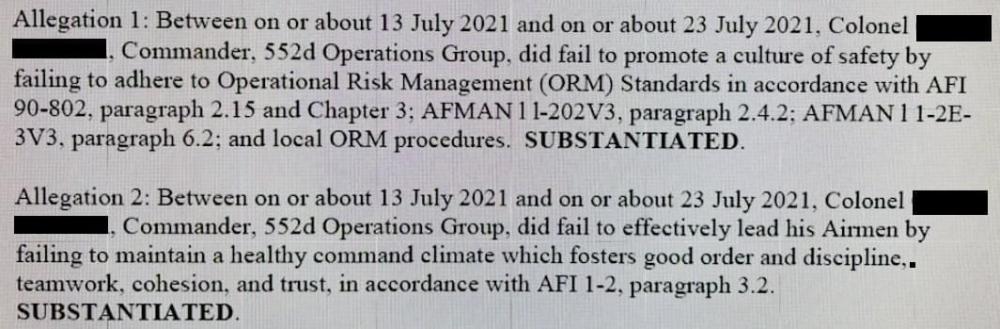
1 pointApparently, the investigation substantiated that is is his fault.
 1 point
 -
Agreed entirely if we are talking about the last 30 years and not the pandemic era. The only reason we didn't see incredible deflation is because the fed stupidly targets 2% inflation, and in failing to achieve it for most of the past few decades, felt perfectly comfortable printing trillions and keeping interest rates pegged at zero. Even before the pandemic we were running out of destitute countries to shift our simple manufacturing to, and the number of jobs for robots to replace humans in were dwindling. Sure, AI offers some new productivity gains, but probably not on par with the past. Couple that with the government incentivizing the displaced workers to remain unemployed rather than transfer their effort to new industries, the spectacular deflationary forces of the 90s-today seemed like they were already on the wane at the exact moment the inflationary pressure went into overdrive. The 5.3% inflation that our government reluctantly admits is not transitory is probably closer to 10%. That's pretty f'n huge. Once they finally have to raise the interest rates I expect the stock market and housing prices to eat sh*t in epic fashion since both are married to fed policy at this point, but neither is considered in CPI calculations. Rent, on the other hand is, and that's spiking right now. And ultimately, the best analysis I've seen to date is here: https://www.forbes.com/sites/johntamny/2021/10/24/theres-no-supply-chain-shortage-or-inflation-theres-just-central-planning/amp/ The fed policy goal of full employment is exactly the type of tampering we don't need. The pandemic just kicked their meddling into overdrive.1 point
-
1 pointInvalid assumption. Gross income is not as simple as hourly rates. It’s not even entirely dependent on left or right seat. Seniority is a pay raise all its own. You want to stay domestic? Yeah, you can do that everywhere and it’s not an uncommon career plan. Lots of guys don’t want to deal with the circadian interruptions, longer legs, customs, large international cities, etc.1 point
-
1 pointI thought a lot about your question last night and to be honest I don't have a good answer or even know if there is one. I've said it before but I personally felt that Milley and McKenzie should've resigned for the way the Afghan withdrawal was conducted. That isn't really an answer to your question though, because they just happened to be the guys in charge when everything came crashing down; tough to blame them for at least 18+ years of official fallacies we (both State and DoD) were telling ourselves and the American public about how the war in Afghanistan was going. My thoughts in no particular order. 1. Part of this is cultural, both in our military and in our political leadership. We (in the officer ranks) all should bear some responsibility for this. On the military side, we rarely (almost never) want to or will actually say "no". It's in our DNA that if we're given a task or mission, we'll figure out a way to get it done. And nobody gets promoted for saying they can't accomplish something (see the Navy's destroyer mishaps as the latest example of severe consequences of this mentality). We've grown and groomed our leadership this way. Almost no one from the top generals/SESs down to probably the at least the FGO level wanted to admit that things weren't going well and that the goal of an independent, democratic Afghanistan free from most Taliban/VEO interference (if that was the goal) wasn't attainable (at least not in any reasonable timeframe). 2. We (talking the royal we, USA at large) tend to have a belief that the US is capable of accomplishing anything if we set our minds to it. And in the late 90s-early 2000s we were still coming off of the rapid, smashing success of Desert Storm. The American public was willing to keep things going so long as the casualties were relatively low and they didn't have to personally pay anything for it. Our public is also as separated from the military as it's ever been and our political class hasn't voted for "military action since the AUMF back in '01. A lot of us also mistakenly hold the belief that everyone in the world wants our version of democracy. 3. "Sometimes you have to let things fail". Don't know how many times I've heard senior leaders say this one in my career but I've rarely seen it actually utilized. I get that "failure" with something as large as the entire Afghan campaign is orders of magnitude different than some new process at the squadron level but it feeds back to point #1. Nobody in our senior leadership wanted to be the guys holding the bag when things ended in the Stan. They would have rather kept the war going indefinitely than admit our ever shifting goals were unattainable. Honesty was less acceptable than the static quo because no one could admit that we were going to fail. 4. Tactical success vs. Operational/Strategic failure. This one goes without saying. If our Operational/Strategic goals were unattainable from the get go, 20 years of killing people and spending money was never going to translate into a win. To answer your original question about who to hold accountable, I honestly think it's probably the bulk of the DoD and State leadership chain for the last 18 years (from at least O-6s all the way to the top, maybe lower). I don't believe the US military was able to be honest with either itself or our civilian leadership about the war. I understand that's probably not a popular opinion. I know a lot of vets were having trouble (a lot probably still are) processing what happened two months ago. The bulk of the rhetoric/messaging has been aimed at us doing our duty, no more attacks on the homeland, etc. That's all well and good, and probably appropriate for the time, but we lost, and I think we need to figure out how to avoid these sort of mistakes/failures going forward. I don't think anyone is going to get fired over this, so to your question over accountability, it'll probably be hashed out in the history books versus public hearings, resignations, some GO/FO or retired GO/FO actually saying "I'm responsible". Not a very satisfying answer I'm afraid.1 point
-
1 pointIn all walks of life - to work little and get paid a lot is the goal at its most purest form, no doubt. Flying cool stuff is awesome or the ability to fund any hobby and do it well is outstanding. *Best case scenario still includes passion or enjoyment in whatever you might be getting paid well for. Just my take personally. When you enjoy going to so called “work” it is a blessing. Not all airline “jobs” are created equal by any means so hopefully a schedule/work lifestyle fits the bill. For some it will always be work and for others it becomes better with seniority. Lucky for you if it starts out that way, but most have started at X and end up at Y so usually gets better. Do your research to fulfill your priorities which is normally work little, paid a lot I will not deny. If you actually jump on board going somewhere with folks quite happy with the work they do it makes all the difference at times rather than falling back to “Well at least the pay is good/at least I don’t have to work much!” Cuz it’s exactly that, Work… Sometimes it works out not to be.1 point
-
1 pointI had always wanted to try my hand in something where I was organizing/running a group or organization. After a lot of networking, I accepted an offer to run an aviation non-profit (basically, a club of jet owners) as their Executive Director. I could write a small book on the experience, but I resigned after 18 months and went back to the airlines... from which I had been absent for 15 years. Glad I worked in the ED job, otherwise I'd have always wondered if I should have done it. With the experience behind me, I know now that I have a much better quality of life where I am.1 point
-
1 pointYeah, there is a certain age/generational demographic that seems to be attracted to this particular plan of action. For some reason, many seem to insist on buying the cow (often multiple cows, one after another), regardless of the price of the milk. To be honest, I don’t get it either, but I guess we all have our proclivities.1 point
-
1 point