
Leaderboard
-
Lord Ratner
Supreme User5Points2,688Posts -
dream big
Supreme User5Points1,419Posts -
M2
Administrator3Points5,945Posts -
BashiChuni
Supreme User3Points2,644Posts



Popular Content
Showing content with the highest reputation on 10/16/2024 in all areas
-
5 pointsThese were valid options during the primary. Trump legitimately won his though.5 points
-
3 pointshttps://www.washingtontimes.com/news/2023/aug/21/stolen-rigged-and-illegitimate-democrats-long-hist/ "Democrats such as Hillary Clinton, Georgia gubernatorial candidate Stacey Abrams and dozens of congressional lawmakers have long objected to state and federal election results and have attempted to block every Republican presidential winner since 2000." "“I believe he knows he’s an illegitimate president,” Mrs. Clinton told CBS News in September 2019."3 points
-
3 pointsI think talks about mandatory service miss the point. I don't think the Israelis have a heightened sense of purpose because of their mandatory service, they have a heightened sense of purpose because there is an immediate and obvious threat nearby. And even then, a lot of young Israelis were succumbing to the same aimless malaise we are in the West... Until October 7th. We're fat, dumb, and (un)happy. From everything I've read, the 1920-30s were the same. Then economic crisis, then total war. WWII was so catastrophic that it provided the West with meaning and identity for the next 70 years. I think WWIII will have the same effect.3 points
-
2 points
-
2 pointsWonder if the guy who made the slides is also the one who tells students about the “real AF” or when they “get into the CAF/MAF/AFSOC, it’s going to be like _____.” Those were the best FAIPs.2 points
-
1 pointThanks dude! I appreciate your kind words! Hopefully this is the year!1 point
-
1 pointNothing different about it. The American people, regardless of party, no longer trust "experts." They still trust *their* experts, but that's human nature. It's just a broader loss of faith in the institutions, which is warranted because the leaders of those institutions decided a while ago that the purpose of the institution was to further an ideological goal, instead of just doing-the-thing (collect taxes, prosecute crime, administrate education programs, preserve public land, research and defend against disease, etc). That's why Republicans have been (until Trump) weak on immigration despite the contradiction with rule-of-law, because they wanted to further a flawed view of unfettered capitalism. And Democrats have supported the greatest absurdities of affirmative action despite the contradiction with equality and colorblindness, because they wanted to further a flawed view of utopian equity. Trump and Bernie are the voters' anguished response to the liars leading the government, espousing values they do not uphold in their own lives or in the way they steer their organizations. Bernie just failed to stay true to his values (thank God), so he lost to the Democratic machine. Trump did not. Both are insane, but these are insane times🤷🏻♂️1 point
-
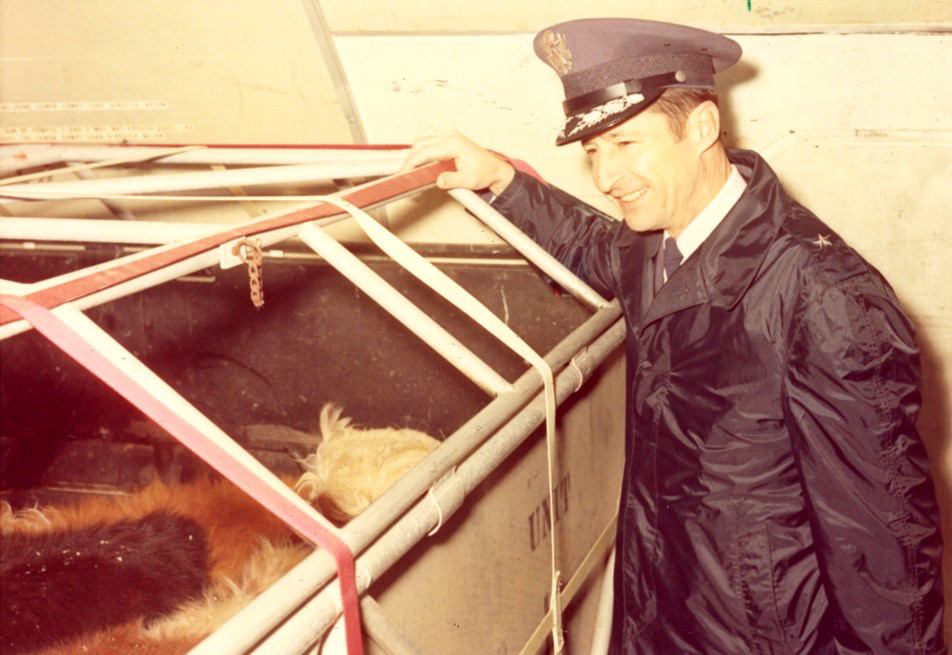
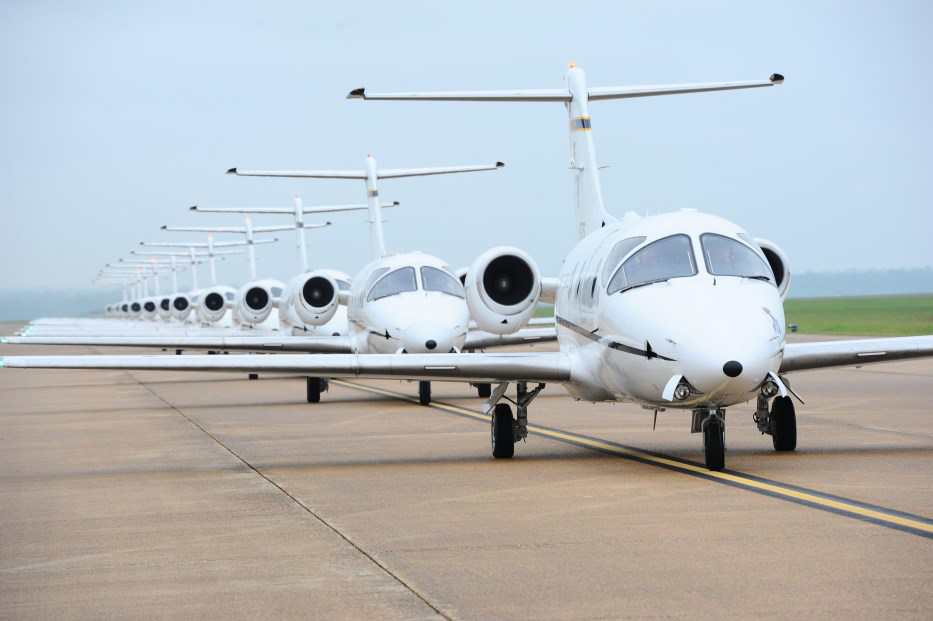
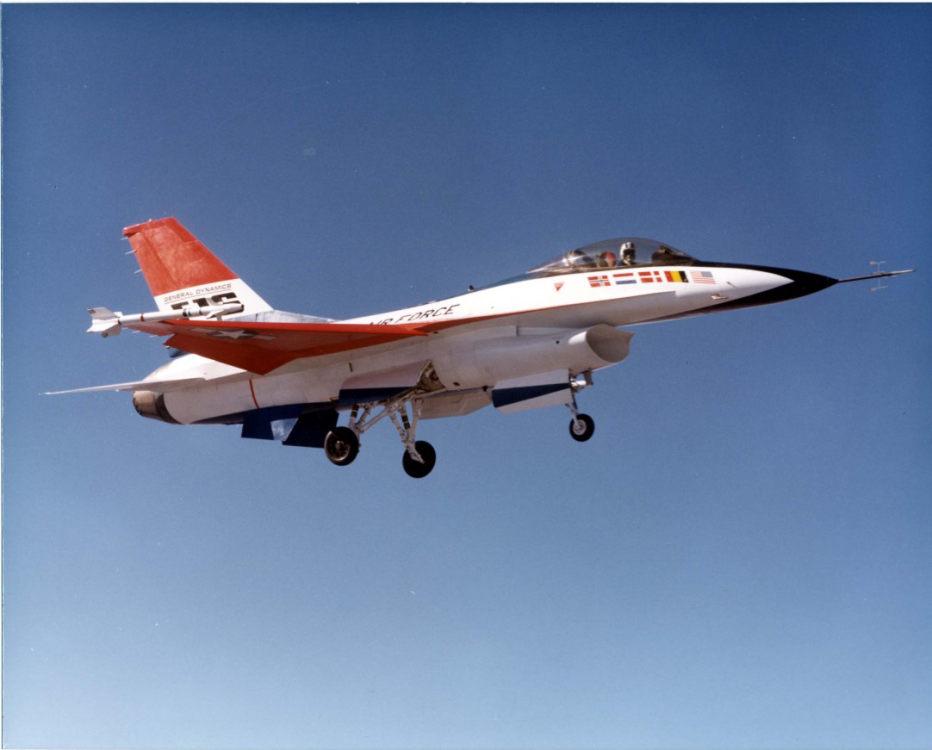
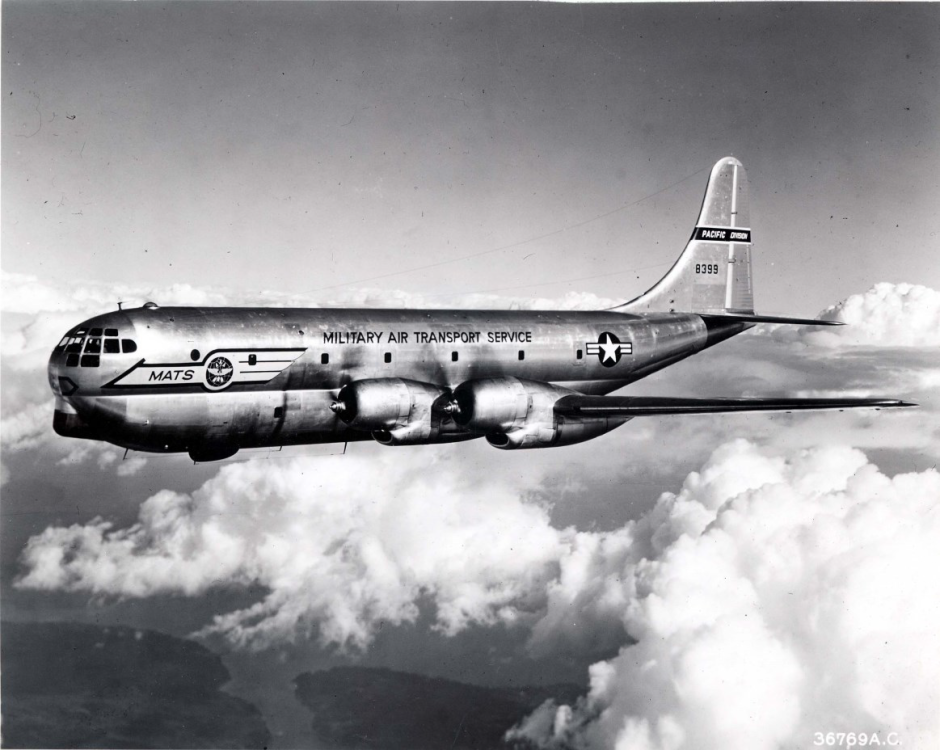
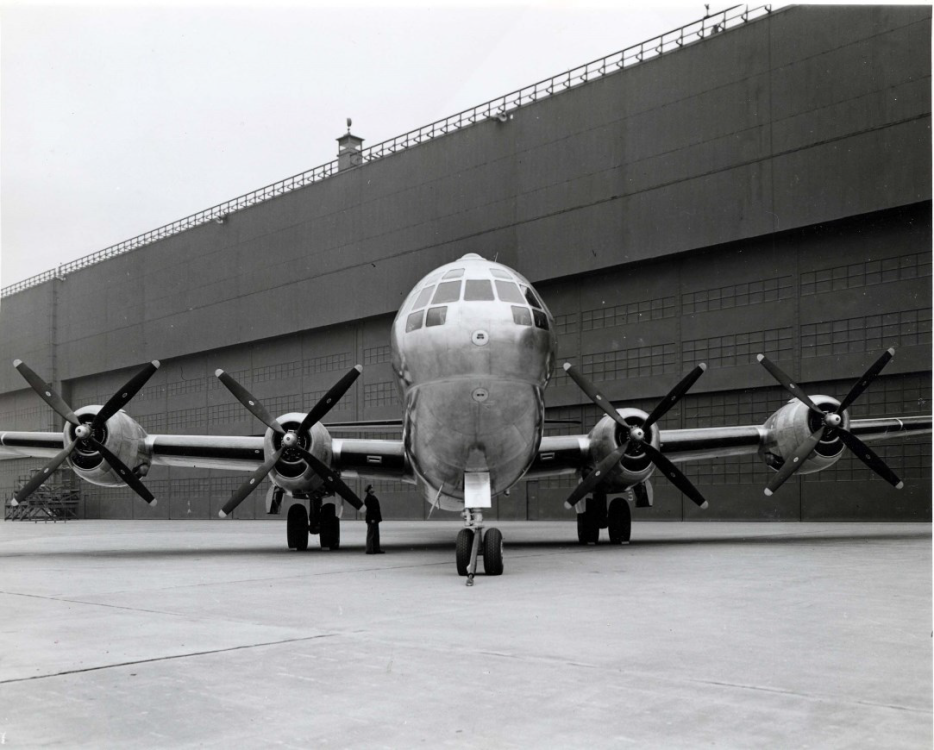
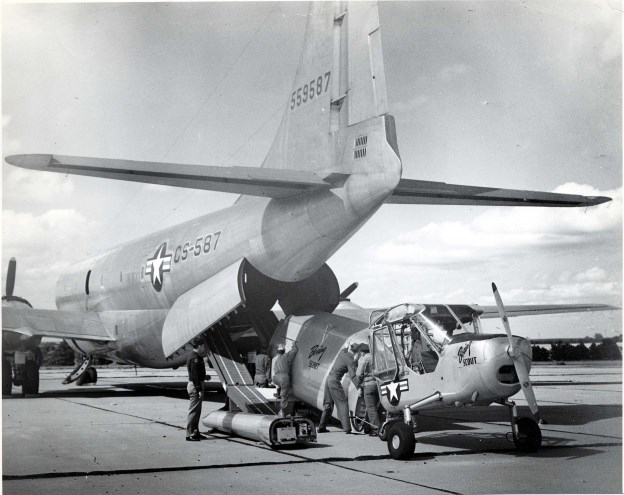
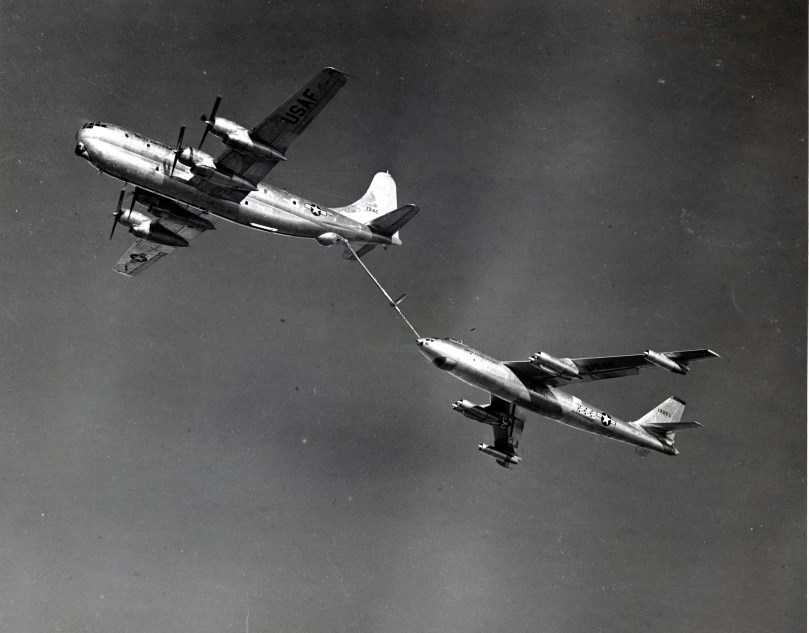
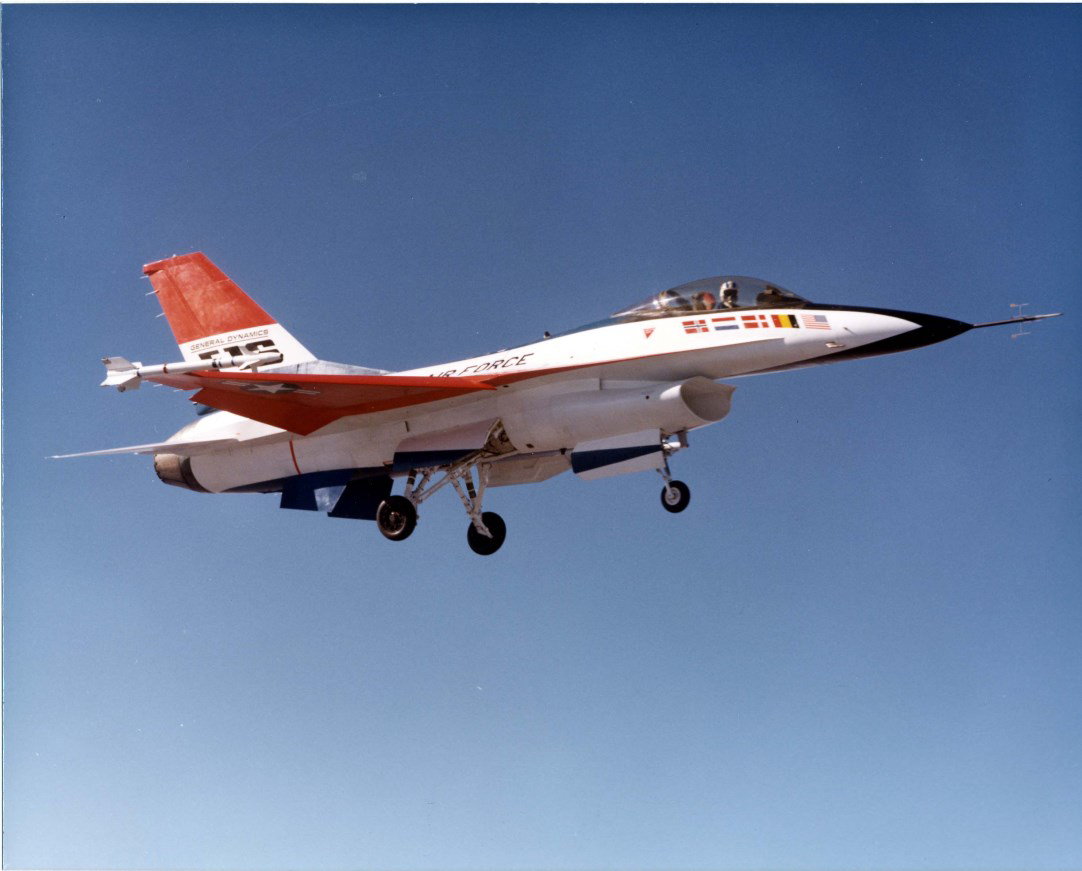
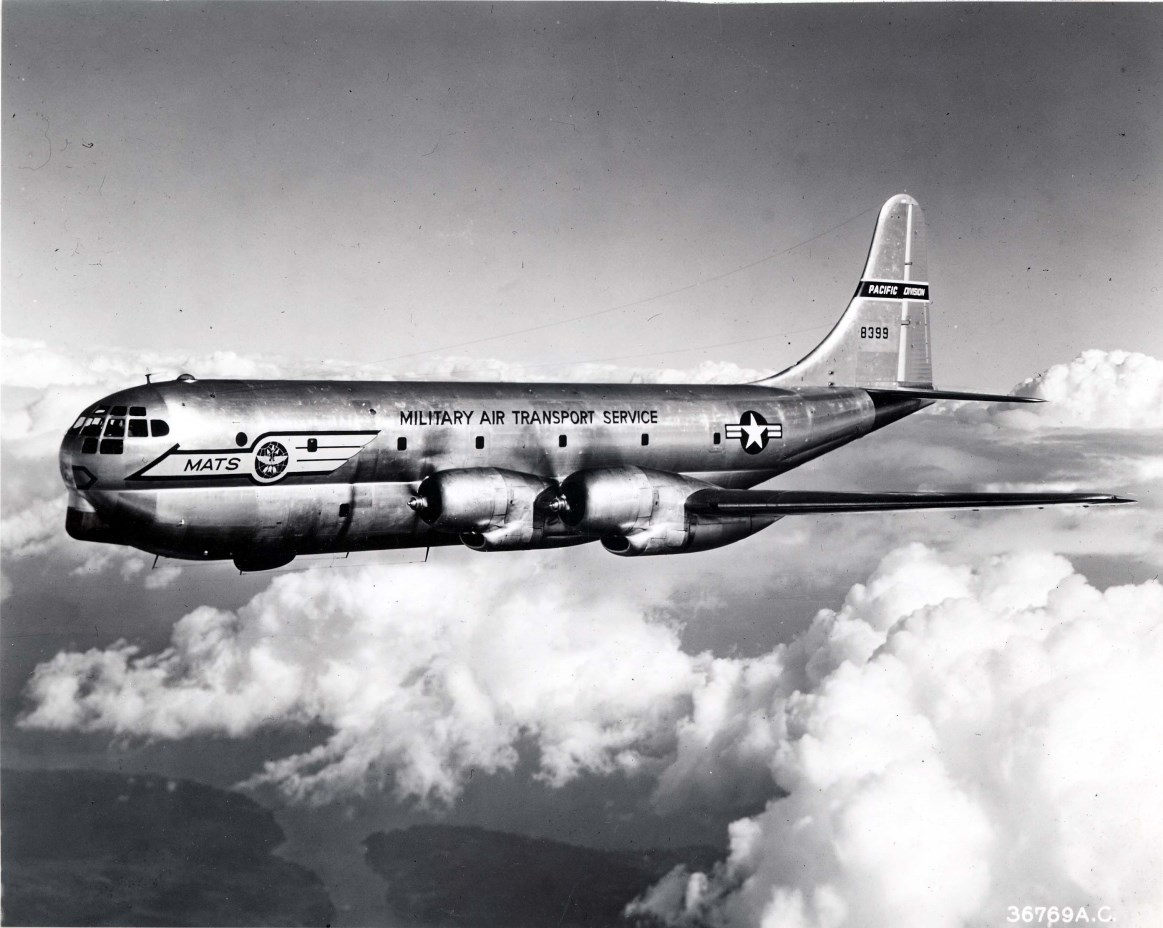
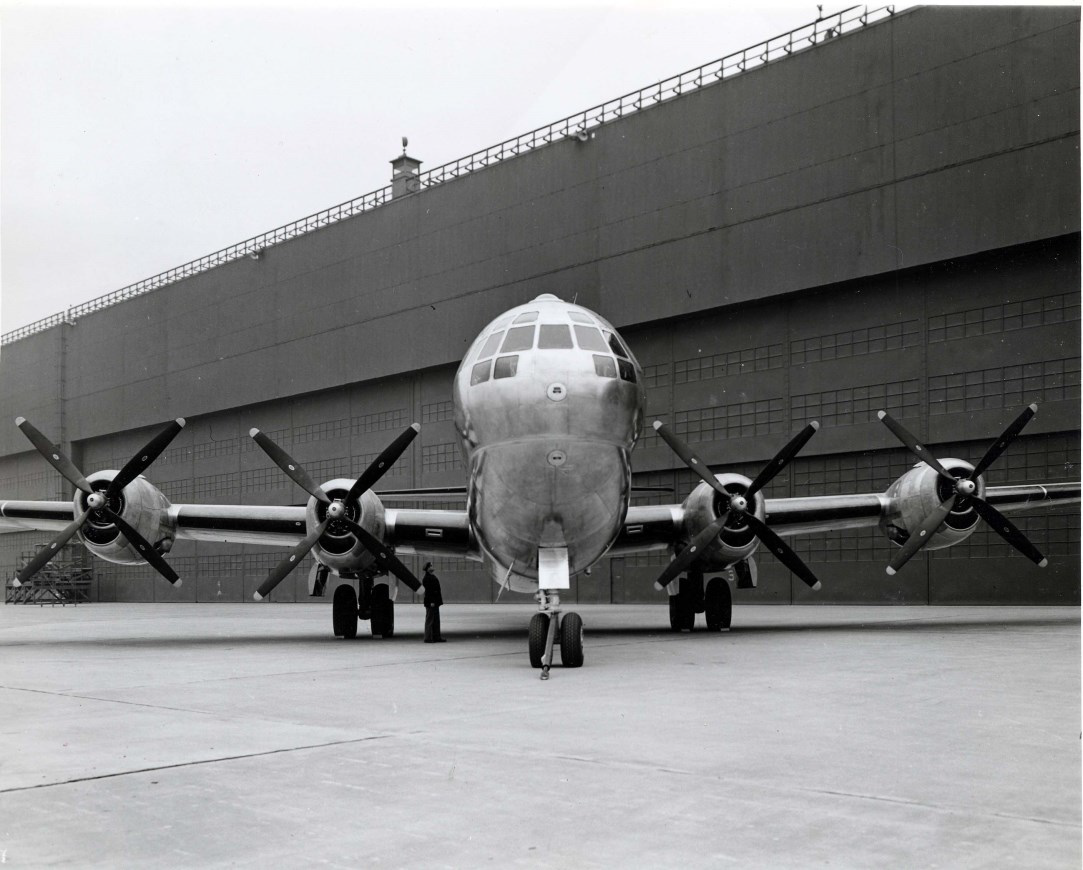
1 pointAs I will be out for an exercise, here are the daily history inputs for the rest of the week... 75 years ago (17 Oct 1949), as the forces of Nazi Germany rolled across Western Europe and Imperial Japan expanded its conquests in Asia and the Pacific in the late 1930s, the United States considered the need to be able to strike these potential enemies across the Atlantic Ocean or vast stretches of the Pacific. To do that, the Army Air Corps contracted with Boeing for a “Very Heavy Bomber” in May 1941, seven months before Pearl Harbor. After significant growing pains, that project resulted in the B-29 Stratofortress, which could reach farther and drop more bombs than any other aircraft of its day. The B-29’s advanced design, leveraging new technologies like cabin pressurization (demonstrated on Wright Field’s XC-35 in 1937) convinced Boeing that the basic platform could be modified into an equally capable car-go plane that incorporated many of the bombers’ components. In June 1942, three months before the XB-29’s first flight, the company approached Wright Field with this concept, which gave them the go-ahead. The slender fuselage of the B-29 clearly wasn’t suitable for a heavy airlifter, but Boeing engineers devised a 2-level “inverted figure 8” concept that grafted a larger diameter upper fuselage onto the standard lower one, giving it considerably more interior volume, along with its distinct “pinched” waistline. The two halves were separated inside by a deck, with rear clam-shell doors and loading ramp to the upper space, which totaled over 6000 cubic feet—more than twice any other car-go plane. The wings, engines, tail, landing gear, and many internal components came directly from the B-29. Dubbed the XC-97 Stratofreighter, the type had its first flight on 9 November 1944 and just three months later flew non-stop across the US in a record six hours. After nine prototypes, the Air Force and Boeing pivoted the design’s baseline platform to the newer B-50—a significantly upgraded version of the B-29 that superficially looked the same but had 75% new components and 60% more horsepower for greater range, speed, efficiency, and lifting capacity. The first lot of these YC-97As were distributed among Military Air Transport Service (MATS), Strategic Air Command, Air Proving Command, and Air Materiel Command. One of SAC’s was pressed into service in May 1949 during the Berlin Airlift, where it carried a record one million pounds of cargo to the blockaded city in 27 sorties. The first production model C-97A had its maiden flight on 16 June 1949, with deliveries beginning that Fall. MATS received its first of these on 17 October 1949—75 years ago. They served with distinction during the Korean War, particularly for aeromedical evacuation. Boeing eventually built a total of 888 C-97 variants. Just 77 of these were cargo planes, another 56 were Boeing 377 Stratocruiser airliners, but the vast majority were KC-97 tankers (below), serving as the mainstay of the Air Force’s aerial refueling fleet until they were supplanted by the KC-135, with the last KC-97s being retired in the 1970s. In 1951, the type was also BIG SAFARI’s first project: PIE FACE, which concealed a massive camera in a C-97A to surreptitiously photograph East Germany. (Photos: NMUSAF) On 18 Oct 1971, 264 feeder calves weighing around 270 pounds each flew out of Tinker AFB on commercial DC-8s under the watchful eyes of base officials, representatives of the South Korean and Japanese embassies, U.S. Senator Henry Bellmon of Oklahoma, and former Arkansas governor Winthrop Rockefeller. The jet-setting cattle were on a trip to South Korea, where Sam Lee, the owner of Daehan Feed Co. in Seoul, had purchased the calves under a cooperative venture proposed by Senator Bellmon about a year prior. The idea was that calves could be sent to South Korea, fattened up there, and then sold to Japan as meat—avoiding a $130 per head tariff that discouraged ranchers from sending cattle directly from the U.S. to Japan. This flight followed an earlier “test run” in January of the same year, flying cattle from Tinker to California, which was known as “Project Bull Shipper,” a photo of which is reproduced here. The operation gave Tinker’s “LogAir” team valuable training and experience. (Photo: USAF) On 19 Oct 1991, the second test T-1A Jayhawk (TT-02) made its first flight. The first test plane had had its first flight earlier in the year, on July 5th. Following successful testing, the first operationally ready T-1A was delivered to Reese AFB in Texas a few months later in January 1992. This twin-engine, medium-range trainer was designed to be utilized in Specialized Undergraduate Pilot Training (SUPT) and would first see use with student pilots in 1993. SUPT begins with coursework and classroom time before students start primary flying training in the T-6 Texan II. Once they’ve completed flying in the T-6, they are “tracked” into either the fighter/bomber track or the airlift/tanker track. Those who will be going on to fly fighters and bombers then conduct their advanced flying training on the T-38 Talon (soon to be replaced by the T-7 Red Hawk); while those who will be flying airlift, cargo, and tanker missions train on the T-1. Pictured are 14th Flying Training Wing T-1s conducting a mass launch in 2015 from Columbus AFB, Mississippi. (Photo: USAF) On 20 Oct 1976, the General Dynamics plant in Fort Worth, Texas, hosted its rollout for the F-16A, revealing the production model of the new lightweight fighter to the public for the first time. Shortly after, in December 1976, it would have its first flight (shown here), nearly 3 years after the YF-16 had flown. The A model was larger, more robust, and more capable than the prototype. Even at rollout, it was clear that the F-16 was going to have a large foreign market. Unlike most US airplanes, the F-16 was actually commissioned by five countries in a coproduction scheme—the United States, of course, played the leading role, but it did so in agreement with four NATO allies: Belgium, Denmark, the Netherlands, and Norway. The F-16s produced for this consortium had parts manufactured in each of the five countries, and, at the time, the arrangement was hailed as “the arms deal of the century” by those involved. (Photo: NMUSAF) (Just to add, 20 Oct also marks the 43rd anniversary of my arrival at basic training! 🫡🫡)
 1 point
 -
1 pointI want to get the Gen2 Ranch in 300BLK with a PTR Vent 1. Gets close to "movie quiet" while still using a real caliber (unlike .22LR, which I love, but it's for kids 😂🤣). Speaking of 22, I got a Sig P322 and I gotta say, the 20rd mags really mitigate the most annoying elements of shooting a 22 pistol. With a can on it (Warlock) the thing is stupid quiet. And very light. Probably my go-to snake gun just based on the decibels. And somehow I end up more of a Sig fanboy. Needs a replacement trigger though, the plastic is flimsy. Now just waiting on the can for my Rattler. We'll see if the NFA gods will honor me with a fast approval...1 point
-
1 pointYup, and shame on them. Shame on candidates that lose and refuse to concede, that undermine confidence in our elections, and that call into question the legitimacy of the winner, simply to safeguard their bruised ego. Shame on them, and especially so without any credible and/or compelling evidence of outcome-determinant fraud or suppression. Ok, now your turn……1 point
-
1 pointThe military/govt should be shitting their pants at the threat of drones. I'm not saying anything groundbreaking here or advertising a capability that isn't being used a thousand times a day in the current conflict, but $100k and ten dudes spread out stateside would bring our home station AF to its knees.1 point
-
1 pointSuch an on the nose reminder of what people are capable of when the government bureaucracy gets taken out of the process. I don’t know what it was like in the ‘60s to watch the leaps and bounds that NASA made towards manned space flight on the way to the Lunar landings, but I feel immense pride in watching SpaceX demonstrate good old American ingenuity. I love the “chip on the shoulder” attitude that we’re gonna do something completely unheard of in the history of the world. And why, because F*** you, we can.1 point
-
1 pointThe WSJ take on the situation, with the added bonus of a humorous story on the "worst spy ever," Fengyun Shi! Mystery Drones Swarmed a U.S. Military Base for 17 Days. The Pentagon Is Stumped. U.S. officials don’t know who is behind the drones that have flown unhindered over sensitive national-security sites—or how to stop them https://www.wsj.com/politics/national-security/drones-military-pentagon-defense-331871f4 To view the article with pictures, go to the Air Force MWR Libraries website (https://daf.dodmwrlibraries.org/) and log in using your DoD ID number (i.e., EDIPI) and DOB. Once confirmed, under ‘Find a Resource’ search for the Wall Street Journal. Once at that publication’s website, use the URL above.1 point
-
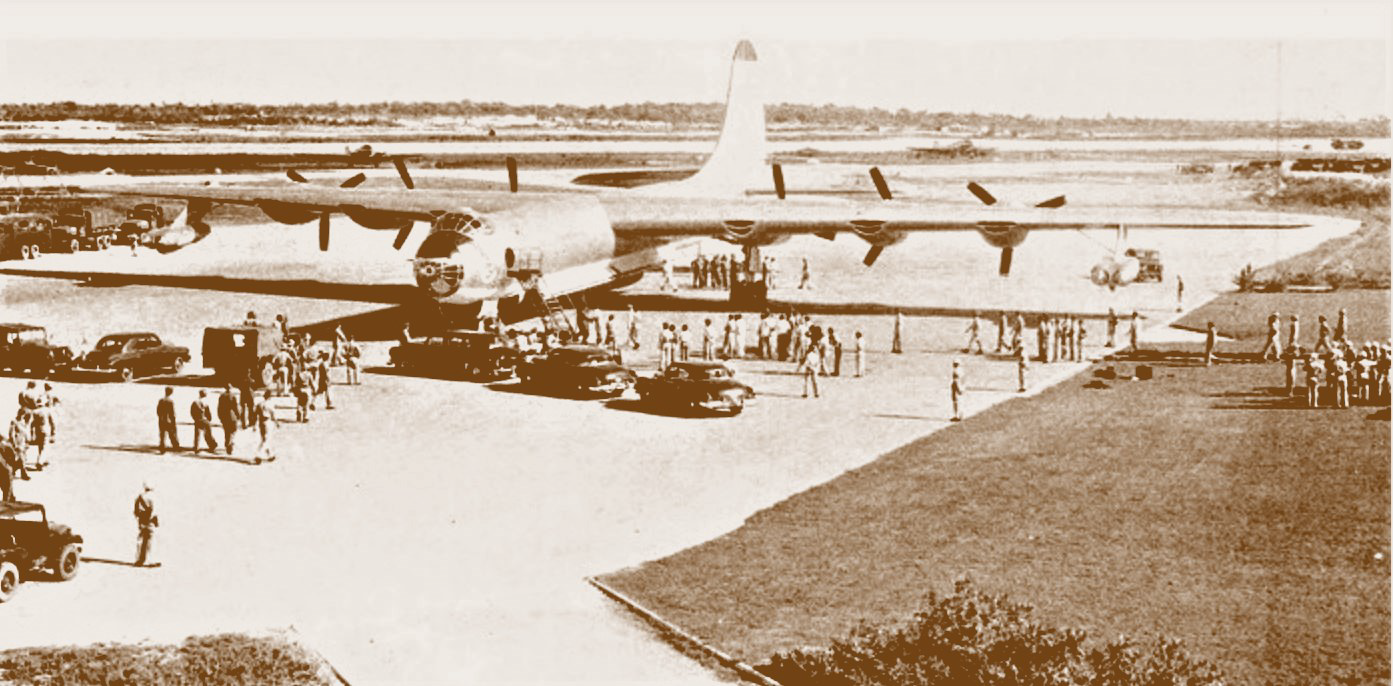
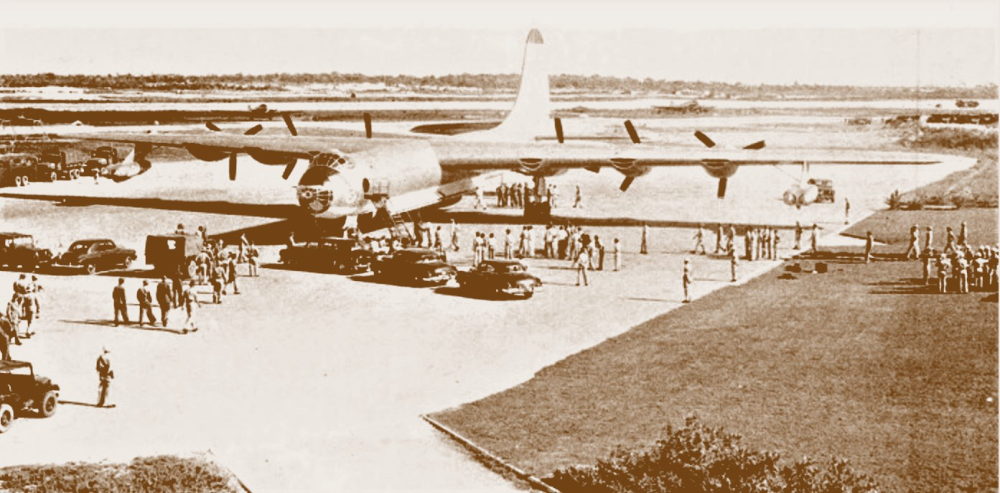
1 pointToday in 1954, 70 years ago, the first full wing of Consolidated B-36 Peacemakers—which were then the largest intercontinental bombers in the world—deployed to Andersen Air Force Base on Guam. This was the first time a complete B-36 wing had deployed overseas. The bombers were part of Strategic Air Command’s 92nd Bomb Wing (pictured here on Guam with one of their B-36s in 1954). At the time, Brig Gen Joseph D. Caldera told media outlets that the B-36 “now flying daily over the Western Pacific could take off from Guam, hit every important Russian target, and land in England,” making Guam the chief Soviet target in the Pacific were the Cold War to turn hot. While the B-36 was the primary component of America’s nuclear deterrent force in the early Cold War, no B-36 ever dropped a bomb in combat. (Photo: AFLCMC/HO)
 1 point
 -
1 point
-
1 pointRooting for you again, QUAG. DM on IG if you got questions but I know this isn't your first rodeo.1 point


(1).thumb.jpg.7759999c13b3f642753de813ad11dd09.jpg)