
Leaderboard
-
arg
Supreme User12Points1,370Posts -
ClearedHot
Administrator6Points5,429Posts -
Danger41
Supreme User4Points1,823Posts -
Blue
Supreme User4Points542Posts




Popular Content
Showing content with the highest reputation on 09/16/2022 in Posts
-
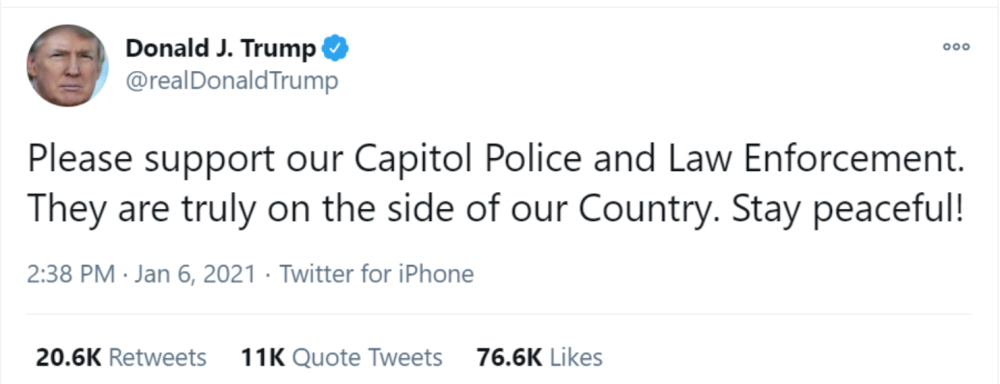
6 pointsI certainly agree Jan 6th was a horrible day for America, but Democrats stood by (and in some cases cheered), as Left Wing radicals burned American cities and stormed U.S. buildings. Just because you repeat the narrative that doesn't make it true. If you want to talk about him challenging the election please be equally damning in going after democrats who did the same thing - Clinton Won't Rule Out Questioning 2016 Election, But Says No Clear Means To Do So Sadly I sense some TDS, this is not about Trump...I don't like him and I want him to go away, but the radical left under crazy Uncle Joe has been empowered to do a LOT of damage to this country. You can try to over complicate the immigration argument but it is a simple fact, with effort on the border and things like the remain in Mexico policy FAR fewer were crossing our borders illegally...many were deterred from even trying. Are there several factors that need to be adjudicated, of course, but this wide open bullshit is bringing havoc. I am usually a rule of law kind of guy so sorry this path to citizen ship for 11 million that came here ILLEGALLY is complete bullshit. I favor a path for the dreamers, they were kids and had no choice in the matter, this country is all they've ever know but the adults that BROKE THE LAW, hell no, get OUT! Granting them citizenship is a giant FU to the MILLIONS of people standing in line trying to come here LEGALLY. We are a country of law...why is that so difficult? Do we need legal immigration, absolutely...we need workers (skilled and unskilled), and as you point out the demographics of the boomer generation points to serious issues if we don't make adjustments. That being said and acknowledged lets do it legally, with background checks and a secure border that at least slows the most wanted terrorists and tons of illegal drugs that are flowing across the border and into our country. I believe the last number I saw said we allow about one million folks each year to LEGALLY emigrate the U.S., if that number needs to be increased, let look at it and do what makes sense for our country. It is ironic that the liberal mayors of these so called sanctuary cities are screaming for help with Texas sending them illegals. These nitwits get a small taste of what they have done to Arizona and Texas and they cry like little bitches. NYC cried uncle after 2,000 arrived over a month when Texas is seeing 7,000-8000 EACH DAY! The ultimate buffoon is Lori Lightfoot who then put them on a bus out of her so called sanctuary city.
 6 points
 -
4 points4 points4 pointshttps://www.919sow.afrc.af.mil/News/Article-Display/Article/3154553/draco-crew-excels-despite-adversity-in-afghanistan-withdrawal/ Here’s a great write up about a Reservist pilot and crews mission in Kabul. Hopefully AFSOC PA can get can the stories of the no shit heroism of the Draco folks involved there.4 points3 points3 pointsUmm, I've got 21 cows and a 1949 Ford tractor.3 points3 pointsThe question is who is "they?" I'd argue it's not so much the contractors, as it is the Air Force. In particular, AFMC and ACC. Contractors gonna contract, they're gonna occasionally be slow and provide substandard product. That's not ideal, but that's just reality of the supply base for military aviation. A former professor had a different way of putting it - the difference in standards between military and civilian aviation is why, when a 737 makes a smoking hole in the ground, the heirs of each person sitting in the back gets tens of millions. When a F-16 does the same, the heirs get a couple hundred grand in SGLI money and a folded flag. A morbid aspect of the difference in civilian and military aviation. And the topic of "counterfeit parts" is obviously incredibly concerning, but so far it just seems like a red herring in this case. It makes for good press, but hasn't yet been attributed as causal to the incident. In theory, AFMC and ACC should be the "adults in the room," advocating for keeping the best possible hardware in the hands of the warfighter. In the case of AFMC, it would be the System Program Office (SPO) for the F-16 and whatever SPO handles the ACES-II seat and components. One would hope that, due to the criticality of their application, all mods, TCTOs, etc related to the ejection system would be given the highest priority within the Air Force enterprise. Everything about this accident seems to point towards the ejection seat mods being treated the same as any other mod on the aircraft, and scheduled when they'd be the most convenient and least manpower-intensive. Either way, lots of missed opportunities: TCTO 11P2-3-502 was issued for the shorting plug installation. When the plug wasn't available in 2017, ACC decided to push the install 36 months, to the next seat maintenance opportunity. Why was such a safety-critical mod allowed to be pushed three years to the right? Who made that call, and what was their reasoning? What was the original compliance deadline on the TCTO? The shorting plug was out of stock, for some reason. Did someone from one of the SPOs go beat down the door of the supplier to expedite orders for the shorting plug? Did someone search out an alternate source? Or did no one take any action, and accept whatever slip they manufacturer gave them? The DRS reached it's life limit, and it sounded like ACC asked for three individual six month extensions. ACC is looking to the "big brains" in the SPOs in AFMC to provide well-reasoned technical guidance on whether or not the life should be extended. Did AFMC do any kind of no-shit analysis and come to a well-supported conclusion? Or did some desk jockey just sign it off to keep the boss happy? In hindsight, the combination of a required TCTO, along with expired service life should have given someone pause. When the shorting plug became available, ACC didn't install it on the aircraft. When the replacement for the DRS became available (the MASS), ACC didn't install it on the aircraft, either. Instead, they pushed all mods to the next available maintenance opportunity. That's great for efficiency in manpower and aircraft availability, but poor for safety. Again, an OK path if your mod is some mundane change, but poor if your mod is safety critical. Goes back to what was the deadline on the shorting plug TCTO? Who set the deadline, if it was pushed, who approved the push, etc. The question of manpower resources at Shaw comes up, too. I'm long since removed from any kind of military flightline environment. But the stuff you read on social media (here and elsewhere) seems to indicate the scepter of volunteering, bake sales, SARC CBTs, and everything else but your primary duty continues to be the focus. If some of that nonsense was diminished, would maintenance at Shaw have had the bandwidth to do the seat work sooner, and not wait for the next "convenient opportunity?"3 points2 points2 pointsHonest question. If that's the case why is he being charged by the civilian law for acts with someone under 18? Should it be under 16?2 points2 pointsIt's not that they can't let it go, it's that you just don't understand. You weren't there. You wouldn't know... If I had a nickel for every time I've been told something like that in the past two years...2 points1 pointWho would have thought a bunch of limousine liberals who live sheltered lives in an exclusive bubble would actually think this way? WATCH: Spanish TV Reporter Says Martha’s Vineyard Residents Privately Admitted They ‘Don’t Want Migrants Here’ https://www.breitbart.com/politics/2022/09/16/watch-spanish-tv-reporter-says-marthas-vineyard-residents-privately-admitted-they-dont-want-migrants-here/ Sent from my iPhone using Tapatalk1 point1 pointWhoa, even mainstream sources (NPR) are backing away from the party line that held fast the last 2+ years. Apparently, it’s okay now to question how mortalities were counted, the riskiness of COVID, etc. 🙄 Before someone says, “But the science is different now,” I acknowledge that contextual factors have changed regarding the disease. However, non-scientific reasons are also driving the shift in attitudes, which undermines the credibility of the cult chant of “trust the science.” Scientists debate how lethal COVID is. Some say it's now less risky than flu1 point1 pointOne of the first things I read when I got to the CAOC last year was their AAR after the TF rep recognized my name and pushed it to me. Very, very impressive. BZ to those crews. ATIS1 pointHigh mortgage rates are going to be a godsend. It's the only thing that will reliably bring down prices, and lower prices are desperately needed. Even some of the housing bears think we'll only see a 10-20% drop in home prices, but I think that's wildly optimistic. If we have higher interest rates, housing will correct to the historical cost:income ratios. No, we didn't see the adjustable rate mortgages that blew up the last housing market. Canada and Australia are going to have to fight that demon. But we saw a level of institutional investor purchasing that was unheard of until this bubble, coupled with interest rates that are unsustainable in the long term. I think those two factors are going to be more, not less devastating than the adjustable rate mortgages were. Other factor is rents, people assume will continue to rise as housing prices fall, but they usually fall in tandem. If rents drop, the institutional investors that are already losing their dreams of asset appreciation will also lose their cash flow, and unlike mom and pop, the second it becomes unprofitable they will sell. To add to that, another thing we didn't have in 2008, the baby boomers retiring. Many of them are relying on their home price as a component of their retirement. 50% of the generation has no retirement savings, and of the 50% that do, the median retirement value is 105,000. Why downsize when the value of your home just keeps going up? Conversely, I think there will be a lot of panic selling when they see their largest asset lose 10 or 20%. And that'll only drive down prices further. Even though they are doing a surprisingly resilient job of fighting the pivot narrative, eventually the Fed is going to break something in this debt addicted market, and at that point the political pressure will be overwhelming. Don't get me wrong, in the long term. The only solution to this will be fiscal and monetary tightening, but I think that will only have the political support required when inflation rears its head again, after diminishing somewhat from this round of tightening. At the end of the day, the home prices we have seen are only possible with low rates and easy money, and inflation reduction is only possible with high rates and reduced liquidity. I do not believe housing will win out over inflation in the long term.1 point1 point1 pointI've had the pleasure of working with folks from a couple different carriers that went away via mergers, albeit corporate types, not pilots. It's been interesting to see the differences. The former Continental folks were all incredibly proud of what they had accomplished at their former carrier. Their bags and backpacks often had a tag emblazoned with "Ex-Con" and the Continental logo. Mechanics had similar stickers on their toolboxes. Newark was longtime Continental stronghold, and as late as 2013 (three years post merger), there was a Continental flag the size of a small house hanging on the wall in the hangar, and all the mechanics still had Continental logos on their uniforms. Legend has it that all changed very quickly when some higher-up took a tour of the hangar and subsequently blew a gasket. All those ex-Con folks were incredibly proud of "where they came from," and the afterglow of the halcyon days of Gordon Bethune were evident. At the same time, they didn't come across as any kind of "know-it-alls." More just proud of their heritage, and occasionally privately shaking their head at some of United's post-merger stumbles. Very much keeping with the polite, South Texas heritage of the former Continental HQ in Houston TX. The former Northwest folks didn't really have any kind of outward displays of their former employer. The odd decal here and there was about it. And they (mostly) didn't immediately revert to bellowing "well back in Minneapolis...." when in a meeting. But get those folks in private, hoo boy! Northwest Airlines was God's fucking gift to the airline industry. They were breaking new ground every time they stepped into the hangar in the morning. Every single employee from top to bottom was the world's leading expert in their field. There was no higher pinnacle in the industry than being employed by Northwest Airlines. A janitor in Minneapolis was superior to a Director at any other airline. Their way was the best way, and anyone who even approached questioning it was deemed a fool. It was very keeping with their humble, but incredibly passive-aggressive Upper Midwest ways. The corollary to "Minnesota Nice" is often "Minnesota Passive Aggressive and Back-Stabby." All the ex-United folks seemed to be merely happy to have a job, and quietly reflecting on how the proceeds from selling their 1,200 sq ft home in San Fran was able to buy a mini-estate in the Chicago suburbs. Airline history, and how some people make it part of their identity, is a weird aspect of the industry.1 point1 pointI'm all for legal immigration. I'm not for a border so porous that everyone who wants into the US knows they should go to Mexico and cross from there.1 point1 pointThey killed him. He needed the seat and they let him down. How can they sleep at night?1 point1 pointThat’s exactly right. Go back and read this thread from 18 months ago, people here were claiming there was a scientific consensus when in fact there was a conspiracy to paint a scientific consensus and drown out opposing voices. And those opposing voices turned out to be correct. Now revisionist history is taking place right in front of our eyes: Democrats are claiming they did not want schools closed, Trump pushed the shot, and it was just a wild time and nobody really knew what the right answer was so they defaulted towards safety. All of that completely false. As I look at the many failures compounding within our society, from skyrocketing urban crime to a foolish Covid response, to a humiliating defeat in Afghanistan, runaway inflation, etc. there is a single thread which connects them all: lack of accountability. People in senior leadership positions made deliberate decisions with disastrous results, and they are never held accountable. All of our problems will continue to worsen until people are fired & thrown in jail when they deserve it. And given the severe damage to children he perpetrated, I would like to start with Fauci.1 point1 pointSpending a few billion to kill Soviets is one of the best investments out government has made in a long time.1 point0 pointsI have a junior and freshman in college. They would both join (against my recommendations) in a heartbeat if there was no vax requirement. Keep it in place as far as I'm concerned.0 points









Account
Navigation
Search
Configure browser push notifications
Chrome (Android)
- Tap the lock icon next to the address bar.
- Tap Permissions → Notifications.
- Adjust your preference.
Chrome (Desktop)
- Click the padlock icon in the address bar.
- Select Site settings.
- Find Notifications and adjust your preference.
Safari (iOS 16.4+)
- Ensure the site is installed via Add to Home Screen.
- Open Settings App → Notifications.
- Find your app name and adjust your preference.
Safari (macOS)
- Go to Safari → Preferences.
- Click the Websites tab.
- Select Notifications in the sidebar.
- Find this website and adjust your preference.
Edge (Android)
- Tap the lock icon next to the address bar.
- Tap Permissions.
- Find Notifications and adjust your preference.
Edge (Desktop)
- Click the padlock icon in the address bar.
- Click Permissions for this site.
- Find Notifications and adjust your preference.
Firefox (Android)
- Go to Settings → Site permissions.
- Tap Notifications.
- Find this site in the list and adjust your preference.
Firefox (Desktop)
- Open Firefox Settings.
- Search for Notifications.
- Find this site in the list and adjust your preference.