Leaderboard



Popular Content
Showing content with the highest reputation on 10/05/2016 in all areas
-
Ding ding ding! It is now imbedded in the culture that you should be far more concerned about your next promotion, assignment, and/or decoration than you should be about the mission. If you aren't, you will fall behind. The "speech" from one's CC these days almost always consists of something like: "You're a good pilot. So are Bob and Sally and Billy. In fact, when it comes to the actual job, you're all pretty much the same in the eyes of the people who matter. So, let's talk about your roadmap to the vaunted SQ/CC position and beyond. To get ahead, check box X, then Y, then Z (nevermind that none of those are mission related. The mission will take care of itself.) If you do this, you must be a good officer and will be rewarded for your stalwart dedication to the self licking ice cream cone." I have heard this speech or something very close to it from the majority of my SQ/CCs and above and every time I hear it my heart sinks a little more. I'm convinced that the majority of the leadership thinks in this manner and this is why no one seems to be able to take a wholistic view of how to get the USAF where it needs to be. They simply aren't motivated to think beyond the next three years because that's the way we're all told we're supposed to think. Until there is a dramatic shift in this way of thinking, I surely would not recommend the AF to my children.4 points
-
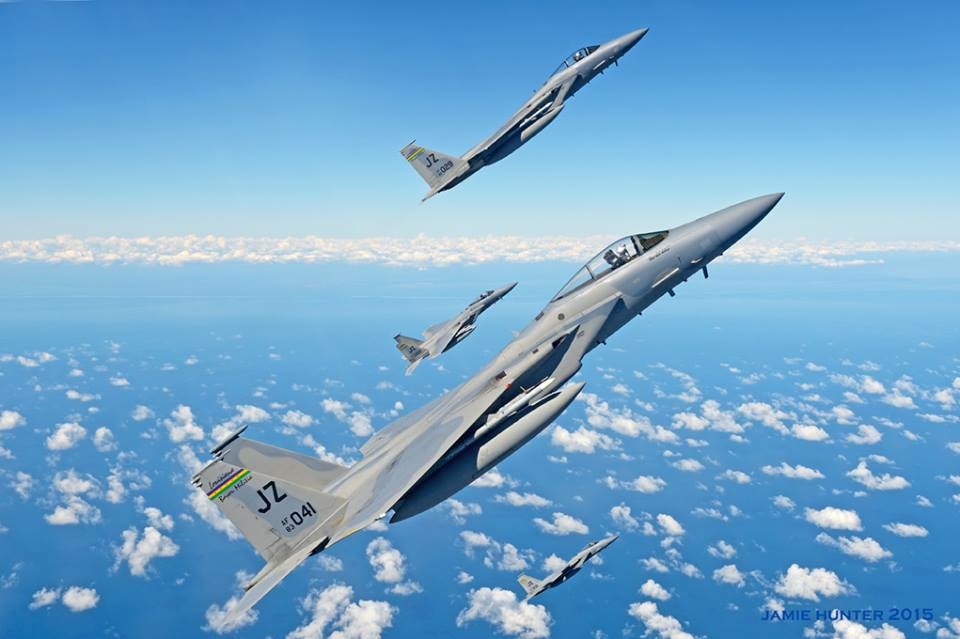
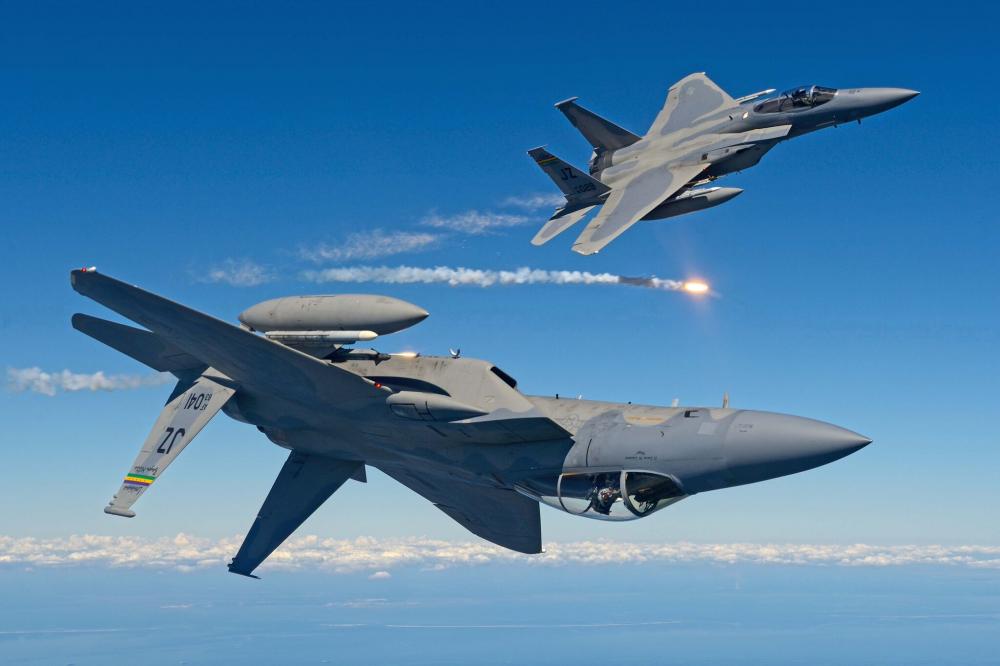
3 pointsWe're looking for a new pilot or two. All interested individuals are invited to send their resume and/or information to 122FSpilothiring@gmail.com . A full application includes, but is not limited to, a college degree or status of coursework/transcript, AFOQT scores, TBAS test and PCSM score, and summary of flying time, if any. All applications will be considered, but only a small number of applicants will be invited to interview in January. I highly recommend visiting during one of the upcoming drills (Oct 14-16, Nov 4-6, Dec 2-4). If you want to maximize your chances make sure all the tests are complete with competitive scores (most of our applicants that get interviews have scores in the 90s) and you are within a semester of college graduation. It also helps if you visit (and don't get hammered and make a fool of yourself - I mention it because it happens). Questions? Shoot an email to the address above. Good luck everyone, we're looking forward to finding our next round of Eagle drivers.
 3 points
 -
2 points
-
1 pointI am an AFROTC cadet graduating in May with a pilot slot, I was curious if anyone had info on how EAD and pilot training dates work? Can you request dates to go to pilot training/EAD? Can you trade dates with other pilot slot selections? I am asking because I would like to use up my full year before I EAD so I can get my masters. Thanks in advance for your response!1 point
-
1 pointAs a 1C, I can help with this question. You will need to talk to yours HARM office. They're the ones who track your flight pay. As far as you being a reservist, you're on "conditional" flight pay. That means you get paid for how much you fly. Generally you have to fly 4 hours a month to get paid. If you fly more, it'll roll over to the next month or apply backwards if you didn't get it previously. It won't matter about your AT weekend. However, if you're on active orders then you should be prorated as a result. Finance will not know the answer to your question. It's trucked by your HARM office who pushes the info to them. It should be easy to find since your info will be in your FRF.1 point
-
Stockholm syndrome... Sent from my iPhone using Baseops Network Forums1 point
-
1 point
-
I was a phase III UPT instructor around 07-08, what I remember is substantially smaller classes and not many fighters dropped. I remember picking up a track select of 3 T-38 dudes per class for a while, this will come home to roost soon as well.1 point
-
The Air Force MARS phone patch net supports all DoD, Federal and State agencies providing HF radio to telephone interfacing. We have increased our monitoring due to hurricane Matthew and would like to remind pilots / operations that we are available to handle Official (and Morale) HF phone patch to DSN or commercial numbers. Specific information is in the Flight Information Pilot (FLIP) document. Please feel free to contact me or the net via https://marsphonepatch.net for any further information. PhonePatchNetBooklet.pdf1 point
-
1 pointMeh, We're dropping multiple GBUs/Hellfires to kill a dude getting paid 200 dollars to dig a hole and bury HME. A GBU-10 for a MI series is probably a bargain by comparison. Sent from my iPhone using Tapatalk1 point
-
1 pointJeebus Christola on a Cracker, a GBU-10 for a helo? Is everything WSOs do Korea-esque not-quite-right? Sent from my iPad using Baseops Network Forums1 point
-
1 pointThe last USAF aerial victory was on May 4th, 1999 in Operation ALLIED FORCE. Lt Col Michael H. Geczy shot down a Mig-29 with an AIM-120 while flying an F-16CJ with the 78 EFS.1 point
-
1 point
-
1 point
-
1 point
-
1 pointUnfortunately that is likely but one can and must argue for us to remember our roots Centralized planning Decentralized execution The tether that modern links provide has become a chain dragging down our aggressiveness and offensive capability as an AF Sent from my iPhone using Tapatalk1 point
-
1 pointFury 02 (B-1) crashed in 1997 with 4 fatalities. That callsign still flies regularly on B-1s.1 point
-
1 pointThe B-52 community flying with the Raider callsign probably really struck a nerve with the Doolittle Raiders because several of their bros ended up executed in China...what a slap in the face to those men that the Buff community would dare fly with the callsign Raider. Buy you know, yay heritage!........wait, that didn't happen because none of those Doolittle Raiders were a bunch of whiny SNAPs. Sounds like some of your friends need to get over themselves. Not a bomber guy, but I think the name pays a great tribute to not only a historic bomber raid in WW2, but also to the bros who were lost in 2008. Seeing it any other way is beyond ridiculous and extremely self-centered.1 point
-
1 pointI'm sorry man, but history is full of callsigns (especially from WW 'Nam) of men and women who paid the ultimate price while flying their war chariots, both in battle and while training for battle. If the B-52 community is offended by the name Raider, maybe y'all need to dig a little deeper into history and come up with a list of names and call signs we can't use until we give you SNAPs sufficient trigger warnings and enough time to retreat to your cozy safe space. YGBSM. Personally, if I morted and Big Blue decided to name an airplane the same flying callsign, I'd be fvcking honored. You can't un-mort the mort, so your only option is to remember (with reverence). Sent from my iPhone using Baseops Network Forums1 point
-
1 pointYour fight is not with lodging. It's with whoever is paying your vouchers. LR used to do the same thing. They'd not give you an on-base room, but give you a "contract lodging" letter to the Motel 6 in Jacksonville. However, it's not "contract lodging" if you pay for it with your GTC, so he doesn't understand the letter of the law first of all. Read through the attachment for the actual letter of the law. So here's what you do. Tell him thanks for his help, get his name, number, and the date and time you called. If he books you rooms, tell him thank you, walk out of his office, and have your copilot call the hotel directly and cancel all the rooms. Go stay at the hotel of your choice, while of course staying under the max lodging allowance. Do your mission, go home, and file your voucher. Where it asks for the non-a, provide the name, number, and the date and time you called and he said there were no rooms. Reference JTR Chapter 2, Part, H, Paragraph 2570(A)(2) and Paragraph 2570(C). The caveat to all of this is the new Integrated Lodging Program. If wherever you're going is in that, you have to involve CTO and it gets way more painful unless your AO will let you slide without it for mission accomplishment. And finally, caveat emptor. I've done what I spelled out above and it worked as I've said. But you're dealing with different people, different offices, and different bosses. Message_-_Lodging_Reimbursement_Uniformed_Members_-_221800Z_DEC_06.pdf1 point
-
1 pointPredictable response. You earned it...everybody else is just a freeloader. And of course everybody else thinks similarly with regard to themselves. I know a guy who will get a check from the government for the rest of his life because he snagged a ski on a tree root while on vacation and it tore his leg to pieces. I know of another who injured himself playing a pickup game of basketball at the base gym (comedically enough, he was skipping out on work to play). And then there's every other guy who avoided the base clinic like the plague until 6 months before their final out date when, based on their medical records, you'd think they'd come down with some sort of degenerative terminal disease (which then miraculously disappeared when they needed to go out and find employment). That reminds me of another guy who thought he was done with government work when he left and pushed the VA hard to earn himself a ~40% rating. 8 months later he was trying to get on with a Guard unit who wouldn't take him because he was disabled. He was able to reverse engineer that issue, pass his physicals, and is serving in a Guard position that is more physically demanding than 99% of all Air Force positions. Had he not had the desire to return, he'd still be collecting. What are the odds that his ailments will return when he leaves the Guard? None of these are the reason for the existence of the VA healthcare system, but they are by far the overwhelming majority of claims. Monthly disability payments exist explicitly to replace income potential lost due to debilitating conditions developed as a direct result of military service...not to compensate people who have lower back pain because, ya know, 40yr old+ people tend to have aches and pains. If the 95% of people living normal lives while receiving VA disability gave up the entitlement, the guy who had his legs blown off in combat could get 50 times better care and not have to wait in a 9 month backlog of people making frivolous claims to start receiving benefits.1 point
-
1 pointI know a lot of guys receiving disability payments...not a single one of them is in a position where they would do a specific job to support themselves or their family if they could, but can't because their 'disability' prevents it. Of course those people exist, but they aren't even close to the majority of people receiving benefits, and it's sickening. My TAPS class was worthless in every regard, except one. It served as a fairly comprehensive guide on how to exploit the VA disability system for personal gain. It bordered on a class about how to defraud to program. It was disgusting to see people who were nodding off in the middle of the class perk up and start asking questions when it came to how to ensure a monthly payment from the government in return for nothing. I have neck, back, knee, and hearing issues...all of which developed while I was on active duty. The VA considers them service connected, and for all I know my time on a constantly vibrating platform with 8lbs of gear on my head under 'high' G's didn't help. But you know what? I was a decade older when I separated. Getting old sucks. Your body starts falling apart whether you're in the military or not. Just because it fell apart while I was on active duty doesn't mean my job led to the problems. I wake up every morning, dress myself, and go to work. Even if it involves some pain, I don't want a government handout that could otherwise go to a guy who took a face full of shrapnel, lost a limb, and is legitimately excluded from performing many jobs that he might otherwise hold if healthy. It always blew my mind listening to retired guys bitching about how their disability check was late again while they piloted a commercial aircraft making $200k a year, and in their previous breath were complaining about the entitlement generation and Obama phones.1 point
-
1 pointI don't think anyone would disagree with you there. But when we have guys getting a 50% rating for Irritable Bowel Syndrome supposedly acquired from the AOR chow halls, or PTSD from seeing coffins in the back of an airplane (personal knowledge of both), I don't have a problem judging some people as frauds. If you are in worse shape when you get out than when you got in, as a result of your service, than by all means you are entitled to and should make a claim. But if you are in worse shape because you eat like shit and don't exercise, or you were a train wreck to begin with, don't stick it to the Amrican taxpayer because it's an easy buck. Those people piss me off.1 point
-
1 point
-
1 pointFound this on the Facebook ENJJPT group...posted by someone who got ENJJPT FY 07 who had asked someone from his Det who went through circa 04/05...long but worth the read: Hey dude, of course I remember. Congrats on getting ENJJPT. It will be awesome. A lot of people ask what you can do to get ready for pilot training, what to study, etc. The truth is, there's not really much you can do to get ready for it. Any amount of studying you do beforehand will only put you a couple of days ahead of everybody else when you get there, and then you'll all be even again. You will be somewhat overwhelmed with the amount of things you are supposed to learn once you start the flying portion. You'll hear "like drinking from a firehose" all the time. As far as other things to expect, the timeline sort of works as follows: you'll start with aerospace physiology first, which is the easy part of the program. You'll go out early in the morning, practice PLF's, sit through classes about GLOC's and spatial disorientation, etc. I think that lasts a couple of weeks, if I remember. After that, you'll start the systems academics phase for the T-37 (I don't think they've upgraded to the T-6 yet, but I might be mistaken). The contractors they have are awesome teachers and could build a tweet from spare parts if you gave them a couple of hours. You'll cover engines, hydraulics, electrics, etc., the whole gambit. Then, at some point, I think it totals up to be about a month after you've formally started the program, you start reporting to your flight room instead of the academics room every morning. You'll meet your instructor pilots (IP's) and you'll start getting put on the schedule to fly. Expect to fly about 4 times a week or so, as long as the weather is decent. If your class gets behind they might start double-turning you (fly twice in one day) to try to get you caught up. There are five flying phases in the Tweet. Contact, Instrument, Low Level Navigation, Advanced Contact, and Formation. Once you start getting put on the schedule to fly, life is a blur for the next two months. You'll step to the jet on your dollar ride and you'll have absolutely zero SA on what's going on. You'll barely be able to get the jet started in the correct order like you've already practiced a hundred times in the LINK simulator. Everything seems to happen at ludicrous speed. In the contact phase, you're just learning the basics of flying the jet from point A to point B, how to fly a military overhead pattern, how to put the jet into a fully developed spin and then recover, how to land, single-engine ops, emergency procedures, just the basics. After you have about 5 or 6 contact rides, you'll start flying the instrument phase simultaneously. This is to give you more practice in the VFR pattern with an IP next to you before you solo. Then you'll fly a mix of contact rides and instrument rides as you go, and before you know it you're in the VFR pattern with no IP next to you. Solo is awesome. You're scared as ###### when you step to the jet, but once you get airborne it's sweet as hell. Your SA is 10 times better because there is no pressure from the right seat. Your first solo ride is in the VFR pattern (the IP actually flies the first half of the sortie with you, then you land, shut down the right engine, he climbs out and you fire it back up again and take off. He then walks over to the RSU shed to watch you in the pattern and help you out on the radio if necessary). After that, you'll be full-up cleared to the MOA, to Hacker (the auxiliary field where you practice pattern stuff). You live for the solo rides and you actually start looking forward to those sorties instead of sucking with the IP seeing everything you get wrong. The instrument phase is the most grueling. It's tough enough that you are flying the contact phase and the instrument phase simultaneously, but you alsol have academics every day, and you're also flying LINK missions every day (T-37 SIM with no screen so you can practice instrument procedures). There is a LOT of stuff to learn about instrument procedures. You'll have your first checkride at the end of the contact phase. It's pretty nerve-wracking, but it's not too big of a deal. It's actually kind of nice when you get the contact check out of the way, because then you can just focus completely on the instrument phase. Towards the end of the instrument phase, you'll start flying "out-and-backs." You fly IFR to some other airport, grab some lunch, and then fly back. You're responsible for filing the flight plans, doing fuel computations, planning divert options, etc. Then, at the end of the instrument phase, you'll have another checkride. Here is where the program starts to get money. At about the same time you finish contact and instruments, you also finish up with academics and LINK missions as well. Congratulations, you just made it into the Tweet Flying Club. You'll find that you actually have time to do things like go out to dinner during the week or watch a movie at home or whatever. The fog finally starts to lift a little and you think you might actually make it through this program. After contact and instruments, you'll start low level navigation. You'll build maps and fly low level routes to arrive over a target at a specified time. This phase is awesome because you're cruising at 500 feet and you can actually look outside again as opposed to the instrument phase. Low level nav is a short phase, only like 8 or 9 rides or so. Then you'll start flying advanced contact. Advanced contact is more of the same stuff in basic contact, but now you add in aerobatic maneuvers. About half of the advanced contact portion is solo. You already know how to do all the contact shit, so it's a pretty easy phase respectively. You'll also start flying the formation phase along with advanced contact. Formation is probably the most fun phase of the whole program. You'll hamfist the first formation ride, but you'll get the hang of it. You'll do fingertip whifferdills, extended trail exercises, echelon turns, etc. Then you'll have your advanced contact and formation checkrides (sometimes only separated by a couple of days or so) and you're done with the Tweet. Then there's the T-38. It's an awesome machine compared to the Tweet, full up with afterburner and everything. You'll move to your new flight room on the T-38 side of the house, and you'll start at the bottom again. The T-38 phase is easier than the Tweet phase. The program runs: Contact, Instrument, Basic Formation, Advanced Formation, and Low-level Navigation again. Here's the difference though: You already know how to study. You already know the instrument procedures. The T-38 is where you actually get good at them. Formation is the same, but now you add the tactical formations and stuff. Like the T-37 phase, the first couple of months or so are somewhat difficult, but not as bad. Same deal with the LINK missions and academic classes for about the first half of T-38s. And then you're done. A quick side note on non-flying related stuff. If you drink alcohol, you'll drink like a mother######er at Sheppard. You'll NEED to. Everyone always studies all day on Sunday, so Friday night you'll have a ton of stress built up from the week, and you and your bros will go out and get absolutely wrecked. I never drank in college like I did on the weekends at Sheppard. Woke up several times underneath my truck staring at the driveshaft with Carl's Jr. littered all over the place. If you don't drink, no worries, you'll still hang out and just take it easy on Friday and Saturday. So get ready for that, you'll have all kinds of crazy stories. The international dudes are pretty cool too, they make things interesting. So that's about it in a nutshell. Of all the uncertainties, I can guarantee it will be the best year of your life. Pretty awesome when you finally pin on the wings. So here are some parting recommendations: 1) Go to Kinko's when you get thereand get the big packet of gouge. They'll know what you mean when you ask them. I think there are a couple in town there, so call first to find out which one has it. It's got lots of useful information and stuff that previous classes have compiled. It's good reference data, but remember, it is gouge so it might not be 100% accurate. 2) Start practicing ground ops as soon as you can when you get there. Get someone from a couple of classes ahead of you to walk you through it a couple of times. They should be glad to. The better you are at ground ops on the first ride, the more brain bytes you can dedicate towards the stuff that actually matters. 3) Chairfly. I know it sounds gay, and it's difficult to do for long periods of time, but it will pay off huge. Talk out loud to yourself when you are chairflying if you need to to keep your mind focused. Go over every detail of your flight the next day, repeatedly. Trust me, it helps big time. Also, schedule yourself for practice SIMS if you have the spare time. 4) I don't know if you're IFR qualified or not, but the more exposure you have with instruments, the better off you could be during the really grueling phase. It might be worth checking out on Microsoft Flight Simulator or something. 5) Help your bros. Not everyone will do as well as you will. Offer to take them to the SIM and help them practice whatever they need help on. Share info you get about test questions, etc. The IP's are just looking to see if you guys can work as a team. That's about it dude. It will be pretty awesome. When does your class start? Do you know anyone that will be in your class? Anyway, hit me back if you have any questions or whatever about the program. I got a little long-winded, but it should give you a little bit of an idea of what to expect. Also, when I left, I think they might have been building a new simulator building or something. So the syllabus may have changed a little bit since I was there. Anyway best of luck and I hope you do well.1 point
-
-1 pointsNo we don't, but it IS a bomber that will be crewed by some of the same crewdogs that had friends on RAIDR 21. Just saying that some have said it hits close to home.-1 points