Leaderboard
-
Hacker
Supreme User10Points2,077Posts -
ClearedHot
Administrator5Points5,447Posts -
Lord Ratner
Supreme User5Points2,938Posts -
arg
Supreme User3Points1,380Posts



Popular Content
Showing content with the highest reputation on 04/11/2025 in all areas
-
It is about f'n time that service members be reminded of their duty to remain apolitical with respect to well and faithfully discharging the duties of their office.7 points
-
"I do not presume to understand current politics, but what I do know is the concerns of the U.S. administration discussed by Vice President Vance on Friday are not reflective of Pituffik Space Base," Meyers wrote in the email, which was communicated to Military.com Yeah that's not a surprising dismissal.4 points
-
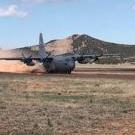
3 pointsThen it would have been even more funny to show him in a fancy curated PowerPoint presentation that GA guys with 4 hours of training can figure out how to fly a taildragger safely. That isn't even a fraction as complicated or challenging of a skill to learn as formation flying or even hovering a helicopter. Even a rotorhead could do it.3 points
-
3 points3 points2 pointsIt came straight form the mouth of the then AFSOC Commander who was by trade a Pavelow guy. Why do folks think this can't be used in the big fight against China? I can think of 69 missions it can do in that fight. During the recent Special Air Warfare Symposium the current AFSOC Commander mentioned putting Small Cruise Missiles on them. Pop up out of a dirt strip on an off axis and dramatically complicate the calculus of the Chinese. Also, the Taiwan scenario will include operations on the periphery that will have a big impact on the fight. There are 10,000+ little islands between the PI, Indonesia and Vietnam...2 pointsGood, clean kill. Sitting 0-6 Installation CC should know better. Would have felt the same if it was about Kaaamala.2 points1 pointEurope is the gayest place on Earth. How else will they continue to purchase cheap dildos besides meeting with Xi.1 point1 point1 point1 pointT-6? No, I'm old. IP in tandem a/c: F-4, F-104. IP in side by side a/c: T-37, B-727, DC-9, MD-80, ERJ-170. IP in separate a/c: A-10. Neat fact. The prototype B-52 had a tandem seating set-up, like the B-47. Curtis Lemay thought differently and told Boeing to redo the cockpit to a side by side arrangement.1 point1 pointWho else is in the 25 July IPT class for Columbus. Heard we were heading to Pensacola and I know QUAG is in the same class, just wanted to see who else it otw1 point1 pointTaliban say reoccupation of Bagram is not happening (fun propaganda video included). OSINT accounts also disputing the claim using Google satellite imagery. Always possible secret discussions are ongoing, but lacking any secondary confirmation this remains a single source claim.1 point1 pointYou do understand there are other ways to influence and bias trade than just tariffs, right? I already gave one example, the subsidized airlines in the Middle East. No tariffs, but it's still disadvantaging our airlines. In other countries VAT is universally collected, so it seems fair, yet the taxes are used to subsidize specific industries. Yet another way is the artificial devaluing of a currency. If you don't think this matters, watch what the Fed does when they think a nation is not playing by the rules. As for trade deficits, they are not inherently bad, but remember that they are only possible because there is a global reserve currency, the dollar. But the reserve currency is made unfathomably complicated by the Eurodollar system, which is way, way beyond the scope of this conversation. It's just not as simple as "trade good, tariff bad." Sorry. I don't think formula they used to come up with the tariff numbers makes sense, but it's pretty obvious they weren't meant to. The order from Trump was probably "just come up with something and hit them with huge tariffs. They'll come to the table." And so far he was right. Oh boy. You think that's compound interest? Strange that happened during the lowest rate period in the last 50 years. This was asset inflation, pure and simple, made possible by expanding the money supply rapidly and funneling the money through the banks. You aren't thinking about this clearly. If the *percentage* of wealth held by the top 0.1% is expected to continually increase, exactly what happens as you follow the graph out over time? They just eventually reach 99.9%? What do you think happens to the social order? The nominal amounts can change but the percentage of wealth controlled by a given percentile should be relatively constant. Completely depends on how tariffs are used. Either Bessent or Lutnick mentioned a separate tariff strategy akin to pre-WWI America where tariffs rather than income taxes were the primary revenue source. Removing all income taxes below $150k income and using tariffs instead. This is a step closer to a sales-tax-based system instead of income, and I'm a huge supporter of that. But that all depends on Trump having a stable policy. Doubtful, but we won't know until the "reciprocal" tariff war phase of the plan is over. We'll see.1 point1 pointI keep hearing this line - "the world took advantage of us" "we are getting hosed by the whole world in trade" Who, exactly is hosing us? Is it South Korea who imports our goods at near as makes no difference 0% effective tariff rate? Is it Australia with whom we have a significant trade surplus? I was reliably informed that if you have a trade deficit with someone that must mean they're hosing you. So are we hosing Australia? Must be somehow.. And if so why are we slapping additional tariffs on them? Dude just take a step back and call a spade a spade here. None of this makes any f-ing sense. It's a nice graph though. The rich indeed are getting richer at a faster rate than the people with less money. That's exactly how compound interest works. Even for regular folks, it takes approximately the same amount of time to accumulate your first $100k as it does to go from $100k to $1M. Isn't it crazy how math works?! That's also exactly what I would expect growth curves to look like when comparing the 0.1% to the rest of the population. Turns out if youre in the 0.1% you're probably pretty freaking good at allocating money and making more of it. To pin wealth inequality in the US on "globalization" and the "myth of free trade" is definitely a new one. But ultimately the real issue here is your implication that trump's deranged and incoherent tariff plan is going to somehow rectify this wealth problem. What evidence do you have for that? Because so far all I've seen are normie financial dummies panic selling, while the savvy billionaires short the market and use their connections and insider info to capitalize on the insane volatility. The tariffs are also effectively a wildly regressive tax. When you jack up the price of normal goods across the board it's going to hurt regular people far far more, because us normal folks need the same amount of food and toilet paper as billionaires do.1 point1 pointInstead of giving heavy deployers more time with their families I think ACC should use that day for full Class A open ranks inspections...with demerits.1 point1 point1 pointBiff, since you like the Sabbath, here's the War Pigs cover you didn't know you needed. Also, the lead guitarist (left) is likely channeling some Hendrix and Eddie VH. Drummer is killer too.1 point