Leaderboard



Popular Content
Showing content with the highest reputation on 04/17/2018 in Posts
-
6 points
-
5 pointsLet’s cut to the chase then. If he wasn’t Green Dot current, look no further.5 points
-
You know, Joe, the "military life" isn't for everyone. You're certainly not the only one that has made a similar statement/post, and it is certainly not my goal to poke you in the eye. I simply have a different outlook I'd like to share. While you consider my decision to stay in "fucked up", I certainly didn't, and I "wore the bag" for 28 years. It's a "service to the country". There's sacrifice involved. And my family got to be a part of that experience. No, my kids didn't get much of a vote. The career decision was mine to make. You're right: I could have improved my "income" had I separated at the end of my 6-year UPT commitment, but more money wasn't my goal. As for "improved quality of life"... that's a personal matter. Serving as a USAF pilot was my dream... and I was living my dream. The satisfaction I had in doing my service was my "good QOL". And my kids relish their time living on base. They were very happy times. I signed up to serve. And when I got married, she agreed to it too. Oh yeah... she was a military brat who never stayed anywhere more than 3 years while growing up. I guess the lifestyle rubbed off on my oldest kid, who is now a Lieutenant, and commissioned despite outsiders saying it was a stupid decision, based on civilian career potential due to graduating from a prestigious private university. Said Lt is apparently fucked up like dad. As for me, I could have been an civilian engineer like my dad, who had a PhD. I went to 4 different high schools in 4 years. Is that fucked up QOL in your book, and is my dad to blame? I meet people now that say "my oldest is in 7th grade, so we need to stay h ere until he graduates". Really? Well, ok. If that's what they need, then so be it. To me, it seems odd when they only reason is that "they are established in football" or "with their friends". But I respect it. They know their family's needs better than anyone (hopefully). Having spent 18 months as the Executive Director of a very interesting civilian group after I retired, I can tell you the experience was worse than being on active duty in many respects. The AF isn't the only organization doing things terribly wrong and inefficient. If you want the money, and hate the QOL, then don't join the military. And if you make that realization while you're in, get out at your earliest opportunity. Many of my friends did just that. But in my case... as bad as things had become in the AF by the time I left in 2014... I still looked forward to going to work every day.5 points
-
5 pointsI feel bad for whoever gets fragged for this SIB. Not only do they lose a month+ of flying, but they have to listen to Raptor dudes refer to their jet in the 3rd person. ("And then, Raptor did....")5 points
-
3 pointsNope. His cyber awareness training expired and the jet locked his account at a very inopportune moment.3 points
-
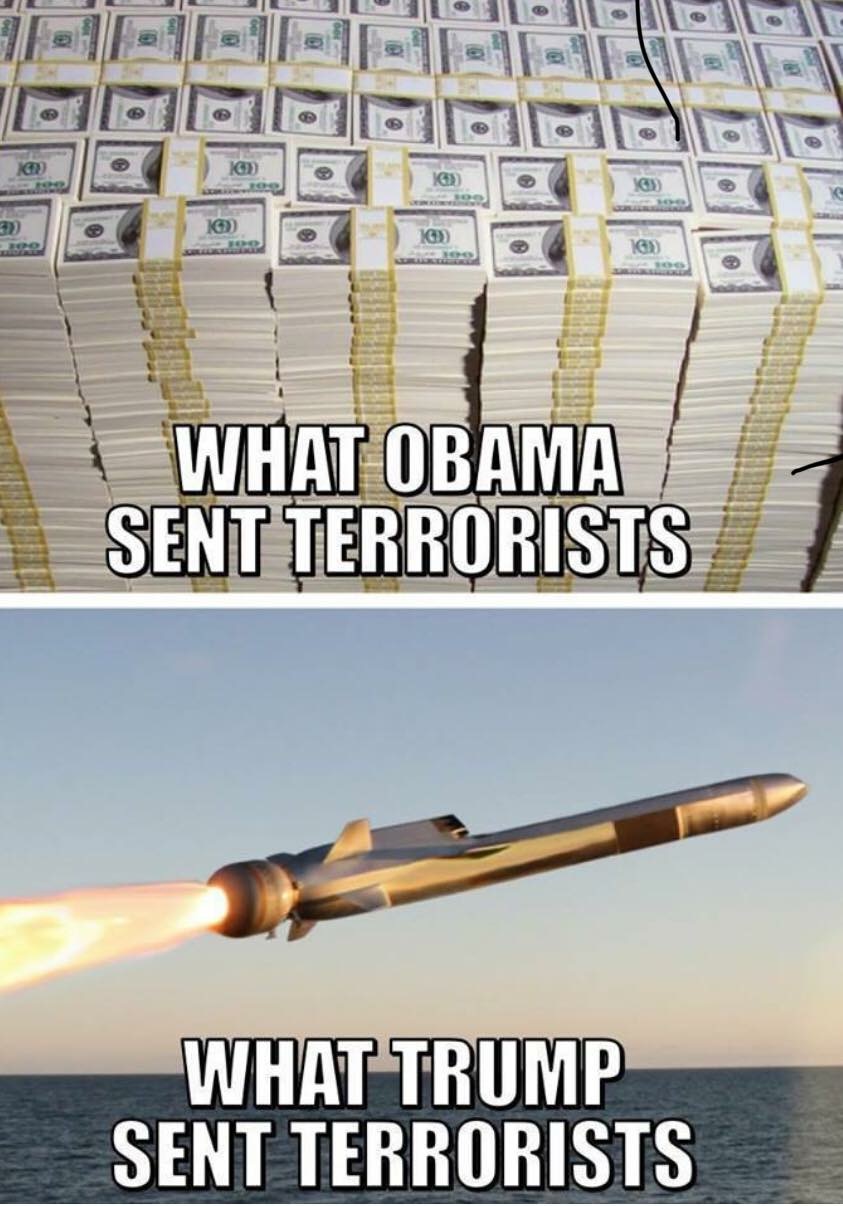
3 pointsDoubtful...Regardless, if the spineless messiah grown a pair and hit them when they crossed the "red line" there might be a lot less dead women and children.3 points
-
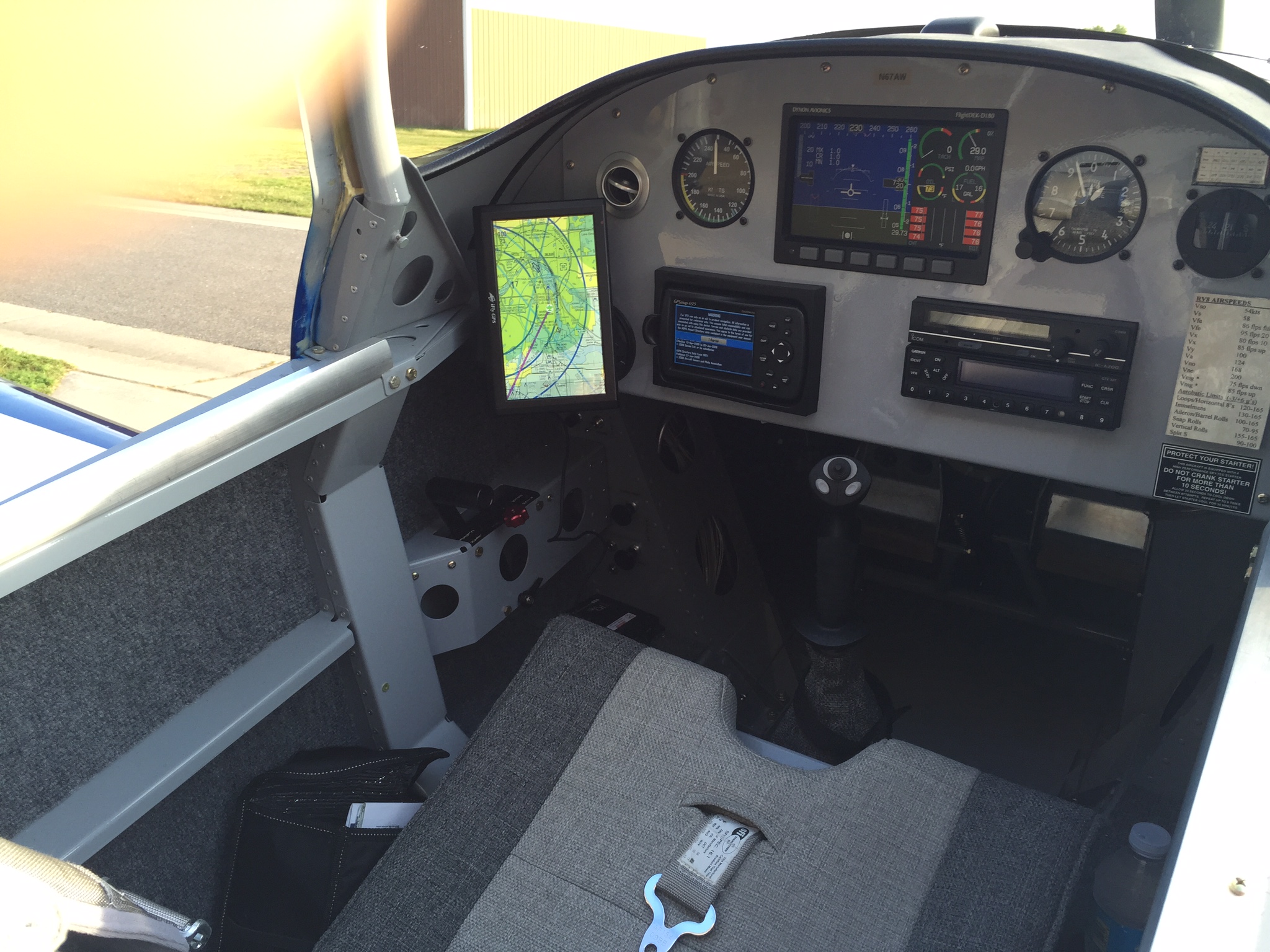
Ummmm, I did a 170kt break this afternoon in my RV which was paid for by my job flying 136kt ILS finals.3 points
-
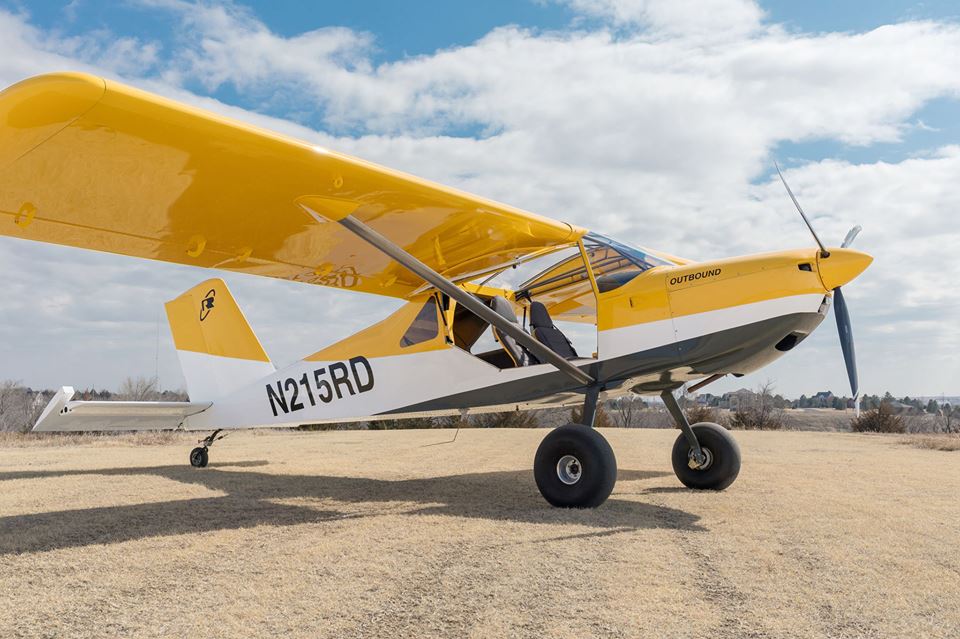
2 pointsRVs are awesome planes and I had the order form filled out for an RV-7. However, after talking with quite a few builders I decided to hold off, maybe down the road. Orbit gave a pretty good description above about the various RVs. I'll add that I really wanted the RV-9 but after lots of research figured you're much better off with the RV-7. They're pretty close to the same plane, but the 7 is aerobatic. This is huge for resale value! If you like the Kitfox, you have got to check out this guys videos. His day job deals with filming/expensive cameras, plus he lives near a bunch of BLM land, which means he can land anywhere can make awesome videos. Also, check out the Rans S-7 or S-20 if you're interested in an alternative to the Kitfox. I've flown with a few Captains recently that have built the S-7 and they love them. I've flown both, they are a blast to fly and they're essentially the same plane, but the 7 is tandem and the 20 is side-by-side. I ended up going with the Rans S-21 and my wing kit is showing up to my garage in a few hours. I don't really care to fly aerobatics in an aircraft that doesn't have an ejection seat, and would rather bounce around the local dirt strips, with the occasional weekend trip. It's relatively new, but much of his stuff is being reused from other kits he has designed. It's STOL-like but will cruise around 155mph @ 75% with a 180hp motor. For me the build time/complexity was a huge factor, and that's another place this plane excels. Given that it's all aluminum (CNC milled parts...read very little drilling/deburring) and built mostly with blind rivets, they're forecasting 500 hours, not including paint. Based on a few bloggers that have already started their wings, that seems fairly accurate. On top of that, there are very few times where you need another person there to help you, which is key since I live by myself and don't want to have to always bribe my buddies to buck rivets for me. Here is one that is already built. It's hard to tell in the pic, but the doors and roof are all lexan...great for visibility. Cargo space is pretty awesome and is easy to access due to the large door and seat that fold down quite a bit.
 2 points
 -
2 pointsImagine how I felt when they said all the data would be saved on a thermometer.2 points
-
Damn, who did you piss off for that triple-decker-sh-t sandwich? I was complaining to my wife tonight about two days back to back top-3 tours. You illustrate a HUGE problem as to 2018 USAF pilot realities. Who wouldn’t leave for the airlines.2 points
-
2 pointsBecause Raptor will become self aware, travel back in time and try to kill your mom.2 points
-
1 pointhttps://aviationweek.com/defense/t-6-pilots-report-eight-new-physiological-events "U.S. Air Force student and instructor pilots have reported eight additional physiological events in the T-6 Texan II trainer since March 1, but the service is not currently considering grounding the fleet for what would be the second time since the beginning of the year. The T-6s returned to the skies Feb. 27 after a series of hypoxia-like cockpit events caused an almost month-long stand-down for the fleet. The aircraft, which the Air Force uses to train all new pilot candidates, resumed flying operations even though a team of investigators still had not found the root cause of the incidents. And even though the Air Force has identified several issues with the aircrew breathing system, particularly with the Onboard Oxygen Generation System (Obogs), pilots are flying without any restrictions to flight parameters or training profiles, Col. Lee Gentile, deputy commander at the 71st Flying Training Wing, told Aviation Week in March. In response to Aviation Week’s story, Rep. Mike Turner (R-Ohio), chairman of the House Armed Services tactical air and land subcommittee, urged his fellow lawmakers to hold the Air Force accountable for the T-6 incidents. “These physiological episodes are not individual incidents. At this point we have an aggregate of these mishaps that points to a systemic issue,” Turner tweeted April 17. “As we look to #FY19NDAA, attention must be paid to these unprecedented issues.” The Air Force apparently decided returning the T-6s to flying status without identifying a root cause was worth the risk, as the service struggles to overcome a critical pilot shortfall. The almost month-long pause came at a significant cost, with undergraduate pilots unable to fit in crucial flight time. This year the Air Force will fall about 200 aviators short of its goal to ramp up annual pilot production to 1,400—primarily due to the T-6 pause, Air Force Chief of Staff Gen. David Goldfein recently told the House Appropriations defense subcommittee. The urgency of the pilot shortfall helps explain why the Air Force is hesitant to ground the fleet once more. But service officials stress that the T-6 is safe to fly. The 19th Air Force has taken several steps to mitigate the problem, including implementing new inspection procedures, purchasing new testing and monitoring equipment, improving maintenance, and educating pilots on how to respond to inflight physiological incidents, Gentile said. The “19th Air Force is not considering an additional operational pause of the T-6 fleet at this time,” Air Force spokeswoman Lt. Geneva Croxton said April 14. “The initial pause was a requirement due to the unexplained nature of the physiological events experienced.” While the fleet was grounded, the 19th Air Force conducted a thorough inspection of the breathing system—from the engine bleed air port to the pilot’s mask—on all 444 T-6s, officials said. Investigators found several problematic issues with the system, such as excess moisture in the condensers and sticky valves, Air Force Material Command Chief Gen. Ellen Pawlikowski told reporters March 14. The team is fixing those issues, and also is re-evaluating how often certain components of the breathing system should be replaced in maintenance, she noted. Interestingly, Lt. Gen. Lee Levy, commander of the Air Force Sustainment Center, noted that the service is not responsible for most of the maintenance on the T-6. The majority is all done through the contractor, Textron, he said in an April 16 interview. “I can’t tell you what the root cause is for these [unexplained physiological events],” Pawlikowski said. “I can tell you they are real, but we have work to do.” Pawlikowski added that she believes the aging of the aircraft has caused something to change, either in the air flowing into the Obogs or in the guts of the system. But she cautioned against jumping to conclusions. The Air Force also is considering adding an automatic backup oxygen system to the T-6s, much like the service did with the F-22 fleet after the 2010 death of Capt. Jeff Haney, Pawlikowski said."1 point
-
1 pointDo you really want to sit on a jumpseat for 5.5 hrs especially on a B-737 that many are now flying to HI? Don't get me wrong because I was a commuter for 23 years and did all I could to make jumpseaters feel welcomed, but do you think the cockpit crew wants you on their jumpseat for that long?1 point
-
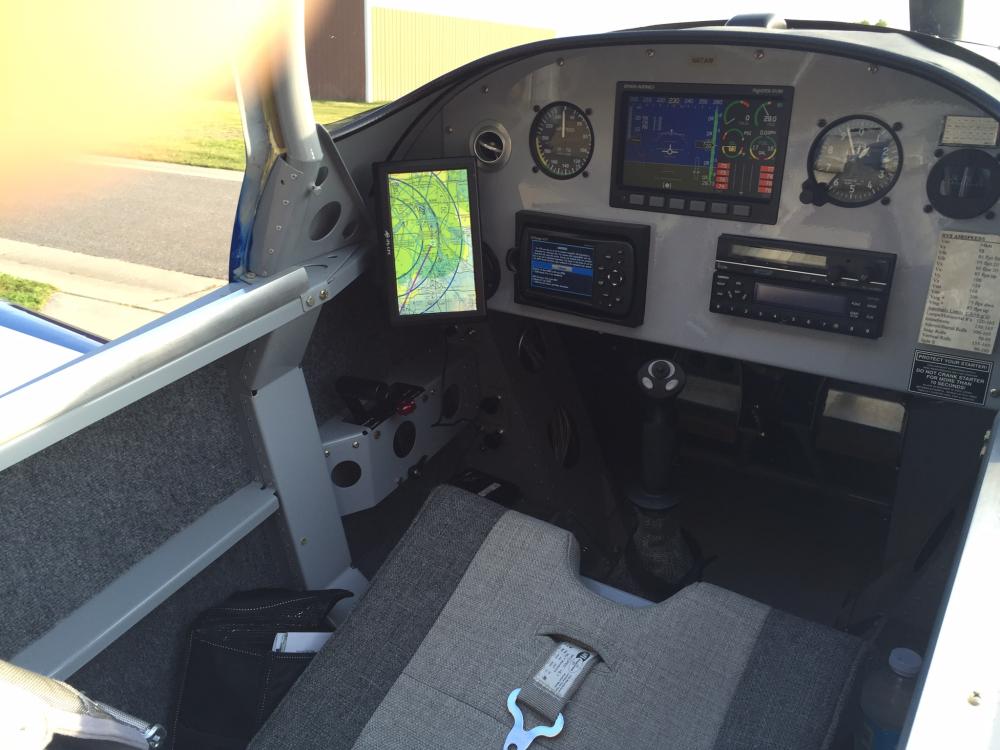
Yep but keep it light and simple. Having flown my entire life with either a back seater, student, someone in the right or left seat, wingman etc, it's great to fly solo and reflect. Huggy with his U-2 experience can probably relate.
 1 point
 -
1 point
-
1 pointDecent movie but a little bit unrealistic. I heard C-17 guys can't use Bose headsets, so when I saw the pilots wearing A20's while the giant gorilla was trashing the plane the illusion was broken for me.1 point
-
Same...I'm receiving the first part of my plane kit tomorrow. Not an RV though.1 point
-
1 point
-
1 pointThe entire situation is of course a chocolate mess. Do we intervene in every situation around the world, most would agree no. Are we seen as world leaders and do our actions send a message, most would agree yes. I believe if Obama had thumped them when they crossed supposed Red Line and previously used WMD, the calculus for Aasad would have been different this time. I could be wrong. All of that being said, it is exceptionally difficult to see women and children being hit with chemical weapons.1 point
-
1 point
-
1 point1 pointWhat goes around comes around. TAMI 21. No remorse for what the AF did to itself and continues to do.1 point