Leaderboard
-
Duck
Super Moderator4Points1,786Posts -
HeloDude
Super Moderator2Points3,593Posts -
hispeed7721
Supreme User2Points769Posts -
tac airlifter
Supreme User2Points2,052Posts



Popular Content
Showing content with the highest reputation on 12/30/2016 in all areas
-
4 pointsI don't know man, I'm kinda hoping California just kinda falls off into the sea. Sent from my iPhone using Baseops Network Forums4 points
-
2 pointsIf Democrats are so disenfranchised by the EC then how were they able to win in 2008 and 2012? Try researching the EC vote (i.e. state by state races) since the late 1700's--you'll see that states, elections, etc change with time, and likewise this 'advantage/disadvantage' you speak of. As you mentioned, Democrats do this to themselves because progressives love living close to other progressives--well, enjoy your progressive states like California, New York, Massachusetts, et, and likewise, enjoy Trump being president. Besides, I don't recall Democrats in 2009 trying to pass a Constitutional Amendment in Congress when they had large majorities... And with regards to your assertion that "all votes are not equal"...this is completely false. Since we have 51 individual state elections for president, all votes in each respective state (or district for Nebraska and Maine) is equal.2 points
-
2 points1. Who speaks for the "intelligence community?" The ODNI. No one else, that's why it was created. So without the office charged with informing us of consensus on a topic, you cannot plausibly say the IC is in agreement on the topic. Magnetfreezers link indicated ODNI saw evidence of senior Russian involvement in hacking as late as Oct 2016, that's legitimately serious. I didn't see ODNI endorsement in nsplayers link, because it's not an IC report. 2. Starting at page 5, the report is generic advice on preventing future intrusions. Yes I saw the professionalism in the phishing email sent to Podesta; 17D, I certainly appreciate your professional opinion on their tradecraft. My point is that a report on an event which spends most of its pages not talking about the event..... seems like a weak ass report. Jaded, you may disagree with my assessment but considering the stakes involved with publicly confronting Russia I'd prefer my international accusations have more granularity. 3. "Do I have any idea how this stuff works?" As I said, without a parallel classified report containing actual evidence this report alone is unconvincing. Have you read that report with actual evidence? Or are you assuming it exists? Or are you convinced without seeing evidence? Regardless of your answers, this alone is not satisfactory to me. Gents, the IC Iraqi WMD reporting convinced decision makers on both sides of party lines. It was heavy on "trust us" and weak on why, resulting in a total fiasco for our country. This is what a loss of credibility looks like, and there have been additional major IC failures between 2003 and now. Maybe I should re-frame it: given recent spectacular IC assessment failures, why should I believe this one? You may disagree and you may even be right, but unless you use an argument other than "it's secret and you'll have to trust me but I'm right" you will remain unconvincing across the spectrum of viewpoints. And in fact, a large number of incoming policy makers seem unconvinced. This is a real problem because potential evidence would be secret because it would expose capabilities. I don't know how to resolve this impasse, but it's a real issue for our nation going forward. Other than "read SIPR" (which wouldn't help on this one, BTW), I'd love to read opinions on this quandary in our republic. How does the country learn to trust institutions that have burned us, while maintaining security required for them to function? Again, I'm glad that report was posted here and I appreciate the spirited discussions.2 points
-
1 pointMy decision to leave just keeps getting easier and easier. Sent from my iPhone using Tapatalk1 point
-
1 pointI've driven through just about every state minus the Great Lakes region and California is still the only state where I've gone through an inspection checkpoint to enter the state.1 point
-
1 pointI'd venture a guess that shedding CA would put the federal balance sheet more towards green, but that's completely unsubstantiated Sent from my iPhone using Baseops Network Forums1 point
-
1 pointSo all pay will be taxable...and no change in pay based on location I presume Sent from my iPhone using Baseops Network Forums1 point
-
1 pointUS CERT posted the indicators (IPs, etc) in a CSV/XML file accompanying the report at https://www.us-cert.gov/security-publications/GRIZZLY-STEPPE-Russian-Malicious-Cyber-Activity1 point
-
1 point"In spring 2016, APT28 compromised the same political party, again via targeted spearphishing. This time, the spearphishing email tricked recipients into changing their passwords through a fake webmail domain hosted on APT28 operational infrastructure. Using the harvested credentials, APT28 was able to gain access and steal content, likely leading to the exfiltration of information from multiple senior party members." Were the compromised folks up to date on their cyberawareness challenge? If so, they should turn their trophies in.1 point
-
1 pointnsplayr did a good job of articulating the benefits...the key one being workload. The second major advantage was a selling point for other versions of light attack and that was the ability to fly with a host nation aircrew member. If you go back and read our doctrine it actually says we don't want to be in all these small fights, we want to build partner capacity to fight the small fights in their own back yard before the turn into something more serious that requires our participation. The "reattack" on lite attack in the mid to late 2000's was based on the construct that we would fly the aircraft to country X, spend a period of time training them to fly and employ the aircraft, then our folks would fly home commercial and leave the aircraft for country X to fight with. Another huge benefit not related to one or two seats is cost to operate. The A-10, F-16/15E, B-1/52 and Gunships are all great airplanes but they are expensive to operate. Scorpion and other versions offer 80% capability at 1/4 the cost.1 point
-
1 point
-
1 pointMaaaaan I knew there wasn't gonna be a bonus. Oh sure, eventually they'll drop something but forgive me if I was skeptical from the moment I saw this even as the rest of the career field is flipping out. I got nothing else to do so I'll take it but I doubt I'll be eligible now as I'm edging within a couple months of what the initial stated eligibility was. Hope you're able to enjoy it if you're sticking around though! zb1 point
-
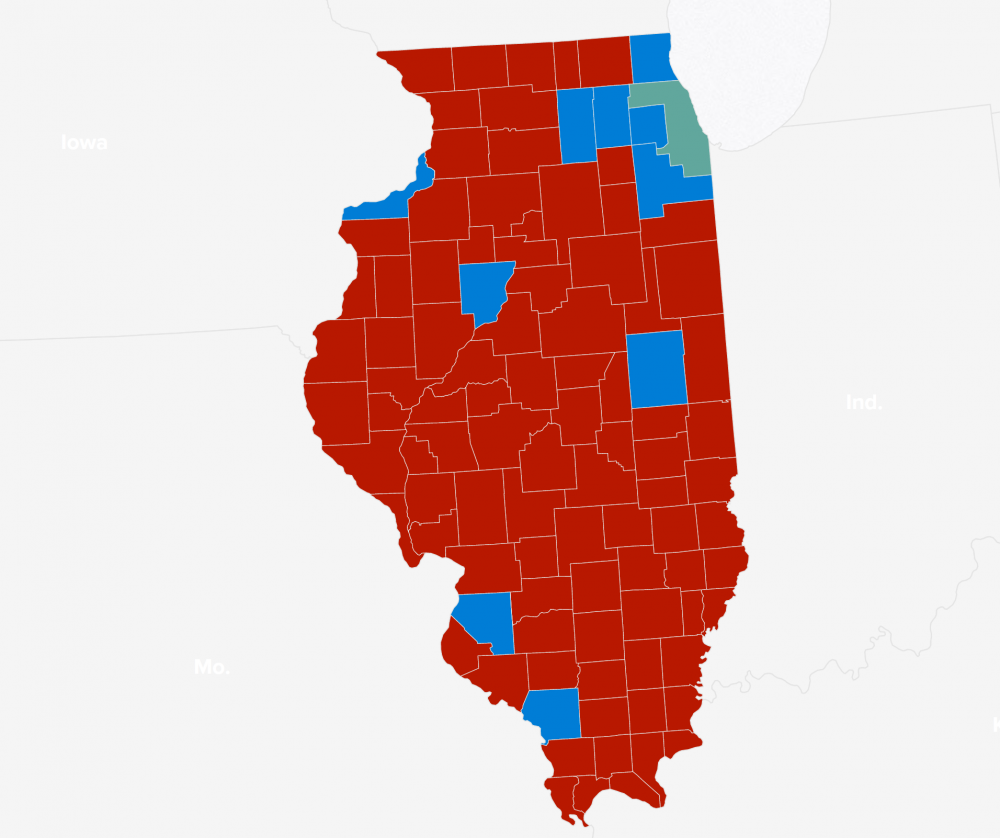
1 pointIllinois, my favorite electoral map this year, is a current Democratic stronghold. Let's play a couple guessing games: 1. Where is the city with some of the strictest gun laws located? 2. Where is the city with one of the highest gun-related murder rates in the US is located? HINT: One city is the answer to both questions - sometimes nicknamed "Chiraq" for it's warzone-like atmosphere.
 1 point
 -
1 point
-
1 pointA bit dated but if we had listened to RAND in 2010 we would have a force for these marathon conflicts https://www.dodbuzz.com/2010/04/05/af-needs-coin-plane-rand/ We need it to deliver air power without breaking the bank, develop our allies and steer them to airplanes they can afford and not fly the 4/5 gen fighters into the boneyard prematurely Sent from my iPhone using Tapatalk1 point
-
1 pointNice thread derail going on here. A 4-ship doing OCA works as a single unit with their radar assignments and what not. Same concept as a crew airplane, just spread to 4, single seat jets. And if you think you're some higher level thinker because you're a single seat guy, ride along in a family model Viper doing CAS or something. All that chatter going on the aux isn't discussing why Dez Bryant is a dumpster fire for a fantasy football team this year. It's the same conversation going on amongst a crew on an ICS about how to accomplish the mission. On that note, ask the original Weasels back in Vietnam if they would've rather unloaded the "noise maker" in favor of more gas. And those gibs literally mean Extra Weight Onboard (EWO).1 point
-
1 pointLogic and reason supported by data to argue for a LAAR therefore this will be ignored... https://warontherocks.com/2016/11/logistical-fratricide-the-cost-of-fast-jet-tacair-measured-in-purple-hearts/1 point
-
-1 pointsRight, nothing new just an alternative perspective. The problem with the state (or county) election maps is that they exaggerate the gap between right and left based on physical geography, and completely overlook the large portion of "purple" voters. The "dead smurf" map also shows how disadvantaged Democrats are by the Electoral College since they are concentrated in a few geographies. The bottom line is that not all votes are equal - it depends where you live. 2,900,000 votes >> 80,000 votes 80,000 votes in MI, WI, and PA >> 2,900,000 votes anywhere else The best strategy for the Democrats in 2020 would be offer relocation packages for CA residents to move to swing states. No need to sway anyone or win hearts and minds - just change where you vote. Anyway, the Organization of Cartographers for Social Equality would be happy we're having this discussion.-1 points