Leaderboard
-
MKopack
Supreme User6Points392Posts -
matmacwc
Moderator4Points3,226Posts -
ClearedHot
Administrator3Points5,429Posts -
Steve Davies
Supreme User2Points899Posts




Popular Content
Showing content with the highest reputation on 01/31/2013 in Posts
-
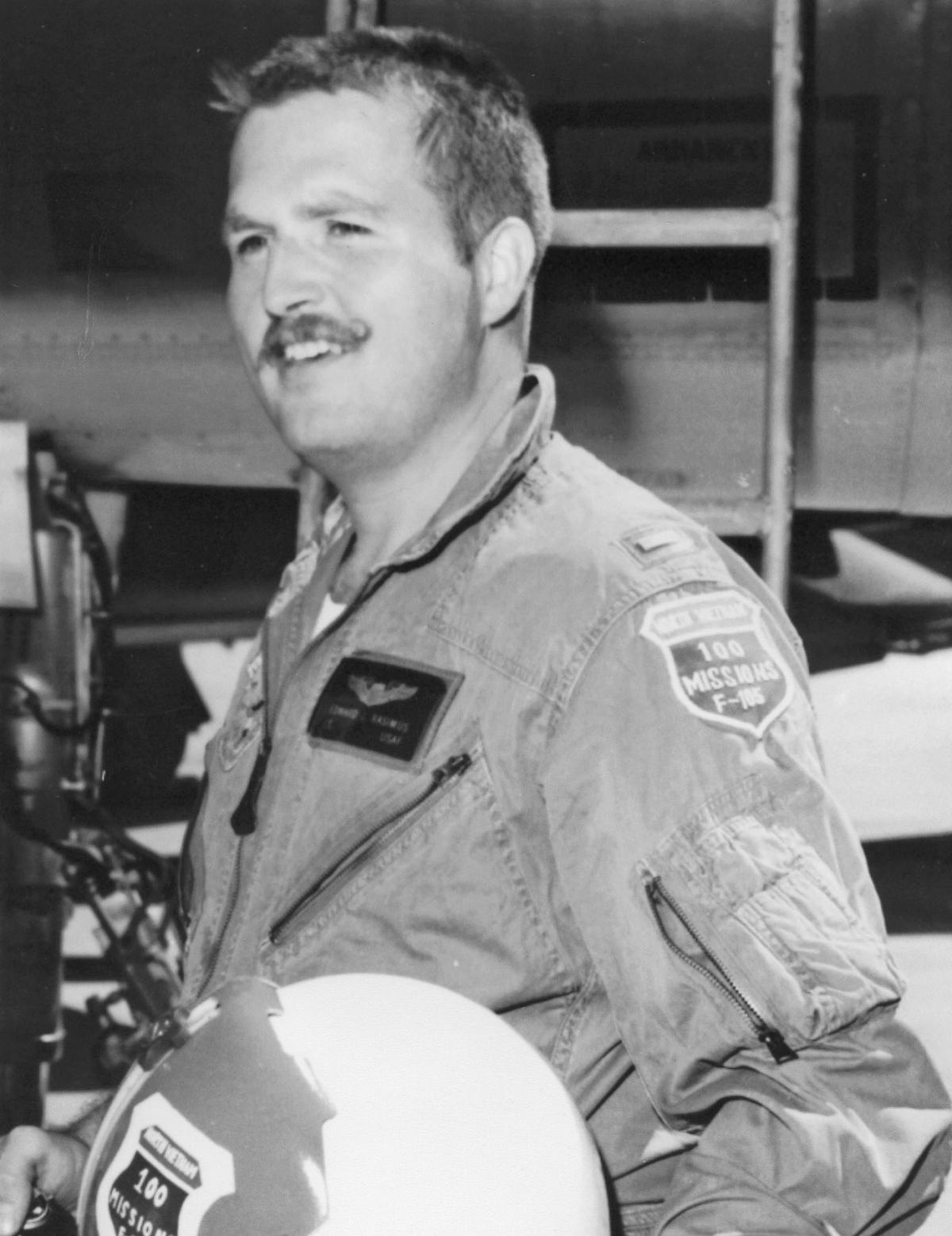
It is with heavy heart I share with you the passing of a fellow USAF Veteran, Ed Rasimus. Ed was a fighter pilot with two tours in Southeast Asia (F-105D Rolling Thunder & F-4E Linebacker I & II), an educator, and a terrific writer, and at least since 1996 I've been proud to call him a friend. “So here’s a nickel on the grass to you, my friend, and your spirit, enthusiasm, sacrifice and courage - but most of all to your friendship. Yours is a dying breed and when you are gone, the world will be a lesser place.” Going to miss you, Ed. Somewhere an F-105 taxied out of chocks today, not headed for Route Package VI, but just cleared for an unlimited climb on departure...
 6 points
 -
Delusion. I've only seen 2 commanders in 13 years that can tell his leadership what's up.3 points
-
Everyone seems to be using 'combat' as a blanket term. There's really a big difference between Spc. Joe Schmuck support person who gets in a firefight, and Spc. Tommy Toughnuts infantryman who walks around all day looking for a fight. I have a female friend from the Army who had been attacked on convoys in Iraq and had people shooting at her, and she shot back. That's combat, no doubt. I also have friends who were infantry, and a couple who were Rangers. One of them spent 18 months straight in Afghanistan dragging a sniper rifle up and down mountains, setting up ambushes and attacking Taliban. One of my Ranger buddies was in Iraq breaking into buildings and chasing down people in the streets and arresting them. All these people 'served in combat', but it's a big frickin difference. My female buddy was totally competent in her MOS, passed her PT tests no problem, and was generally one of the more squared away people in our unit. I was glad she was in my squad (we were marksmanship instructors in this unit mind you, not infantry). BUT I can tell you there's no way in hell she could have physically done what my infantry friends did day in and day out. That's just one example I guess, but something to think about. edit: spellinz2 points
-
2 pointsUpdate: Lakenheath: 100 copies on their way c/o 494FS Panthers Beale: 50 copies on their way Hill: 50 copies on their way to 4FS, 25 to 466FS Cannon: Quantity TBC for SOF Nellis: Quantity TBC DM: Quantity TBC for 355FS Columbus - 25 copies on their way + 41 copies for 41FTS Tyndall - 20 copies on their way AK - Quantity TBC Dyess - 10 copies on their way Remaining copies: approx 75 True. I asked Ed Rasimus to review it. To paraphrase, he said 'Fine. So long as you know that I'll probably end up saying that it's shit. Most of these books are'. Here's what he actually wrote:2 points
-
I'm sorry that you don't think I'm being fair. It is funny how you're cool with being 'fair' when it comes to gender but not 'fair' when it comes to age...I mean, hey, if standards are standards then it shouldn't be a problem? And I'm not talking 65...the military starts age discriminating much much earlier. What planet are you living on?? The physical standards are less for women in every service. Are you really this clueless? Ok, you're finally doing better here. ...and then you go and screw it up. You were so close. The standards are not the same--see above. You have yet to disagree with anything I said concerning menstrual cycles, pregnancies, etc. You just keep talking about dicks and standards. I guess if a chick has surgery in order to not have her menstruate or be allowed to get pregnant then the discussion would change a bit. As it stands, allowing women to serve (especially if they serve in offensive ground forces) brings on more risk than if it were only men, even with all other things being equal. But yet you're saying it's worth taking on they additional risk when it comes to our most strenuous jobs, especially the ones that take on the most riskier missions...and that increased risk is ok in the interest of 'fairness'?? Oh good...I was worried that our Army was in trouble when it came to local women in combat zones. I'd like my job to be like the movies everyday too man...unfortunatey that's why they call it the movies. My parents made me grow up years ago.2 points
-
1 point
-
1 pointHe is definitely a helluva guy and Cassey is just as awesome. Still hoping and praying for a miracle.1 point
-
Just as an aside, the book Steve is giving away is an excellent read -- a first person account of flying a Thud mission in Vietnam.1 point
-
1 pointFuck, he sounds like a helluva guy from the article. Praying for him and his family.1 point
-
1 pointNot going to search through 3500+ posts to see if this has been shared already....but this has got to be the coolest shotgun I've ever seen.1 point
-
Not the question everyone here is asking you. That's a guy who was already qual'd. If you want an example that's on point, you should look to how many guys with prosthetic legs go to pilot training (or are accepted for initial entry to military service). What's that, we don't do that...? That's unfair! I'm calling my Congressman!!1 point
-
1 pointCouple thousand hours without a Nav, never had a problem putting the gear down or landing at the wrong place.....1 point
-
1 pointYep, pretty sure that if someone would've got the Captain his box lunch in a timely manner he would've avoided the reef.1 point
-
Big thanks. I can now ignore the illogical, nonsensical, long-winded ramblings of the morons that post on this forum more than they seem to work....cough NSPLAYR cough1 point
-
Very, very sad. I considered Raz one of my mentors, having started to correspond with him in the late 90s via the old rec-aviation-military USEnet newsgroups, where Raz was a frequent poster. I corresponded with him frequently then, and continued to do so for years as I went to UPT and became a fighter pilot myself, including some very poignant conversations while I was deployed for OIF during Shock and Awe in 2003. Those of you that have heard the "A Night At The Bar With The Boys" CD of fighter pilot songs mentions Raz by name as one of the old-school songmeisters. Great fighter pilot...wrote some fantastic books....someone who will be righteously missed. How'd he go? Here's an excerpt from the old 435th FTS doofer book (RIP doofer books, too...) from the days when Raz was an AT-38B LIFT instructor at Holloman.1 point
-
Anybody here gone through Ranger School? It's not just about meeting the standards. Most are washed out in the first week because they don't have the mental fortitude to gut through it. Yes the official answer with the fitness test is so many push ups/situps/pull ups; but it is also a test of the mind. Guys are typically knocking out 90+ push ups in that event because the grader will mess w/ them and not count push ups. A candidate will continue to knock them out until they have achieved the minimum number. The grader will mark down the 65 push ups required but as I said before they more than likely knocked out 90+. The same goes for the rest of the test with the exception of the 5 mile run in 40 min's. Ranger school is all about a gut check. A lot of guys who make it past the first week, who are at the top of their game physically, will not make it due to some form of leg/knee injury from all the rucking that they do. Then there is also peer evaluations. So how do you think a woman will make it through the peer evals (that will be out the door). Anybody ever watch any of the documentaries on Ranger School. To quote my wife, "women are already loopy from the start." Men are working on almost pure instinct by the point that it gets to where guys start hallucinating. I don't see a woman even making it through Infantry Training which I have been through. If we are looking at full equality. Then I would suggest that there is just one PT standard which males currently do, true equality since there is no real difference between a man and a woman. As a father of a daughter, I am completely against it especially since this will create a possibility that she has no choice but to enter military service. I do not believe in equality. Some are made stronger, faster and smarter and good on them. In the realm of ground battle, men have the obvious advantages that are necessary for winning battles as quickly and efficiently as possible. I can remember my Parachute Infantry Regiment Company Commander almost disowning me because I had purchased GI Jane. I thought it was a half entertaining movie. But I knew it was fiction and could never happen. I know it won't happen until they lower the standards for the sake of equality and giving in to the whining women that want leadership positions just for the sake of the title. It will be harder to operate and win quickly and efficiently w/ women in the combat units.1 point
-
1 point
-
1 pointBingo!! You are dead on with this. I had not read up on this thread in a while, and was going to respond to the 10 other previous posts that mentioned only contributing to a Roth while deployed. That makes no sense. The above bolded stuff is probably the most misunderstood concept that guys in this thread have. To the poster who wrote about turning on and off contributions to the Roth before and after the deployment, you are creating a lot of extra work and creating extra confusion. Like Jaded said, your 1040 tax return does not give a shit when you earned tax-free CTZE income. Your W-2 does not give a crap when you earned CTZE income. Also, your Roth doesn't give a shit whether or not you earned tax-free income or not, it just cares that money is coming into it. Of course, that money going into a Roth is after taxes, whether or not you deployed, had deductions, etc. Again, the money you earn in a CTZE is not somehow specifically electronically marked as "combat pay" when it goes into your bank account or when it is taken from your LES and put into the TSP. It all goes into a pot of money that is sorted out when you (or TurboTax, Taxslayer, etc) do your taxes by entering the taxable amount from your W-2 into your 1040. That taxable amount does not include any Q-code tax free combat zone income. Also like Jaded eluded to, it makes the most sense to look at taxes, tax rates, income, and investments over the course of an entire year. You may as well get out of the mindset that you have to contribute to after tax accounts (Roth) while you are actually in a combat zone because that money is tax free and will come out tax free. In actuality, that investment into the Roth is not tax free at all. Even if you physically put it into the Roth from your laptop while you were taking mortar fire while hiding under your bed in Kandahar, that money still most likely got taxed due to your other, taxable income that year (did I mention that you have to look at taxes over the course of a year and not by the month???) Here is another illustration to prove my point: You deploy for 4 months and end the year with 30K CTZE income and 40K of "regular," stateside taxable pay. Ignoring all deductions, exemptions, tax-free BAH, credits, etc for illustration purposes, you will receive a W-2 in January that says 40K taxable income on line 1 and on line 12 will have Q 30K of tax free income (again - no sign of the timeline as to when you earned the $30K of CTZE income). Your tax software will then crunch the numbers, and you will pay taxes on the 40K and will owe about $6K, or about 15%. Of course, your annual income was indeed $70K, but you still only pay $6K in taxes, for an annual tax rate of about 8.5%. So in this manner, I can easily say that your tax-free income was actually taxed at 8.5%, just as your stateside income was taxed at 8.5%. Why? Because taxes are calculated annually, not monthly. Did I mention that? So, whether you transferred the $5K from your bank account into the Roth IRA when you were in the CAOC or at home in Cannon, sitting in your PJs sipping coffee, the money you put in to the Roth was taxed at 8.5%. You earned tax-free income that year, but your Roth contribution came out of the same pot that your taxed income did - the $70K pot. So, in the end, guys can imagine in their heads that the money they are putting into a Roth is "tax-free" going in and "tax-free" going out just because they were in a CTZE for part of the year, but that won't be entirely accurate (unless they indeed were deployed all year or for whatever reason literally paid 0 taxes for the entire year). So to answer the other question about SDP vs Roth investments while deployed, I would definitely take advantage of the SDP while deployed, since that is indeed a CTZE-only investment offering where the government is no-shit subsidizing your investment and paying you 10% of risk-free return (unheard of in the private sector). While maxing out the SDP in the deployed zone, you can still be following your regular investment plans into the Roth TSP, TSP, Roth IRA, or regular IRA as scheduled. You can continue your Roth investments on a monthly basis throughout the year, or a lump sum at the end of the year, or for the imaginary benefits of tax-free inputs, you can tailor your Roth investments to only take place during the months you are deployed. Either way, you can do SDP at the same time. My personal strategy is to do a lump into our Roths at the end of the year, because I want to be sure that I didn't mess up my tax calculations with my side business, investments, mortgage interest, etc. and owe the IRS money at the end of the year. I almost always get a big refund as planned, and then just use that for the Roth contributions. By the way, you can contribute to the Roth IRA up until tax day (April 15) of the next year. In other words you have until April 2013 to contribute into the 2012 Roth. Again, in the end, the decision to go Roth or traditional should be decided when looking at your tax rates for the entire year (did I mention that before?) and not by mentally separating out CTZE income from regular income, because they are essentially the same when look at your income over the course of the entire year.1 point
-
1 point
-
1 pointIf that Russian Shit was half as good as you think it is they would have won the Cold War. Obviously it takes a more refined intellect to employ an AR, and with that refinement comes victory.1 point
-
Warrants aren't the answer, they are single-track specialty officers and while that may be appealing to someone who wants to stay in the cockpit his/her entire career; it doesn't answer our leadership issue (if there even is one). My suggestion is to allow them to grow beards. It worked during the Civil War and with Special Forces! Even a Pentagon study proves it! Cheers! M21 point