

M2
Administrator
-
Joined
-
Last visited
Everything posted by M2
-
Seriously, it took this many NCOs to put together this shitty little two-minute video?!? Secondly, those "duty identifier patches" are a fucking joke (although I do like the one that says 'Dirt!' WTF is that all about?). Isn't that what career badges are suppose to represent? Do you really need a billboard on your shoulder stating you work at Finance?
-
20+1 rounds in a top-loading auto pistol is intriguing, and at that price point it well may be worth trying; but I have never been a fan of the 5.7x28mm round. Sure, it will penetrate soft body armor than most handgun rounds; but what really are the odds of that being a factor in a self-defense situation? Plus, my house pistols are only to get me to my Mossberg 500! It can get decent penetration and expansion if you use ammo such as the Federal Personal Defense 40g JHP; but there are much better self-defense calibers out there which are easier and cheaper to find. As LR stated, it does have velocity, recoil and capacity in its favor; but the potential drawbacks such as over-penetration and cost would never replace the .45 or 9mm in my opinion. But at four hundred bucks (MSRP), it certainly is interesting enough to try if I ever see one available. My safes are full of firearms I bought just for the opportunity to shoot them! I am glad a buddy had a S&W Model 500 that he let me shoot, it saved me a lot of money realizing that particular revolver just wasn't for me! There's not a huge moose threat here in southcentral Texas!
-
Not really, you can't trust chips made in China...
-
https://www.shootingnewsweekly.com/handguns/shot-show-range-day-is-it-wrong-that-i-really-really-like-the-new-keltec-pr57/ Let us know what you think....
-
https://www.tuskegee.edu/Content/Uploads/Tuskegee/files/EscortedBombersLosttoEnemyAircraft12.2011.pdf https://www.dafhistory.af.mil/Portals/16/documents/Studies/AFD-141118-047.pdf On March 10, 1945, the respected and widely read Liberty magazine published Dark Angels of Doom, an article by influential black journalist Roi Ottley about the 332d Fighter Group in combat. Ottley wrote “in more than 100 combat missions in which the Red Tails have given escort cover to their "Big Friends"--the long-range heavy bombers--they haven't lost a single ship to enemy fighters!” By then the 332d Fighter Group had flown more than 130 bomber escort missions, and had lost bombers on only six of those missions. But the group did not fly 100 missions before losing a bomber. In fact, the group had lost bombers within the first few missions. Despite that fact, readers might have falsely concluded that the 332d Fighter Group had flown more than 100 bomber escort missions and that it had never lost a bomber on any of them, when in fact it had lost bombers on at least six of more than 130 bomber escort missions by March 10, 1945. The “never lost a bomber” claim already circulated before a War Department press release dated June 21, 1945, announced that Colonel Benjamin O. Davis, Jr., who had commanded the 332d Fighter Group, was taking command of the 477th Bombardment Group. Undoubtedly based on the preceding newspaper article, the press release claimed that “On February 28, 1945, Colonel Davis‟ group had completed 200 missions with the 15th Air Force and had served as escort to heavy bombers without losing a single bomber to enemy fighters.” This was probably the first time an official Air Force document repeated the “never lost a bomber” claim.
-
ADMIN NOTE: Not sure WTF happened with all the emojis, but it's been fixed!
-
In 2025, $200 in 1937 is equivalent to approximately $4,382 due to an average inflation rate of about 3.57% per year over the 88 years... And yes, in 1937 the Thompson submachine gun did cost around $200. Fully automatic versions today range from $15,000 (good luck finding one at that price!) to $120,000 for rare early Colt models! How Much is a Thompson Currently Worth?
-
"2022 Women, Peace and Security Gender Focal Point (Correspondence), Joint Staff" https://www.pacaf.af.mil/Portals/6/PDF Bios/AOC Col Sposito_Salceies_Bio_25 Jun 24.pdf
-
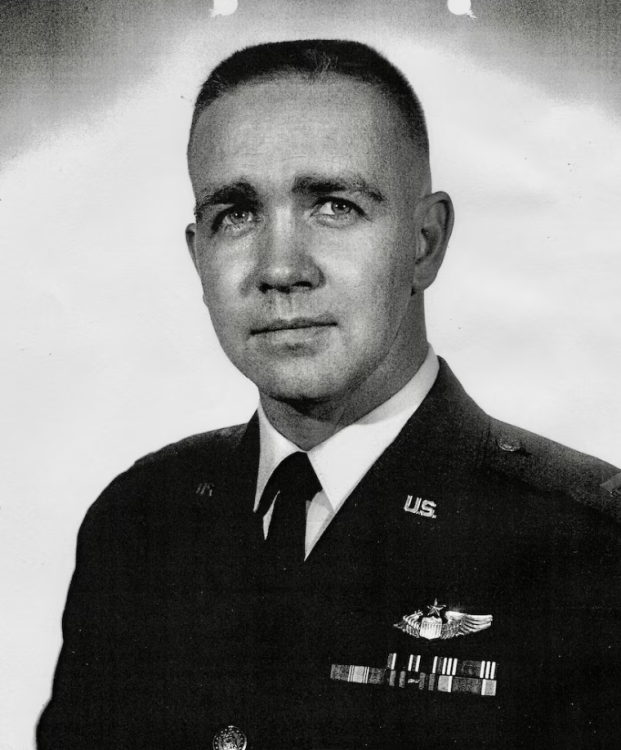
OK, it's only Wednesday; but this can't wait... U.S. pilot who vanished during Vietnam War spy mission accounted for A United States pilot who disappeared while conducting a spy mission during the Vietnam War has finally been accounted for, military officials said Tuesday. U.S. Air Force Lt. Col. Donald W. Downing was assigned to the 557th Tactical Fighter Squadron, 12th Tactical Fighter Wing, 7th Air Force in September 1967, the Defense POW/MIA Accounting Agency said in a news release. Downing, 33, was piloting one of two aircraft in a nighttime armed reconnaissance mission over what was then known as the Democratic Republic of Vietnam on Sept. 5, 1967. While the two planes were on a run to the target, the first saw a "large, bright fireball in the air," according to the agency. Downing did not respond to radio calls to his F-4C Phantom II. And though search and rescue efforts started at daylight, electronic and visual searches of the area found nothing. (Full story at title link) A nickel in the grass! 🫡🫡
-
Context is important... At the Presidential Parade at Capital One Arena, Musk gave a speech where he thanked supporters for reelecting Trump and expressed his enthusiasm for the administration's goals. During his speech, Musk said: "I just want to say thank you for making it happen, thank you." He then pumped his hand against his chest, extended his straightened arm upward toward the crowd, with his fingers outstretched and palm facing downward. Immediately after, he said, "my heart goes out to you. It's because of you that the future of civilization is assured."

-
Worded better... https://www.flightglobal.com/helicopters/us-air-force-winds-down-hh-60g-pave-hawk-operations/161315.articleThe most accurate documentary on the DoD acquisition system ever made!!
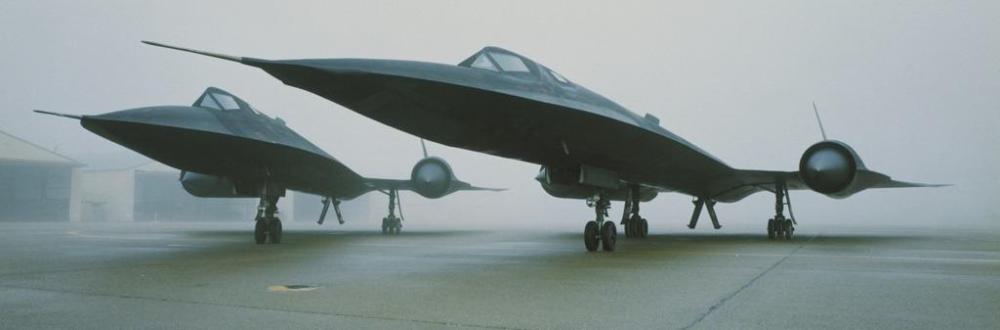
 59 years ago tomorrow (7 Jan 1966), the 4200 SRW at Beale AFB received the first operational SR-71... On 25 January 1966, the 4200 SRW was redesignated the 9th Strategic Reconnaissance Wing
 Bye bye Trudeau! He was gone anyway, but this way he can blame Trump! https://www.msn.com/en-us/news/world/trudeau-to-resign-as-voters-sour-on-his-vision-for-canada/ar-AA1x2NfDAgreed, and why force a productive elective official (there are some, I swear!) out of office if they are doing a good job and their constituents are happy?Prime was here in SA for the Alamo Bowl. I still can't figure out why the guy gets so much positive attention, he is and always has been a huge douche nozzle...I'm going to see how the next USAA CEO does before deciding on whether to punch...Not just in the USAF...The final HH-60G Pave Hawk helicopter in the entire U.S. Air Force was retired on December 18, 2024, by the 56th Rescue Squadron at Aviano Air Base in Italy. This marked the end of an era for the Pave Hawk, which had been a crucial part of combat search and rescue missions for decades. https://www.stripes.com/branches/air_force/2024-12-20/air-force-pavehawk-aviano-helicopter-16227298.html Prior to that... The last HH-60G Pave Hawk at Kirtland Air Force Base in New Mexico was also retired in early December 2024. This helicopter had been in service for 34 years and participated in various search and rescue missions. The 106th Rescue Wing at Gabreski Air National Guard Base in New York retired its first HH-60G in June and finished its conversion by October. And Kadena Air Base in Japan welcomed its first HH-60W in January and retired its last G model by August. The 41st Rescue Squadron at Moody Air Force Base in Georgia retired its final HH-60G Pave Hawk helicopter, tail number 356, on September 29, 2021. This helicopter had served for nearly 30 years and participated in numerous rescue missions around the world. Thirty-seven Golfs were heading (STS) to the Boneyard in fiscal 2024, and another twelve going in fiscal 2025.Brotallion!! 🫡🫡









Account
Navigation
Search
Configure browser push notifications
Chrome (Android)
- Tap the lock icon next to the address bar.
- Tap Permissions → Notifications.
- Adjust your preference.
Chrome (Desktop)
- Click the padlock icon in the address bar.
- Select Site settings.
- Find Notifications and adjust your preference.
Safari (iOS 16.4+)
- Ensure the site is installed via Add to Home Screen.
- Open Settings App → Notifications.
- Find your app name and adjust your preference.
Safari (macOS)
- Go to Safari → Preferences.
- Click the Websites tab.
- Select Notifications in the sidebar.
- Find this website and adjust your preference.
Edge (Android)
- Tap the lock icon next to the address bar.
- Tap Permissions.
- Find Notifications and adjust your preference.
Edge (Desktop)
- Click the padlock icon in the address bar.
- Click Permissions for this site.
- Find Notifications and adjust your preference.
Firefox (Android)
- Go to Settings → Site permissions.
- Tap Notifications.
- Find this site in the list and adjust your preference.
Firefox (Desktop)
- Open Firefox Settings.
- Search for Notifications.
- Find this site in the list and adjust your preference.