Leaderboard
-
HuggyU2
Moderator9Points2,884Posts -
Napoleon_Tanerite
Supreme User8Points980Posts -
Homestar
Supreme User5Points1,491Posts -
JeremiahWeed
Supreme User5Points353Posts



Popular Content
Showing content with the highest reputation on 03/06/2015 in all areas
-
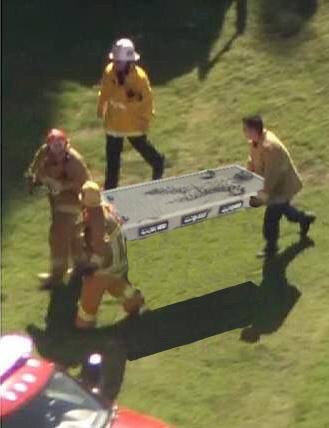
Newly released pic of him being carried off from the wreckage. It appears he froze up.
 7 points
 -
5 points
-
From the dissent: "Standing on one's rights is not an 'unorthodox tactic.' It is a venerable American tradition." Maybe he's crazy, I don't know, but I do believe that unless you exercise your rights the authorities are more than happy to let you surrender them.5 points
-
4 pointsI guess, after some minor success with the first, I’ll try one more. Hopefully I don’t wear out my welcome. Although not aircraft induced, I think it’s still worthy. A minor caveat: I was not actually present when this happened but the guy who told me the story was. He began by saying, “You know, you just can’t make this kind of shit up”……. I agree. Middle weekend of a Red Flag and it’s Friday night at the Nellis O’Club. Our hero has just taken over as the new CC of the Gorillas at Eglin. He was a well-known and highly respected target arm in the community. The bros were extremely happy to have him as the new boss. In order to welcome him and really start things out on the right foot, one of the guys decided to buy his new “Big Toe” a shot of, what else……Weed. So, “Uncle Hulka” (I guess I’ll just go with the “Stripes” reference for lack of something else) and his new subordinate toss back that historic elixir. Using typical fighter pilot logic of “more is always better”, another squadron pilot decides he should be just as welcoming to his new commander as the first guy. More bros take notice and the situation unfolds quickly. At some point between the first shot and say… number 6, it becomes pretty clear that a conspiracy has developed. Whether it was planned from the start or just happened will probably never be known (or admitted). One thing I can say from personal experience is that Uncle Hulka is not the kind of guy to shy away from a challenge. Prior to these events I had the pleasure of flying a few sorties with him during his TX course. Always the warrior. Anyway, back at Nellis…….. So, the boys are tag-teaming shots of Weed and the new guy is up for the challenge. There is enough judgment left in those present to realize having the boss overshoot the OBL (optimum buzz level) by 2045 on Friday night isn’t the best plan. Best to let him go a little while longer. The night continues with crud, more drinking and the standard stupid fighter pilot tricks. The conspiracy continues, however, and it seems that barely 30 minutes can pass before another one of his new minions arrives with pair of welcome Weed shots for them both. Finally, last call arrives and the O’Club bar sells one last Weed shot which sloshes around in Uncle Hulka’s belly as he stumbles out into the parking lot. The designated driver and a couple other squadron drunks have corralled the boss and are making sure he gets back to the hotel. As is typical of rental car ops during a Flag, finding the damn thing is sometimes harder than mission employment. This 4-ship is no more successful than any other and they wander the parking lot for a few minutes in search of their steed. Drunks number 2 and 3 find it first and call the rejoin at their current posit. They grab hold of the fin across the back of the trunk for support while Uncle Hulka takes up a position at the front leaning on the hood as they wait for the DD to get there and open the car. At this point, the eventual goal of the conspiracy is achieved as Uncle Hulka’s “weed over-serviced” warning activates. As expected, he does his best imitation of Mr. Creosote and paints the hood of the car from grill to windshield. Simultaneous with the completion of his outburst, the DD arrives and hits the button on the key FOB to open the car. This results in the car lights flashing and the happy little “here I am” sound we are probably all familiar with. Unfortunately, the sound and the lights are about 50 feet away coming from a different car parked in different spot. It’s around this time that Uncle Hulka, while catching his breath and spitting out a little leftover weed-bile onto the hood, looks up from his masterpiece into the horrified eyes of the two occupants sitting in their car that he has just christened with his welcome to the squadron present. A little wave, a shrug and a quiet “hic....Sorry” and he stumbles off in the direction of the flashing lights and the waiting back seat of the rental car – rightfully leaving at least some of his new charges to deal with the fallout from their master plan.4 points
-
PYB is a retard who thinks he is smarter than everyone else about the law. However, being an idiot and going about things in unbelievably stupid ways doesn't make him 100% wrong. I was struck when I was traveling in Europe and one of my British friends told the other Brits to bring ID to an event, then looked at me and said: "You're American, of course you always have ID on you." What right do police have to stop me if they do not suspect me of a crime? We scorn the Germans in old movies when they randomly stop people and ask for the "papers." How is this different?4 points
-
Trick question-- you make the assumption that I would immediately hand over my ID or otherwise answer any questions. They can lawfully stop you, but you are not legally obligated to answer any of their questions. The correct response is "Am I being detained?"3 points
-
And this is why: "Those who surrender freedom for security will not have, nor do they deserve, either one." Benjamin Franklin3 points
-
Not so, but nice try. The indicators have nothing to do with race or ethnicity, no matter how you desire to spin that. Plus, USCs aren't what are being looked for, Hispanic or otherwise. The indicators really have little to do with the human being themself, but moreso the mobile conveyance. Regardless, Suspicionless search is only at an actual border, extended border, or functional equivalent. At these checkpoints, unless the requirements for extended border can be met (not possible with a regular vehicle), then standard PC or warrant requirements of the 4th Amendment apply. No suspicionless search allowed. On any questions asked, The question was "are you a US citizen", one that takes no more than a second to answer (pointless as the question is), and isn't a kind of incriminating question or one that should necessarily cause anyone to be startled over. Why? Because your answer is taken at face value. You aren't asked for any identification, unless you answer no, which then it would be reasonable to ask for identification. On the one question of immigration, people are creating a problem where there isn't one, and wasting their own time (and everyone else's) when they could be gone and on their way in 2 seconds. Selected conclusions from U.S. vs Martinez-Fuerte: "It is agreed that checkpoint stops are "seizures" within the meaning of the Fourth Amendment...... In Brignoni-Ponce, we recognized that Fourth Amendment analysis in this context also must take into account the overall degree of interference with legitimate traffic. 422 U.S. at 422 U. S. 882-883. We concluded there that random roving patrol stops could not be tolerated, because they "would subject the residents of . . . [border] areas to potentially unlimited interference with their use of the highways, solely at the discretion of Border Patrol officers. . . . [They] could stop motorists at random for questioning, day or night, anywhere within 100 air miles of the 2,000-mile border, on a city street, a busy highway, or a desert road. . . ." Routine checkpoint stops do not intrude similarly on the motoring public. First, the potential interference with legitimate traffic is minimal. Motorists using these highways are not taken by surprise, as they know, or may obtain knowledge of, the location of the checkpoints, and will not be stopped elsewhere. Second, checkpoint operations both appear to and actually involve less discretionary enforcement activity. The regularized manner in which established checkpoints are operated is visible evidence, reassuring to law-abiding motorists, that the stops are duly authorized and believed to serve the public interest. The location of a fixed checkpoint is not chosen by officers in the field, but by officials responsible for making overall decisions as to the most effective allocation of limited enforcement resources. We may assume that such officials will be unlikely to locate a checkpoint where it bears arbitrarily or oppressively on motorists as a class. And since field officers may stop only those cars passing the checkpoint, there is less room for abusive or harassing stops of individuals than there was in the case of roving patrol stops. Moreover, a claim that a particular exercise of discretion in locating or operating a checkpoint is unreasonable is subject to post-stop judicial review. The defendants arrested at the San Clemente checkpoint suggest that its operation involves a significant extra element of intrusiveness in that only a small percentage of cars are referred to the secondary inspection area, thereby "stigmatizing" those diverted and reducing the assurances provided by equal treatment of all motorists. We think defendants overstate the consequences. Referrals are made for the sole purpose of conducting a routine and limited inquiry into residence status that cannot feasibly be made of every motorist where the traffic is heavy. The objective intrusion of the stop and inquiry thus remains minimal. Selective referral may involve some annoyance, but it remains true that the stops should not be frightening or offensive, because of their public and relatively routine nature. Moreover, selective referrals -- rather than questioning the occupants of every car -- tend to advance some Fourth Amendment interests by minimizing the intrusion on the general motoring public. As we have noted earlier, one's expectation of privacy in an automobile and of freedom in its operation are significantly different from the traditional expectation of privacy and freedom in one's residence. And the reasonableness of the procedures followed in making these checkpoint stops makes the resulting intrusion on the interests of motorists minimal. On the other hand, the purpose of the stops is legitimate and in the public interest, and the need for this enforcement technique is demonstrated by the records in the cases before us. Accordingly, we hold that the stops and questioning at issue may be made in the absence of any individualized suspicion at reasonably located checkpoints...." What really needs to happen is people need to push their Congressman/Senator to actually fight for control of the actual border. Because the only reason for any kind defense in depth, which is what these checkpoints are, is due to the fact that we don't have the stones as a country or as either political party, to actually practice controlling our border at the border. The internal checkpoints then become a legally accepted workaround that LE comes up with to try and get their mission accomplished, because our own idiots in D.C. won't do their own jobs, not to mention not letting BP do theirs. That's where people need to focus their efforts......making change from the top of the funnel down, so to speak with government, rather than fighting from the bottom of the funnel up. With regards to the general checkpoints themselves and separate from the actual questioning issue above, as an unrelated benefit the checkpoints do at least offer a law enforcement presence in areas where there generally isn't one, or where response times from state/county/local agencies to calls would be extended due to their own limited resources or distant locations. USBP agents routinely respond to motor vehicle accidents, do motorist assists, and also respond to state crime felonies such as domestic violence / robbery/ home invasion/ shootings/ murders etc at the request of local agencies to handle the scene until the local agency can take over. This particular one was just down the road, a few miles north of the I-19 checkpoint, where the fire department response was about 15 minutes: https://tucson.com/news/blogs/police-beat/border-patrol-agents-rescue-man-from-burning-car/article_1d0f279a-f82f-11e3-9277-0019bb2963f4.html This one was the month prior, 1.5 miles south of the Sarita, TX highway checkpoint on Hwy 77: https://www.kveo.com/news/border-patrol-agents-rescue-man-burning-truck This one in California, in the El Centro sector: https://www.ivpressonline.com/quicknews/two-men-agent-help-unconscious-woman-from-submerged-vehicle/article_3c704e6e-d4b4-11e3-aa80-001a4bcf6878.html2 points
-
Haha yeah man i had seen that, he's just a bad ass man. Also like that clint eastwood is a pilot as well... speaks to the generational gap and the fact i have friends that are more excited to sit in a chair and fly their stupid 1000 dollar robot around 10 min at a time then to hop in a plane and go for a ride with me2 points
-
Any word on how Chewy is doing? BTW... no post-impact fire... despite some significant damage to the nose.2 points
-
The golf course manager immediately asked him to please replace his divot.2 points
-
2 points
-
But, but, but...his point is to NOT pick his battles!1 point
-
The internal checkpoints themselves are useful to a point, but it's how they are utilized that should be the issue, not so much that they simply exist, as they do serve other basic LE purposes in some middle of nowhere areas where state/county/local LE isn't conveniently located.. There still needs to be PC for any kind of search, unless at the actual border, or unless it's an Extended border search or functional border equivilent (with requirements needing to met in order to be these). Search under the 4th Amendment has not changed. But the refusal to answer a simple and legal stupid question that can't be verified anyway, isn't a battle worth fighting, when in the bigger picture, it just subjects you to more scrutiny that you don't want or need. You lose zero if you answer yes and are sent on your way, again pointless though the question may be. Remember, being asked "are you a US citizen" and anything having to do with any kind of search, are two completely different things. The former is just a question....answer it however you like, as you'll be on your way shortly anyway if other indicators aren't there. U.S. vs Martinez-Fuerte already validates these checkpoints for their intended purpose of immigration as well as the brief detention they are and the small inconvenience they cause. Which is why the only ones causing an issue, are the ones creating more problems for themselves in these videos than just answering a dumb question (truth or lie), and moving on either way. For the separate issue of an actual search, unless it's at the border, or considered extended border, or at the functional equivilent, then standard 4th Amendment protections/requirements still apply for any kind of search at these checkpoints or anywhere else. Pointless battle is a pointless battle. Many of the nitwits in the videos are creating more of a problem for themselves than ever had initially even existed, if any problem even actually existed. Reminds me of a guy at work who was pissed the other day because he'd gotten lunch to go from a fast food place and found when he got to work that he'd been shorted two chicken nuggets from his 20 piece order. He wanted to drive all the way back to the fast food place......13 miles, wasting the time, effort, fuel....all over "the principle of the matter!! they're ripping us off!!!" of his having been shorted two chicken nuggets. He doesn't realize he's creating far more work fighting a pointless micro battle, that has no bearing of victory in any kind of macro sense: even if he wins, he still loses overall. And I'm willing to bet it wasn't some grand secret plan of that company or it's franchise, to short him and every other customer one chicken nugget at a time, in some slippery-slope evil scheme to erode his rights as a consumer and eventually work towards shorting people 3 and 4 chicken nuggets or even more down the road and for people to feel its somehow normal. Creating far more out of one immigration question than ever initially existed, and thus wasting your time and everyone else's in thinking in these videos that they're conquering some grand hilltop, is indeed a pointless battle. Being a d-bag just for the sake of being a d-bag, is still being a d-bag no matter how one tries to couch it as some political/Constitutional/Freedom fight. Be delayed a few seconds at a legally upheld checkpoint and be on your way, or cause large delays for yourself and others by being a nitwit over one dumb question. Which is all it is, as anything search-related is not even part of the equation here.1 point
-
The checkpoints are part of a defense in depth, within 100 miles of the border, namely because of how much gets past the border in remote areas as well as even urban areas. Even so, there is no "prove your citizenship" at these checkpoints with any kind of yes answer. You are merely asked (one of any number of questions you can be asked) "are you a US citizen?" If you say yes, whether you are or aren't (you could lie), you're on your way "the brief detention", the SCOTUS refers to, barring some kind of RS to suspect that you aren't. It's only if you answer no, that you'll then be asked further questions of citizenship, etc. This is common with people who are, for example, LPRs, and are required to carry appropriate ID and present it when asked. But regardless, the question doesn't even really matter, as the officer is looking for other indicators in the few seconds he has as you slowly pass the checkpoint, and often any conversation with you is merely brief enough to just say something so as not to just be a silent encounter. You can even get "hi! Have a good day," as you're waived through because you don't sport any indicators. It just varies.1 point
-
I hope he shouted fore! on the way in. Could you imagine, out for a round of golf, when a plane crashes on your fairway and out jumps Indiana Fuckin' Jones?1 point
-
It was never a comfortable feeling having CBP agents treat you as if you're a potential perp just for driving down a highway. I'm not defending PYB because as rumor has it, he has a reputation for being just a little assholish. But again, it never felt right handing them my CAC card with my two toddler boys in the back coming from a Big Bend camping trip being quizzed why I was driving from that area and why I had camping gear in back. I really, really wanted to be smart and say "you DO realize there's a National Park not far from here, yes?"1 point
-
Long enough ago that I must finally admit to myself that I’m an old dude, we had a 2-ship of Eagles on the way to a weekend airshow in France. In the lead aircraft, a two seat D-model, I was accompanied by a crew chief who was one of two maintainers that were joining us for this grueling weekend flying for the crowd, drinking and generally living the dream. His partner was already a couple of hours southwest in one of the base vehicles beginning his land journey when we lifted off. That guy had no desire to slip the surly bonds, which meant my GIB got to look forward to an extra sortie on the way home. After departing Bitburg AB, we spent about an hour of that beautiful summer Friday tapping various NATO fighters, taking in some of the sites and raging around Germany and France VFR. 1-Bravo was taking it in stride. He seemed to really be enjoying himself and had no problems with 6-8 G conversion turns, wrapping it up with some of the aware fighters and just bouncing around in the typical hot summer thermals at low altitude. 500 knots on initial at our destination, a snappy high G pitch out with the jets disappearing in balls of summer vapor completed his test and he passed with flying colors. Man, I wish all my incentive rides were with guys like that. In addition to the standard fare of military aircraft demos, there were also a large number of civilian singles and teams flying everything from classic Warbirds to Extras, Sukhois and Stearmans. At various points in their displays, some of those high performance civilian aircraft were flying outside loops, resulting in what I’m sure were some fairly high negative Gs. As we were watching this, the other pilot and I must have made some kind of remarks, cringed or probably both. My backseater asked why with a look of confusion on his face. We did our best to explain the negative Gs but I don’t think we were completely successful. Since I was still getting the “RCA dog look”, I offered, “I can show you on the way home if you want” – and promptly forgot. We finished up the rest of the weekend and got ready to depart Monday morning. The plan was to do another VFR low fly mission, land at Spandahlem AB, drop our bags and 1B off and fly a full-up BFM mission (since bags and a maintainer kept us at limited maneuvering training rules). His buddy would be waiting to pick him up and take him and our stuff back to Bitburg. After crossing back into Germany, we completely our sweep of low fly-7 and were RTB cruising at a couple thousand feet. Up to this point, his performance had been similar to the flight out and his enthusiasm was still high. While we enjoyed the morning view, he remembered my suggestion during the airshow. “Hey, what about showing me those negative-Gs”. I was kind of surprised that he suggested it (or even remembered after the weekend we had). But, considering how well he had done up to that point in both sorties, I didn’t think much about it. After a quick check to make sure the map case was covered and he didn’t have anything loose, I let him know it was coming. I then proceeded to pull the nose about 20 degrees up, paused and then smoothly, but smartly brought the nose back to the horizon with some forward stick. Duration of the event was at most 2 seconds and the G-meter registered just shy of 1 negative. Halfway through the 2 second interval of negative G, I heard a noise begin to come over the intercom that sounded like a clip from a demon possessed Linda Blair in “The Exorcist”. It starting out as a low growl and then, as we finished the maneuver, rose in pitch enough that I momentarily wondered if a loose lap belt had allowed him to float off his seat and he had crushed one of his nuts under his thigh when we returned to positive G. After that, he said nothing and communicated only with head nods and an occasional feeble thumbs up. To his credit, he found his sick bag in record time and even had the presence of mind to go cold mic without any prompting. The next 15 minutes were epic. It was like having Mr. Creosote (Monty Python’s Mean of Life) and his “wafer thin mint” riding in my jet. What was most alarming were the total body muscular contractions involved in each and every bout of literally violent vomiting. I wouldn’t have been surprised if he split the back of his flight suit up the middle like the Hulk. I don’t think I will do it justice if I tried to describe the noise he made with each hurl. Suffice it to say that it reminded me of a large wild animal and I could hear it through my earplugs and helmet over the ambient cockpit noise while he was cold mic. I monitored him with some morbid fascination using the mirrors and some fairly regular glances backward when the noise rose from behind me. I was amazed that he didn’t blow a hole in the bottom of his first sick bag which was filled in record time and looked like a white water balloon in his hand when he was finished. He managed to tie it off and prepare his second (and last one) as the next wave hit. During the initial part of this, I climbed to try to find some cooler air for the poor guy as he alternated between his incredible Hulk and Wild Kingdom impressions. As we got closer to Spang, we had to descend and I rocked #2 for a quick BD check. Apparently, that was the exact time my passenger was trying to tie off his second bag and my stick movement hit his hand and caused him to drop the twist tie. Anyone who had spent any significant time in the mighty Eagle knows that if you drop something on the floor, you may as well have put it at the bottom of the Marianas Trench. It’s gone until you land, shut down and get out. Unbeknownst to me, as we were making our approach, this poor bastard is feeling round 3 arrive and he is still trying to decide what to do with unsecured water balloon #2. Possibly as a result of dealing with a clean-up similar to those describe in previous posts, he made a stellar command decision to sacrifice the loaner helmet bag life support gave him Friday. Unfortunately, he opted to hold previously mentioned open bag #2 in one hand and the helmet bag in the other as he convulsed for his next delivery. When using his sick bags with both hands available, he was able to bring them completely up to his face. Now, with both hands occupied during this round, he didn’t consider the fact that his oxygen mask was dangling just to the side of his mouth ready to catch whatever flew out. Halfway through the next explosion, he realized the situation with the mask was a significant problem and made the grave error of trying to halt it mid-stream. Anyone who has witnessed such an attempt or tried it themselves knows what often results. There are other holes in the human head available to alleviate the quick pressure build up created in such a situation. Since this last part was fairly self-critiquing, he quickly realized his error and flexed back to the primary exit. Luckily, what didn’t fill up the mask (immediately unserviceable, for certain) blew straight past it into the helmet bag with some minor collateral damage to his flight suit. As I flew the straight-in, I knew things had gotten bad back there based on the smell and I was starting to think my BFM sortie might be on hold. By the time I was turning off the runway, I was very, very thankful for the opportunity to open the canopy. After shutdown, I got out of the jet and waited for him to do the same. It took him 15 minutes to actually exit the aircraft and make it down the boarding steps. He probably would have stayed longer but the fuelers made him get out so they could gas the jet. He told me later he didn’t go to work again until Thursday. When I climbed up to secure the back seat for the next flight, amazingly there were only a few stains on one side of the lap belt. I even found the twist tie.1 point
-
1 point
-
I do not know, I have no qualms answering (mostly) yes or no questions. It is their job to do so and I have nothing to hide. I understand as someone with a foreign accent but with an American name, I am going to have to be subject to a more pressing set of questions. In today's world I am willing to sacrifice a little more time at border patrol or TSA gates in lieu of letting something slip by.-6 points

.thumb.jpg.9c390ca8e6e624c0547abd6a3f6885b5.jpg)